Standard Thanksgiving deal roundups treat markdowns like isolated bargains scattered across store shelves, when in reality holiday discounting is a coordinated price-discrimination and margin-recovery system. To capture real value without falling into retailer margin traps, buyers need a four-part operating model: Loss-Leader Mechanics, Temporal Price Discrimination, Basket Attachment Economics, and Inventory and Fulfillment Constraints.
Deconstructing the Standard Deal Guide
Conventional coverage of Thanksgiving sales—whether focused on grocery bundles, prepared meals, or early Black Friday electronics—typically lists headline sticker prices, store names, and percentage-off claims as if they represent uniform savings. That framing obscures how retailers actually engineer holiday promotions. A headline discount on a single item rarely reflects the true cost of a shopping trip or the net value received.
The underlying flaw in surface-level deal lists is that they treat price as a static attribute rather than an instrument of revenue management. A grocer advertising a low per-pound price on a whole turkey or a full holiday meal bundle is not abandoning profit; it is competing for basket ownership during a high-volume shopping window. Similarly, an electronics or home-goods retailer rolling out pre-Thanksgiving markdowns is balancing early demand capture against peak-weekend traffic and post-holiday clearance risk.
When buyers evaluate offers purely by advertised discount depth, they miss the trade-offs built into the promotion:
- Conditional eligibility: Low entry prices often require minimum spend thresholds, loyalty program enrollment, or specific fulfillment modes such as store pickup.
- SKU differentiation: Promotional items frequently carry distinct model numbers, smaller package sizes, or limited colorways compared with standard inventory.
- Cross-subsidization: Deep discounts on high-visibility staples depend on full-margin purchases in adjacent aisles or future repeat visits.
- Timing trade-offs: Buying weeks ahead secures availability and immediate utility, whereas waiting risks stockouts or higher prices once promotional allocations clear.
The Four Pillars of Holiday Pricing Mechanics
Understanding where genuine value exists requires separating the promotional hook from the commercial engine underneath it. Known economic mechanisms—such as loss-leader pricing, second-degree price discrimination, and inventory clearance—govern how offers behave in practice, while exact margin figures vary by retailer, category, and supply contract and are rarely disclosed publicly.
Loss-Leader Mechanics and Basket Economics
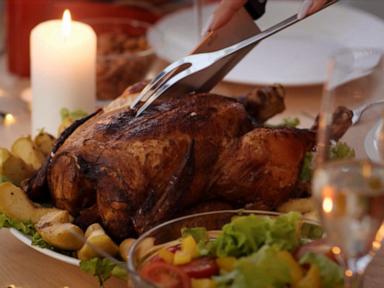
A loss leader is a high-demand, easily comparable item priced near, at, or below cost to attract traffic and trigger higher-margin purchases. Whole turkeys, baking staples, and recognizable consumer electronics fit this role because shoppers already know their approximate reference prices.
The cause-and-effect chain works through basket attachment. If a shopper enters a store for a deeply discounted centerpiece item and adds high-margin produce, beverages, specialty ingredients, or accessories, the retailer recovers part or all of the initial subsidy across the total receipt. When a retailer attaches a minimum-spend rule—such as requiring a qualifying subtotal before a discounted item or meal bundle unlocks—it is actively defending against cherry-picking, where buyers extract only the subsidized item and leave no margin behind.
Consider a household buying a discounted turkey at one chain and then filling the rest of the cart at full price in the same visit. The visible win on the centerpiece can easily be offset by higher unit prices on sides, condiments, and impulse items. Separating the centerpiece from the rest of the basket exposes whether the trip actually lowers total outlay.
Temporal Price Discrimination Across the Holiday Window
Holiday pricing is not a single event; it is a multi-week schedule designed to segment shoppers by urgency, price sensitivity, and planning horizon. Economists describe this as intertemporal price discrimination, where sellers vary prices over time to capture willingness to pay across different buyer groups.
Early November promotions often target planners who want certainty, stock availability, or early use of seasonal goods and tech. Mid-November waves frequently center on meal bundles and pantry staples as households lock in menus. Closer to Thanksgiving Day and Black Friday, pricing shifts toward urgency, doorbusters, or perishable clearance as time windows narrow.
This structure creates a clear timing tension. Waiting for a deeper late-stage markdown can pay off on perishable or date-sensitive items if local inventory remains unsold, but it introduces stockout risk on fixed-supply items and forfeits weeks of utility on durable goods. Conversely, buying early avoids scarcity and fulfillment bottlenecks, even if a subsequent flash drop occasionally undercuts the initial price by a small margin.
Channel Friction and Fulfillment Costs
Where you buy changes the real cost of a deal because fulfillment and transaction friction alter net value. A low advertised price loses appeal if it requires driving across town, waiting in peak congestion, paying delivery or service fees, or accepting a substitution on a key ingredient.
In prepared meals and grocery bundles, make-versus-buy economics also matter. A pre-cooked or heat-and-serve meal package trades cash savings or raw-ingredient control for labor savings and convenience, while pricing varies sharply between mass grocers, warehouse clubs, and restaurant operators. A lower sticker price is an educated hypothesis about value—not a settled fact—until you account for portion counts, preparation effort, dietary fit, and whether extra items must be purchased to round out the table.
Operational Playbook for Evaluating Thanksgiving Offers
Applying an analytical lens turns deal hunting from passive browsing into structured procurement. Execute the sequence below before committing cash or time:
- Establish a baseline reference price. Check normal non-promotional unit prices (such as price per pound or per ounce) before the holiday cycle peaks so you can distinguish a genuine markdown from an inflated "was" price.
- Audit the attachment rules. Read the fine print for spend minimums, loyalty requirements, limit-per-customer caps, and date windows before treating an advertised price as available.
- Price the full basket, not the hook. Compare the combined cost of all required items across stores or channels rather than chasing isolated loss leaders across multiple stops.
- Match timing to perishability and risk. Lock in non-perishable staples and high-demand items early when stock is healthy; reserve late timing only for flexible items where a stockout will not disrupt your plans.
- Factor in time and logistics. Subtract delivery fees, tipping, travel time, and prep effort from nominal savings to judge true net value.
Where This Framework Has Limits
No pricing framework eliminates uncertainty in live retail markets. Promotional allocations can sell out faster than expected, regional pricing varies across store formats, and unannounced flash adjustments can appear after a purchase is made. Over-optimizing across too many stores can also backfire by consuming hours of transit time and increasing impulse spending along the way. Treat every rule as a probability filter rather than a guarantee.
Strategic Move for Your Next Shopping Cycle
Build a single-page Holiday Basket Ledger before browsing any circular or deal feed: list your core items, record each item's normal unit price and non-negotiable quantity, and set a hard cap on how many stores or channels you will use. Commit to buying only when a promotion beats your baseline on the complete item or full basket within your store cap—and walk away from any "deal" that requires buying extras you did not plan to consume.