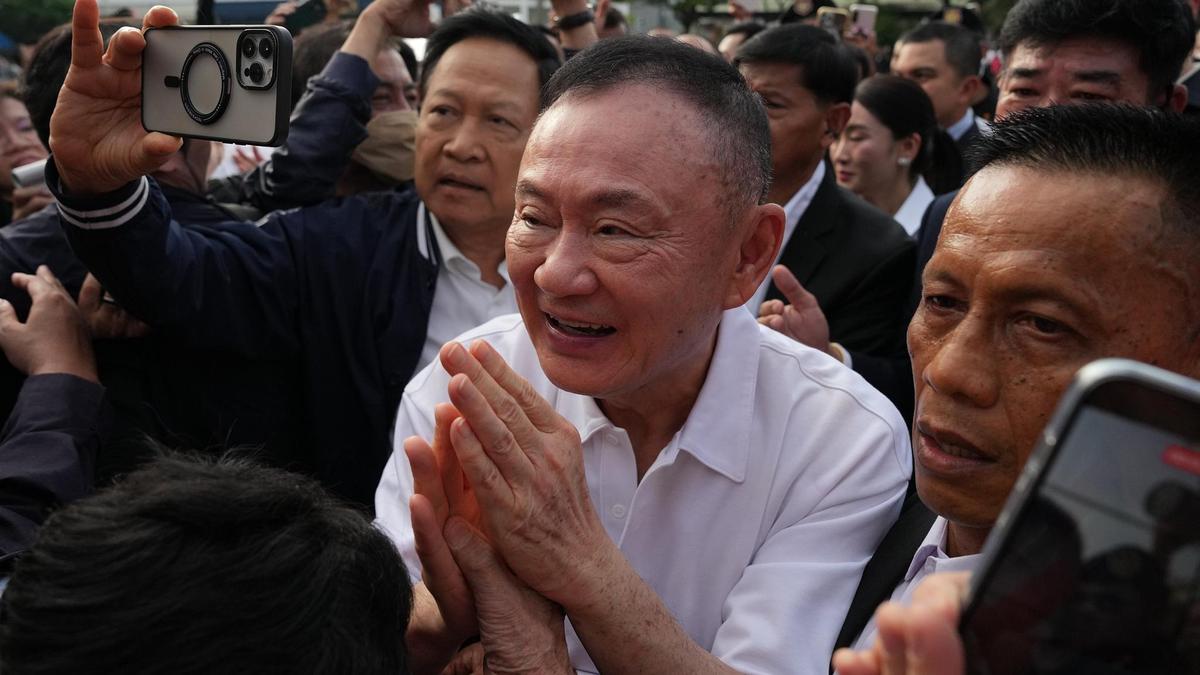
Thaksin Shinawatra is officially a free man, shaking up the entire Thai political spectrum yet again. On June 3, 2026, Thailand Justice Minister Rutthaphon Naowarat confirmed that the 76-year-old billionaire populist received a full royal pardon from King Maha Vajiralongkorn. This structural clemency wiped out his remaining parole obligations.
The timing matters. It happened on the birthday of Queen Suthida, fitting into a broader royal decree that releases prisoners who have less than a year left on their sentences. Thaksin was on a four-month probationary parole slated to end on September 9, 2026. Now, his electronic monitoring ankle bracelet is coming off early. He doesn't have to report to a probation officer ever again. Learn more on a similar issue: this related article.
This isn't just about an old man losing an ankle tag. It represents the latest twist in a two-decade drama that has dictated the rhythm of Thai governance.
The Anatomy of a High-Stakes Political Deal
To understand why this early release is turning heads, you have to look at the timeline. Thaksin flew back to Bangkok in August 2023 after spending 15 years in self-imposed exile. He was facing an eight-year prison sentence for conflict of interest and abuse of power dating back to his time as prime minister between 2001 and 2006. Additional reporting by Al Jazeera highlights comparable perspectives on the subject.
Strangely enough, he touched down on the exact same day his proxy party, Pheu Thai, formed a governing coalition with its historical enemies: the pro-military, royalist establishment. Nobody believed it was a coincidence.
The subsequent events played out like a carefully scripted theater piece:
- Hours after jail arrival: Thaksin complained of severe chest pains and high blood pressure. Officials quickly transferred him to a VIP suite at the Police General Hospital.
- Weeks later: The palace commuted his eight-year stretch down to a single year.
- Six months later: He walked out of the hospital on parole without spending a real night in a standard prison cell.
Public outrage boiled over. The optics looked terrible. Activists screamed that the billionaire was getting elite treatment while ordinary citizens rotted in crowded cells. The backlash grew so intense that the Supreme Court intervened in September 2025. The court ruled his hospital stay illegitimate and ordered him back behind actual bars to finish his time. He ultimately served eight months in custody before getting paroled again in May 2026.
This new royal pardon essentially clean-sweeps the board. It validates the theory that a grand compromise was struck between the old guard and the Shinawatra clan to keep newer, more radical political forces at bay.
Reading Between the Lines of the Royal Pardon
What most people get wrong about Thai politics is the assumption that Thaksin is still the ultimate disruptor. He isn't. The real threat to the establishment is the progressive movement, formerly known as the Move Forward Party, which won the popular vote in 2023 by promising to reform the monarchy laws and break up business monopolies.
That structural shift changed the game. The royalist military elite realized that Thaksin, for all his flaws, represents a capitalist system they can negotiate with. He became the lesser of two evils.
His daughter, Pintongta Shinawatra, told reporters through tears that the family felt deeply honored and grateful for the freedom granted. Meanwhile, Prime Minister Anutin Charnvirakul—a former ally who turned into a fierce rival before aligning in the current messy coalition—publicly congratulated his predecessor. It is a display of public civility that masks intense under-the-table jockeying.
By fully freeing Thaksin early, the establishment cements an alliance. Pheu Thai remains deeply dependent on the traditional power centers, and Thaksin is the backroom coordinator holding the factional pieces together.
What This Means for Thailand Stability
Thaksin's legal troubles are over, but his political shadow looms large. His daughter, Paetongtarn Shinawatra, previously served as prime minister before the administration collapsed amid immense legal pressure last year. The family claims Thaksin wants to step back from the spotlight and enjoy his retirement.
Don't buy it. A man who has dominated the national psyche for 25 years does not just sit home and garden.
He remains the spiritual patriarch of the ruling coalition. With his legal slate wiped clean, he can openly host political figures, advise party leaders, and shape policy without the constant threat of parole revocation hanging over his head. Expect him to actively steer the government as it navigates an unstable economy and faces a highly volatile electorate.
Your next steps to follow this developing situation involve watching three specific pressure points:
- The Coalition Balance: Watch how Prime Minister Anutin manages his relationship with the Shinawatra camp now that Thaksin operates with zero legal constraints.
- Public Sentiment: Monitor whether anti-Thaksin activist groups launch fresh street protests over what they view as a total mockery of the judicial system.
- The Progressive Backlash: Observe how the political opposition capitalizes on this perceived elite corruption to build momentum for upcoming electoral cycles.