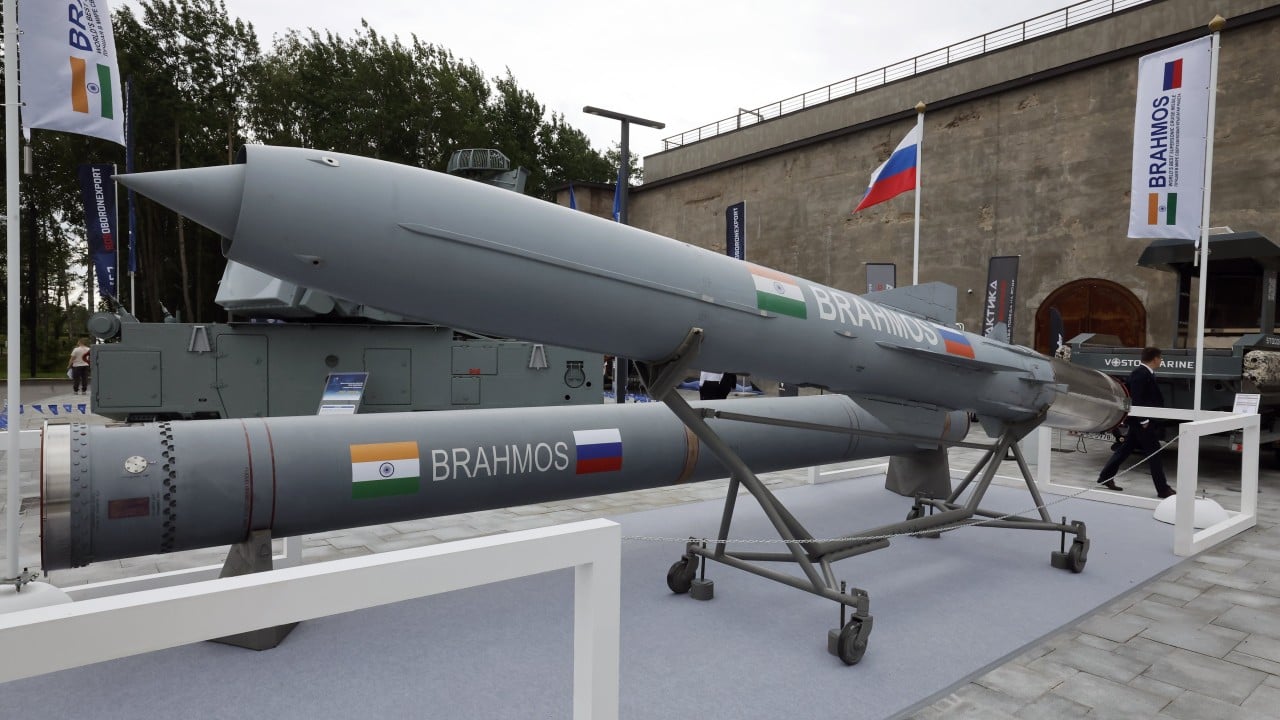
Every defense analyst with a keyboard and a Wi-Fi connection is currently hyperventilating over headlines about Thailand potentially acquiring BrahMos supersonic cruise missiles. The lazy consensus in defense journalism writes itself: Bangkok is inching toward a multi-million-dollar procurement deal, Phnom Penh is getting nervous, and Southeast Asia is sleepwalking into a dangerous mini-arms race.
It is a neat, media-friendly narrative. It is also completely wrong.
I have spent years watching defense budgets get misread by people who think military procurement works like shopping on Amazon. Let me save you the geopolitical anxiety. The hypothetical BrahMos acquisition by the Royal Thai Armed Forces is not the spark that lights an ASEAN powder keg. It is a symptom of institutional budget-padding, bureaucratic inertia, and a fundamental misunderstanding of how middle powers actually deter conflict.
Stop worrying about a Cambodian arms race. Worry about why nobody is paying attention to the actual balance of power.
The Myth of the Mini-Arms Race
Let us dismantle the core premise of the panic: that buying a supersonic anti-ship missile automatically shifts regional hegemony and triggers a tit-for-tat escalation from Cambodia.
This argument assumes that military hardware is a one-to-one equation for strategic threat. It is not. Cambodia’s military doctrine, force structure, and operational funding bear zero resemblance to a peer competitor designed to counter a BrahMos battery. Phnom Penh's defense spending hovers around a fraction of Thailand's, and their strategic priorities are entirely land-centric, focused on internal security, border management, and Chinese-funded naval base modernizations at Ream that serve Beijing's blue-water ambitions rather than a local dogfight with Bangkok.
When defense commentators scream about an arms race, they are confusing capability acquisition with strategic intent. Thailand does not want to blast Cambodian patrol boats out of the Gulf of Thailand. If Bangkok wanted to incinerate Cambodian naval assets, they already have plenty of off-the-shelf platforms capable of doing it without buying a joint Indo-Russian supersonic missile system.
The BrahMos obsession is about export marketing, defense industrial diplomacy, and domestic procurement theater within the Thai military. India wants to prove BrahMos is a viable export product after years of slow-moving sales pitches. Thailand’s procurement committees love shopping for shiny objects that look good in white papers and justify annual budget requests to parliament.
The Economics of Supersonic Deterrence
To understand why this deal is moving at glacial speed—and why it might never actually materialize in a meaningful operational capacity—you have to look past the press releases and look at the logistics.
Military hardware is cheap to buy and ruinously expensive to operate. I have seen defense ministries blow millions on high-profile capability announcements only to let the missiles rot in warehouses because they forgot to budget for lifecycle maintenance, telemetry tracking, and specialized launcher integration.
BrahMos is a heavy, Mach 3 beast. Integrating it into the Royal Thai Navy or coastal defense architecture requires massive overhauls of command, control, communications, computers, cyber, intelligence, surveillance, and reconnaissance networks.
- Maintenance Costs: Supersonic ramjet propulsion demands hyper-precise engineering support. You cannot service these systems with local mechanics.
- Doctrinal Friction: Thai defense doctrine has historically favored western or multi-source interoperability. Introducing an Indo-Russian missile system creates a logistical nightmare for maintenance pipelines.
- Geopolitical Hedging: Bangkok's entire foreign policy playbook is built on hedging between Washington and Beijing. Buying a missile co-developed by India and Russia complicates their procurement diplomacy with the West.
Imagine a scenario where Thailand signs a memorandum of understanding tomorrow. Even under optimal conditions, the timeline from ink on paper to operational deployment spans years. By the time the first battery is combat-ready, the geopolitical chessboard will look entirely different. The deal is a diplomatic football, not a tactical game-changer.
The Real Question Nobody is Asking
Instead of asking whether Cambodia will panic over a hypothetical missile purchase, we should be asking why Thailand’s procurement apparatus is looking outward at high-end anti-ship systems while its internal structural readiness rots from within.
The real friction point in Thai defense policy isn't external escalation; it's internal resource allocation. The Thai military is notoriously top-heavy, top-funded for personnel rather than R&D, and plagued by procurement cycles that prioritize prestige over practicality.
When a nation buys high-profile missile systems while struggling to modernize basic battlefield digitalization and secure logistics, it is engaging in defensive signaling. It tells regional observers that the leadership wants to look modern without necessarily paying the steep price of genuine structural reform.
Phnom Penh knows this. Hanoi knows this. Jakarta knows this. The only people falling for the "mini-arms race" hysteria are foreign journalists who need a fresh angle on Southeast Asian geopolitics every Tuesday morning.
The Uncomfortable Truth About Regional Deterrence
If you want a truly contrarian read on regional security, here it is: actual conflict in Southeast Asia will not be triggered by high-end missile acquisitions between nominal neighbors. It will be triggered by gray-zone maritime coercion, economic choke points, and cyber-warfare that renders traditional supersonic cruise missiles completely irrelevant before they ever leave their launch canisters.
A BrahMos missile sitting in a coastal battery cannot stop a fishing militia blockade, cannot halt economic coercion, and cannot solve a territorial dispute in the South China Sea. It is an expensive insurance policy against a conventional naval invasion that nobody is planning to launch.
The next time you read a breathless breakdown of an impending arms race in mainland Southeast Asia, check the writer's understanding of logistics, maintenance contracts, and actual defense budgets. You will find they are selling you a movie script, not geopolitical analysis.
Stop looking at the missiles. Look at the balance sheets. The real danger isn't that Thailand is starting an arms race. The danger is that everyone is distracted by shiny hardware while the rules of regional security are being rewritten entirely offline.