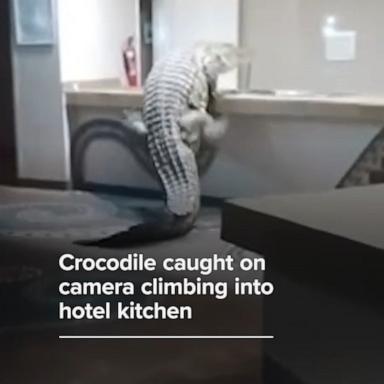
The internet loves a monster. When a three-meter Nile crocodile hauled its prehistoric frame into a hotel kitchen in Zimbabwe, the viral machinery did exactly what it was designed to do. It churned out "shocking" headlines, invited thousands of "nope" comments, and painted a picture of a chaotic, dangerous wild west where apex predators hunt chefs between the prep stations.
It’s a lie. A profitable, sensationalist, and deeply lazy lie.
If you’re watching that footage and feeling a surge of adrenaline, you aren’t witnessing a brush with death. You’re watching a failure of infrastructure and a triumph of cheap engagement. The "crocodile in the kitchen" isn't a story about nature reclaiming the land; it’s a story about why we’ve become so detached from the mechanics of the natural world that we mistake a stray animal for a horror movie protagonist.
The Myth of the Aggressive Incursion
The standard narrative suggests this crocodile "invaded" the hotel. This framing implies intent. It suggests a calculated move by a predator to enter a human sanctuary.
Let’s dismantle that.
Nile crocodiles ($Crocodylus$ $niloticus$) are cold-blooded opportunists governed by thermoregulation and calorie conservation. They don't do "bold." They do "efficient." A crocodile in a kitchen isn't there for a snack of human thigh; it’s there because the hotel likely sits on a floodplain or near a water source where the animal has lived for decades.
The animal followed a scent trail or a heat gradient. It’s a biological machine that hit a wrong turn because a door was left propped open or a fence was substandard. By framing this as a "terrifying encounter," media outlets ignore the boring reality: this was a janitorial oversight, not a predatory strike.
Why We Crave the Crocodile Scares
We live in a world of sanitized, bubble-wrapped experiences. When a traveler goes to a luxury lodge in Zimbabwe, they pay for the idea of the wild, provided it stays behind a glass partition or at the end of a long-lens camera.
The viral crocodile breaks that contract. That’s why it performs so well. It provides a low-stakes thrill for people sitting on sofas in London or New York.
But here is the trade-off no one talks about:
- Sensationalism breeds bad policy. When "croc in a kitchen" goes viral, local management often feels pressured to "remove" the problem. In the bush, "remove" is usually a euphemism for a bullet.
- It devalues the actual risk. By screaming about a crocodile that wandered into a room and sat there looking confused, we lose the thread on real wildlife safety.
- It insults the locals. The staff at these lodges deal with the reality of the ecosystem every day. To them, this isn't a "viral moment"; it’s a Tuesday morning that requires a broom and a bit of patience.
The Architecture of Incompetence
I’ve spent years navigating the intersection of luxury hospitality and high-risk environments. I’ve seen lodges that spend $50,000 on Italian marble countertops but can’t be bothered to install a heavy-duty mesh screen or a proper perimeter gate.
If a crocodile gets into your kitchen, you haven't been "attacked by nature." You’ve been failed by your architect.
Zimbabwe’s tourism industry relies on the proximity of the Zambezi or Lake Kariba. These are high-density crocodile habitats. Expecting a crocodile not to investigate a source of food smells or warmth is like moving to the Arctic and being shocked when it snows. The "shock" expressed in these articles is a performance of ignorance.
The Reality Check Table
| The Viral Narrative | The Insider Reality |
|---|---|
| Predatory Invasion | Navigational Error |
| Heroic Staff Response | Standard Operating Procedure |
| Increasing Danger | Static Environmental Reality |
| Unexpected Wildlife | Failure of Physical Barriers |
Stop Asking if it's Safe
People always ask the same question when these videos surface: "Is it safe to travel there?"
It’s the wrong question. It’s a fundamentally flawed way to view the world. Safety isn't a binary state; it’s a managed risk.
If you want a world where crocodiles never enter kitchens, stay in a Marriott in Omaha. If you want to experience the last truly wild places on earth, you have to accept that the boundary between "us" and "them" is porous. The crocodile isn't the problem. Our expectation of a Disney-fied, sterilized version of Africa is the problem.
The Logistics of Coexistence
Managing a high-end property in a wildlife zone requires more than just a nice wine list. It requires an understanding of animal behavior that goes beyond what you see on National Geographic.
- Pheromone Management: Kitchens are scent factories. If you don't manage your waste disposal, you are effectively ringing a dinner bell for every scavenger and predator within five miles.
- Physical Deterrents: A Nile croc can exert massive pressure, but they aren't great at vertical climbing or navigating complex latches. Entry is almost always the result of human error.
- Staff Training: The reason the staff in these videos often seem relatively calm? They know the animal. They understand that a crocodile on land, away from water, is at a massive disadvantage. It’s defensive, not offensive.
The Cost of the "Monster" Narrative
Every time a competitor writes a "WATCH: Terrifying Monster" piece, they contribute to the demonization of a species that is vital to the ecosystem. Nile crocodiles are apex predators that keep fish populations in check and maintain the health of the waterways.
When we turn them into clickbait villains, we make it harder to fund conservation. We make it easier for people to justify culling. We prioritize a 30-second dopamine hit for a bored scroller over the ecological integrity of the region.
The Actual Lesson
Next time you see a video of a crocodile in a hotel, don't look at the crocodile. Look at the door. Look at the lack of barriers. Look at the people holding their phones instead of following safety protocols.
The "wild" isn't encroaching on us. We are sprawling into the wild with a staggering level of arrogance, assuming that because we paid $800 a night, the laws of biology no longer apply.
Nature doesn't care about your TripAdvisor review. It doesn't care about your "safety." It only cares about the path of least resistance and the next meal. If you can't handle a reptile in the pantry, you aren't a traveler—you’re just a tourist who’s lost his way.
Put down the camera. Close the damn door.