Geopolitics is plagued by a chronic, terminal case of wishful thinking.
Mainstream analysts love a neat, linear narrative. They spent months peddling a comfortable script: Washington and Tehran were inching toward a grand diplomatic understanding, a regional detente was quietly cooking, and once the US and Iran shook hands, peace would magically trickle down to the rest of the Middle East.
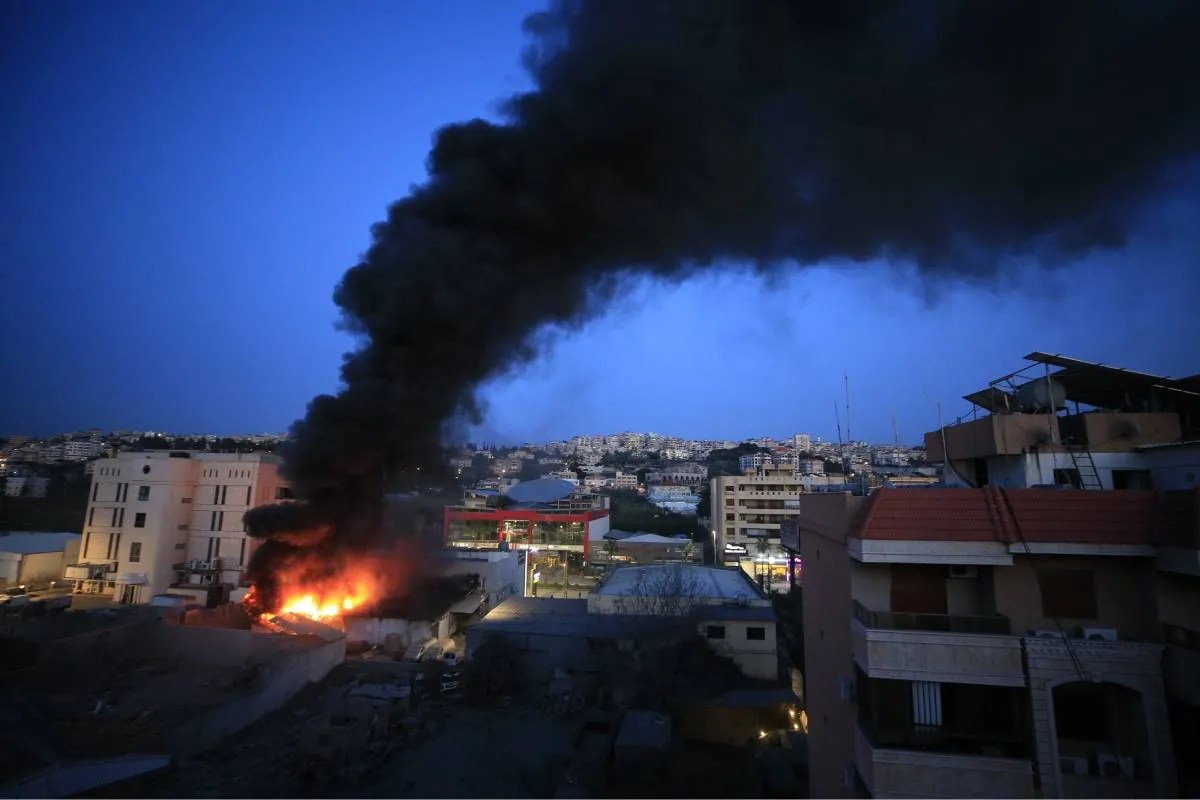
Then Israeli jets flattened a command structure in Beirut, and the entire commentary class gasped in collective shock.
The lazy consensus instantly fell back on its favorite trope: Israel blindsided everyone and disrupted a fragile diplomatic breakthrough. It is a comforting story for bureaucrats who view foreign policy as a series of committee meetings. It is also entirely wrong.
The premise that Israeli military operations are a reactionary wrench thrown into the gears of Western diplomacy misses the fundamental reality of Middle Eastern power dynamics. Israel did not disrupt a deal; it exposed a fantasy. The idea that a US-Iran agreement would automatically tether Hezbollah or neutralize regional flashpoints is an illusion built on a profound misunderstanding of how proxy warfare actually operates.
The Myth of the Central Remote Control
Mainstream media covers the Middle East as if it were a corporate hierarchy. In this flawed model, Ayatollah Ali Khamenei sits at the top as the CEO, and Hassan Nasrallah or his successors act as regional managers. The assumption follows that if Washington signs a contract with the CEO, the regional managers will immediately fall in line and change their corporate strategy.
This is a dangerous misreading of the Axis of Resistance.
I have spent years tracking regional defense architectures, watching Western intelligence agencies consistently overestimate Iran’s tactical veto power over its proxies during active conflicts. Iran provides the money, the logistics, and the ideological blueprint. But organizations like Hezbollah are not robotic extensions of Tehran. They are deeply entrenched, heavily armed domestic political and military actors with their own survival instincts, local mandates, and operational momentum.
An American diplomatic understanding with Iran does not change the physical reality on Israel’s northern border.
- The Precision Guided Missile (PGM) Reality: Hezbollah possesses over 150,000 rockets, including precision-guided munitions capable of striking critical infrastructure in Tel Aviv. No piece of paper signed in Geneva or New York dismantles those stockpiles.
- The Border Displacement: Upward of 60,000 Israeli citizens have been displaced from their homes in Galilee for months. For any sovereign nation, this is an existential, unsustainable wound.
To believe that Israel would pause its existential security requirements to wait for the outcome of a diplomatic dance between Washington and Tehran is sheer naivety. Jerusalem operates on a completely different timeline than the US electoral or diplomatic calendar.
Why Diplomatic Waiting Game Arguments Fail
Let us break down the standard "People Also Ask" logic that populates the news cycle after every major escalation.
Why didn't Israel wait for the outcome of US-Iran diplomatic talks before striking Beirut?
The question itself is structurally flawed. It assumes that a US-Iran agreement would have solved the problem on the ground. History proves the exact opposite.
Look back at the 2015 Joint Comprehensive Plan of Action (JCPOA). When the Obama administration signed the nuclear deal, regional capital did not flow into peaceful civic projects. Instead, Iranian regional expansion accelerated. Unfrozen assets and sanctions relief fueled an unprecedented expansion of proxy networks across Iraq, Syria, and Yemen, while Hezbollah solidified its grip on Lebanon.
Diplomacy with Iran often creates a shield behind which its proxies can build capabilities with impunity. Israel strikes Beirut precisely because it refuses to accept a status quo where diplomatic talks serve as a smokescreen for the further encirclement of its borders.
[Mainstream Illusion]
US-Iran Deal  ──> Regional Stability ──> Proxies Deescalate

[The Hard Reality]
US-Iran Deal  ──> Sanctions Relief  ──> Proxy Modernization ──> Existential Threat to Israel
Israel’s defense doctrine, established since the days of David Ben-Gurion, dictates that the nation must rely exclusively on its own deterrent capabilities, not on the shifting sands of international guarantees. When a threat reaches a critical threshold, Israel strikes. It does not ask for permission, and it certainly does not check the status of a State Department working group's schedule.
The Asymmetry of Risk: Washington vs. Jerusalem
To truly understand why Israel took the initiative while the West preached patience, you must analyze the brutal asymmetry of risk.
When a Western policymaker sits in an air-conditioned room in Washington and argues for strategic patience, their downside risk is minimal. If the diplomacy fails, a bureaucrat updates a policy brief, an academic writes a retrospective paper, and the administration shifts focus to another global theater.
For Israel, the downside risk of a policy failure is a devastating multi-front invasion.
Imagine a scenario where Israel acquiesces to Western pressure, holds its fire, and allows a superficial deal to be struck. Hezbollah utilizes that period of diplomatic immunity to finish integrating advanced anti-aircraft systems and upgrading its entire arsenal to precision guidance. The moment the geopolitical wind changes, Israel faces an adversary that is twice as lethal, positioned directly on its northern fence.
By striking high-value targets in Beirut, Israel pulled back the curtain on the West’s diplomatic vanity project. It forced a collision with reality. True stability in the region is not achieved by signing a document that ignores the thousands of rockets aimed at Israeli cities; it is achieved by systematically degrading the capability and the will of the entities holding those rockets.
The Bitter Truth of the Contrarian Reality
Let us be completely transparent about the costs of this approach. Striking the heart of Beirut is a high-risk gamble that carries brutal, unavoidable downsides.
It risks triggering a full-scale regional conflagration. It stretches Israel's economy to its absolute limits, devastates Lebanon’s remaining civic fabric, and alienates Western allies who prefer quiet management over disruptive victory. It is an ugly, destructive process that guarantees long-term instability and human suffering.
But pretending that a diplomatic deal with Tehran was a viable alternative is a lie.
The Western foreign policy establishment is addicted to the process of negotiation because it mistakes the process for progress. They view the absence of open warfare as peace. Israel, driven by the cold calculus of survival, views a fake peace as merely the preparation phase for its destruction.
Stop asking when the diplomacy will start working. Stop waiting for a magical agreement to solve a decades-old structural conflict. The strikes in Beirut did not break the peace. They shattered a delusion. The region is not entering a new phase because an article of diplomacy was disrupted; it is entering a new phase because Israel decided that managing an existential threat is no longer an option. Elimination is the new doctrine.