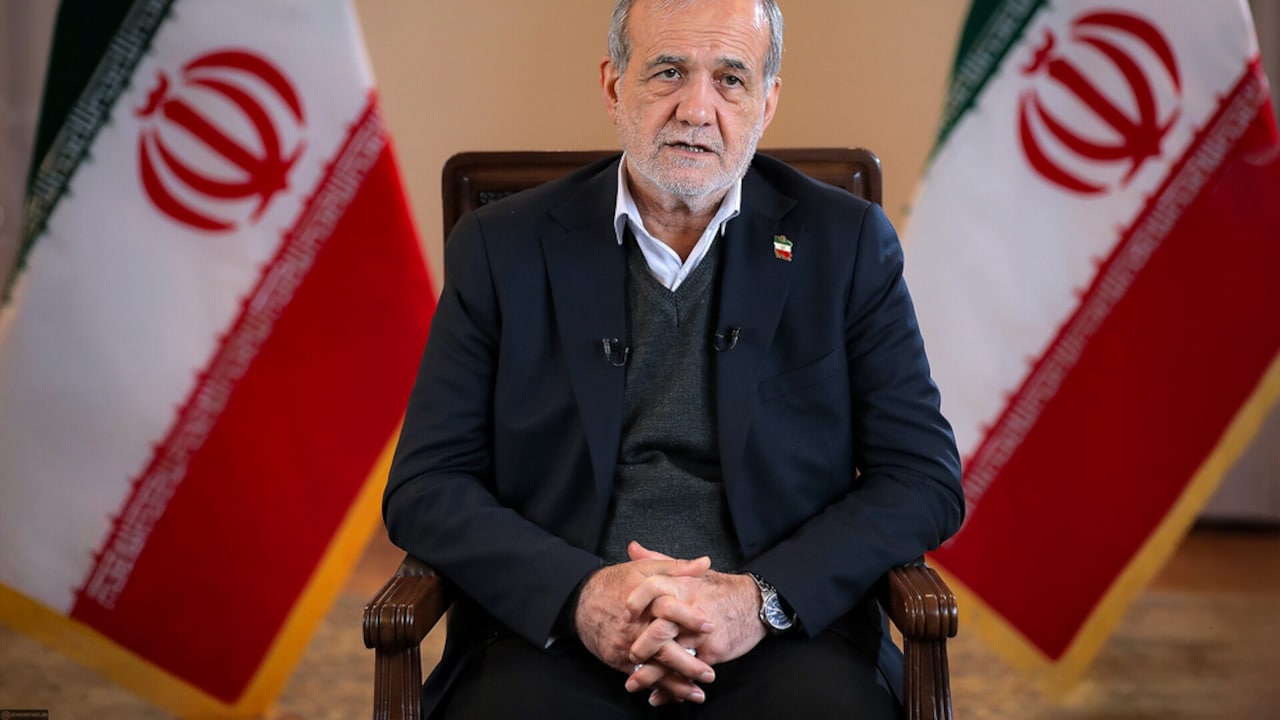
Iranian President Masoud Pezeshkian recently articulated a recurring theme within Tehran official circles. External enemies attempted to turn Iran into Syria, but failed. This framing relies on a familiar political survival playbook. It equates domestic unrest and foreign economic warfare with the catastrophic civil war that hollowed out Damascus.
Yet stating that a state avoided total collapse does not explain the underlying structural vulnerabilities that persist. The comparison to Syria serves a specific rhetorical purpose. It mobilizes nationalist sentiment while deflecting accountability for economic decay.
Decades of reporting on Middle Eastern statecraft reveal a consistent pattern. When regimes face severe internal friction, they point outward. They invoke regional chaos to justify domestic containment. Understanding why the Syrian model did not replicate inside Iran requires looking past official rhetoric. It demands a hard look at institutional control, security architecture, and the limits of popular revolt.
The Structural Divergence Between Damascus and Tehran
Syria fractured along deep sectarian and military lines. The defection of key units from the Syrian Arab Army created a vacuum. Armed opposition groups seized territory, foreign actors poured in, and the state lost its monopoly on violence.
Iran operates under a fundamentally different model. The Islamic Republic constructed a dual-security architecture specifically designed to prevent military defections.
The Security Apparatus
- The Regular Military (Artesh): Positioned largely for conventional territorial defense.
- The Islamic Revolutionary Guard Corps (IRGC): Built to protect the regime from internal and external threats alike.
- The Basij Militia: Embedded directly within neighborhoods, universities, and workplaces.
This redundancy makes a sudden military split nearly impossible. When protests erupt over inflation, currency devaluation, or social restrictions, the state does not rely on a single chain of command that might fracture. It deploys paramilitary units with deep ideological and economic stakes in the survival of the system.
Economic integration further cements this divergence. The IRGC controls vast swaths of the Iranian economy through front companies, construction conglomerates, and black-market management. Officers and commanders have financial incentives to maintain state continuity. In Syria, crony capitalism enriched a narrow circle while hollowing out the institutional middle class. In Iran, the institutional middle class of the security state is too vast to simply walk away.
The Economic Realities Behind the Rhetoric
Pezeshkian inherited an economy battered by maximum pressure sanctions, systemic corruption, and severe structural mismanagement. Inflation regularly runs at hyper-inflationary levels for staple goods. The national currency trades at historic lows against the dollar.
When citizens take to the streets, their grievances are primarily economic. They are reacting to the daily humiliation of watching their savings evaporate.
Official statements from Tehran often blame foreign sabotage for these failures. Sanctions undoubtedly restrict oil revenue and isolate the banking sector. However, blaming external actors alone ignores domestic choices.
State subsidies for energy and imports drain the budget. Monopolies stifle private enterprise. Capital flight drains talent from the country faster than universities can train them.
Foreign adversaries did not invent Iran's structural inflation. They merely exploited existing vulnerabilities. The regime survived by rationing resources, suppressing dissent, and pivoting trade toward alternative partners like Beijing and Moscow.
Survival, however, is not prosperity. A nation can avoid becoming a failed state while its citizens experience a slow erosion of their standard of life.
The Battle for the Narrative
Control of the public narrative remains the primary theater of operations for the administration. By framing every domestic protest as an extension of foreign regime-change plots, the state forces citizens to choose between reform and chaos.
This is a powerful psychological deterrent. Millions of Iranians want systemic economic relief and social freedom. Those same millions watch the devastation in neighboring states with horror. They fear that a total collapse of central authority would invite partition, ethnic conflict, or foreign occupation.
The regime weaponizes this collective trauma. Whenever dissent rises, state media broadcasts footage of wartime destruction in the Levant. The unspoken message is stark. Accept your current hardships, or face total annihilation.
This tactic works in the short term. It demobilizes potential revolutionary coalitions by raising the anticipated cost of action. But it creates a permanent state of low-intensity alienation. Trust between the population and the governing elite continues to bleed out.
The Limits of Containment
Avoiding the Syrian trajectory does not guarantee long-term stability. A state that rules solely through deterrence and economic triage is perpetually vulnerable to shocks.
Demographic shifts compound these challenges. A generation of young Iranians, digitally connected and globally aware, rejects the ideological frameworks of the 1979 revolution. They do not share the historical memory of the Iran-Iraq War. Their frame of reference is daily survival under economic siege.
When the state relies exclusively on the Basij and the security apparatus to manage civil society, it loses the capacity to adapt. Policy debates narrow into security directives. Reformist politicians find their hands tied by unelected power centers that view any compromise as a sign of weakness.
The claim that enemies failed to turn Iran into Syria is technically accurate. The state did not fracture, the military did not splinter, and central authority held firm.
Yet measuring success merely by the absence of total civil war sets a remarkably low bar for a country with Iran's civilizational depth, natural resources, and human capital. A nation can survive a crisis while mortgaging its future to security paranoia. The real test is not whether the government can prevent a collapse today, but whether it can offer a viable reason for its people to believe in tomorrow.


