The collision of transboundary hydropolitics and sovereign infrastructure in the Teesta River basin exposes a structural flaw in South Asian security frameworks: treating water scarcity purely as an allocation problem rather than an engineering and storage deficiency. Beijing’s June 2026 confirmation that its technical involvement in the Teesta River Comprehensive Management and Restoration Project does not target any third party responds directly to New Delhi’s long-standing security reservations. By framing the multi-billion-dollar initiative strictly as a localized livelihood intervention, China alters the geopolitical dynamic of the region. This repositioning bypasses the diplomatic deadlock between India and Bangladesh by transforming a legal dispute over volumetric flow into a massive infrastructure and land-reclamation asset.
To understand why traditional diplomatic solutions have stagnated, one must examine the operational components of the Teesta Master Plan and the strategic vulnerabilities of the actors involved.
The Technical Calculus of the Teesta Master Plan
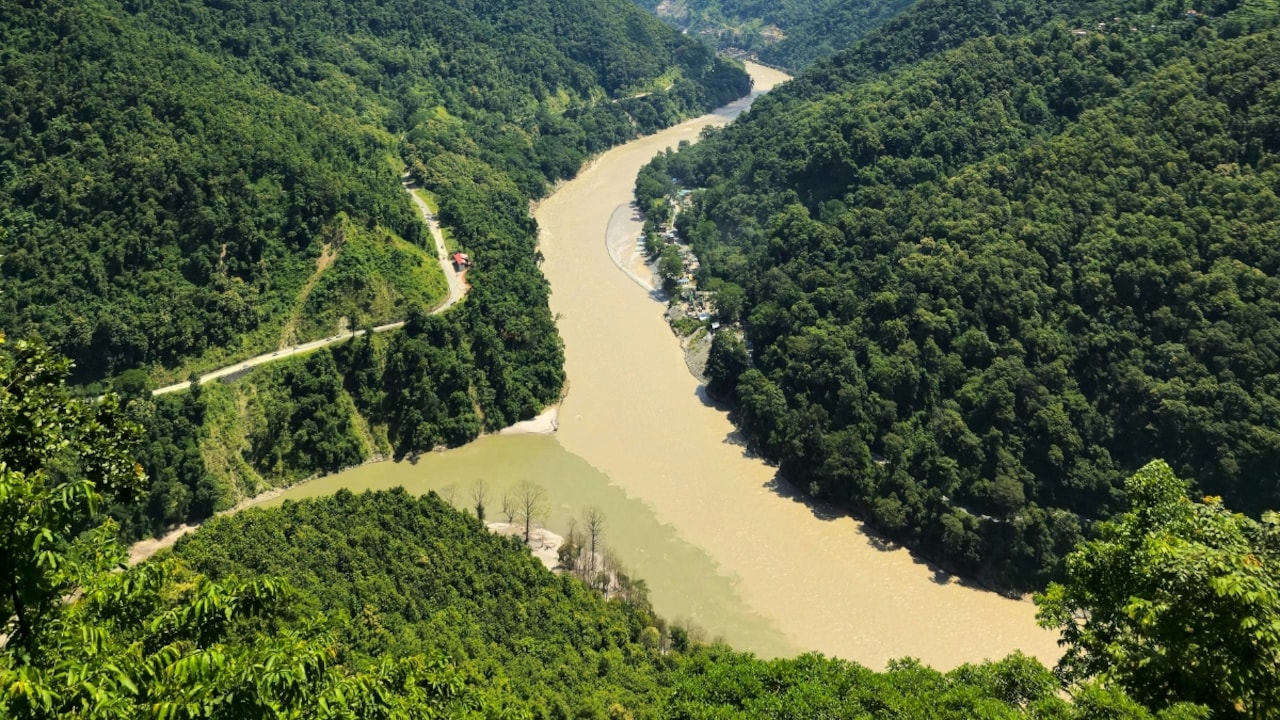
The proposed project represents an engineered modification of a highly unstable river system. The Teesta River originates in the eastern Himalayas, traversing Sikkim and West Bengal before crossing into northern Bangladesh. Because it is a glacier-fed and monsoon-dependent waterway, its flow exhibits extreme seasonal volatility.
The Master Plan addresses this volatility through three core engineering interventions:
- Sediment Management and Channelization: The engineering design mandates the dredging of over 100 kilometers of the riverbed, removing approximately 140 million cubic meters of riverine sediment. This will deepen the main channel, stabilizing a river notorious for unpredictable bank erosion and devastating monsoon floods.
- Volumetric Storage Infrastructure: The construction of a network of large reservoirs and structural embankments spanning 110 kilometers of repaired structures and 124 kilometers of new construction. These reservoirs are engineered to capture excess monsoon discharge, creating an artificial buffer to supply agricultural zones during the critical dry winter months.
- Land Reclamation and Economic Zoning: The consolidation of the river channel allows the reclamation of an estimated 171 square kilometers of land from the current, sprawling riverbed. This reclaimed terrain is earmarked for urban development, logistics terminals, and specialized economic zones.
This engineering strategy shifts the problem from a zero-sum negotiation over natural flow to a technology-driven optimization framework. For Bangladesh, which supports roughly 20 million people within the immediate basin, the plan mitigates the chronic economic losses generated by seasonal agricultural failure.
The Strategic Trilemma: India, Bangladesh, and China
The geopolitical tension surrounding this project stems from a geographic intersection known as the Siliguri Corridor—the narrow strip of Indian territory connecting the mainland to the northeastern states. The proposed project zone sits less than 20 kilometers from this critical choke point.
[Upstream Flow Control: India (Sikkim/West Bengal)]
                     │
                     ▼
[Downstream Inflow Volatility: Bangladesh (Teesta Basin)]
                     ▲
                     │
[Infrastructure & Capital Injection: China (Teesta Master Plan)]
The friction between the three nations operates along distinct strategic axes:
The Indian Upstream Dilemma
New Delhi’s security apparatus views large-scale Chinese engineering projects near the Siliguri Corridor with intense skepticism. The presence of Chinese state-owned enterprises, engineering crews, and long-term technical advisors creates a perceived intelligence and operational footprint in a highly sensitive border sector.
The institutional gridlock within India complicates its diplomatic response. While the central government recognizes the strategic necessity of stabilizing relations with Dhaka, water remains a state subject under the Indian Constitution. The political opposition from West Bengal, driven by domestic agricultural priorities and regional water deficits, blocked the 2011 draft treaty that would have allocated 37.5 percent of dry-season waters to Bangladesh. India’s subsequent 2024 offer of technical and conservation assistance was an attempt to match Chinese initiatives without resolving the fundamental volumetric sharing impasse.
The Bangladeshi Infrastructure Push
The administration of Prime Minister Tarique Rahman faces immediate economic realities that supersede regional security balances. The expiration of the 1996 Ganges Water Treaty in late 2026 intensifies the urgency for structural water security.
Dhaka’s engagement with Beijing reflects a pragmatic realization: a signed water-sharing treaty with India is useless if climate change and upstream diversions leave insufficient water to share during the dry season. By securement of 13 Memoranda of Understanding during the June 2026 Beijing summit, Bangladesh is decoupling its agricultural survival from Indian legislative approval. The state-run capital expenditure plan for the 2026–27 fiscal year prioritizes the execution of the feasibility study, signalling that infrastructure implementation will proceed despite external protests.
The Chinese Operational Footprint
Beijing’s strategy relies on structural integration rather than explicit military or political pressure. By defining its participation through the Global Development Initiative framework, China positions itself as an indispensable technical partner in climate adaptation.
The statement by Chinese Foreign Ministry spokesperson Guo Jiakun on June 26, 2026, emphasizing that the project is a "livelihood project" and "free from third-party influence," employs a highly calculated diplomatic defense. It forces India into an uncomfortable rhetorical position: opposing the project means opposing flood mitigation and poverty alleviation for 20 million Bangladeshi citizens. This approach allows China to expand its economic and logistical footprint in the Bay of Bengal littoral zone while adhering to standard non-interference rhetoric.
Structural Failures of the Volumetric Water-Sharing Model
The diplomatic standoff persists because bilateral discussions rely on an obsolete metric: the fixed-percentage volumetric distribution of raw river flow. This traditional model fails under the compounding pressures of modern hydrology and regional development.
The historical 1983 ad-hoc arrangement allocated 39 percent of the flow to India and 36 percent to Bangladesh, leaving 25 percent unassigned. This framework assumed a stable baseline hydrological cycle that no longer exists.
Three structural disruptions render this model ineffective:
- Glacial Mass Loss and Runoff Volatility: Climate telemetry indicates that the Himalayan glaciers feeding the Teesta are experiencing accelerated mass loss. This increases early-season flash flood risks while severely degrading the base flow during the lean winter months, making fixed percentage targets mathematically unviable.
- Upstream Hydropower Extraction: India’s development of cascading run-of-the-river hydroelectric projects in Sikkim alters the daily timing and velocity of downstream discharge. Even if the total daily volume matches treaty expectations, the sudden surges and dry spells disrupt Bangladeshi irrigation schedules.
- Siltation Accumulation: Silt accumulation has significantly reduced the carrying capacity of the downstream riverbed. Without massive, continuous dredging, any volume of water delivered during the monsoon triggers catastrophic lateral flooding rather than productive agricultural distribution.
The Chinese-led engineering approach exploits these structural vulnerabilities. Instead of arguing over how much water crosses the border, the Master Plan focuses on retaining, channelizing, and optimizing the water that does arrive.
Geostrategic Options for the Subcontinent
The integration of Chinese capital and engineering into the Teesta basin limits India's strategic options. The policy choices available to New Delhi are constrained by international law, regional geography, and domestic political realities.
The Containment Strategy
India could attempt to use its upstream position to alter hydrological inputs or increase economic pressure on Dhaka to abandon the Chinese partnership. This strategy carries severe risks. Unilateral alteration of transboundary river flows would damage India’s international reputation as a responsible regional power and permanently alienate Bangladesh, pushing it further into Beijing's strategic orbit.
The Parallel Engineering Track
New Delhi can aggressively fund and execute its own counter-proposals. The 2024 offer of technical and conservation assistance could be scaled into a comprehensive, joint-venture basin management program financed by Indian capital.
The primary limitation of this option is speed and capacity. Indian state infrastructure entities have historically lagged behind Chinese state-owned enterprises in mobilization speed, heavy dredging logistics, and large-scale land reclamation execution. Furthermore, this option does not resolve the domestic political opposition within West Bengal regarding dry-season water releases.
The Multilateral Institutional Redesign
The most complex but sustainable option involves moving past bilateral frameworks entirely. India, Bangladesh, and Bhutan could establish a sub-regional water and energy grid. By linking Nepal and Bhutan’s massive, underutilized hydropower and storage capacities into the eastern Himalayan river network, the region could collectively manage seasonal deficits.
This approach would transform the Teesta from an isolated security flashpoint into an interconnected node of a broader regional resource network. However, the current level of political trust makes the immediate execution of such a multilateral framework highly unlikely.
The Imminent Hydro-Economic Reality
The diplomatic messaging from Beijing and the infrastructure choices of Dhaka indicate that the Teesta Master Plan is moving past the stage of geopolitical debate and into physical execution. Bangladesh's fiscal focus on starting the project in the 2026–27 cycle proves that the country values tangible engineering solutions over endless bilateral negotiations.
India must prepare for a revised status quo where a major Chinese-engineered infrastructure asset operates right next to its most critical security corridor. As climate stress reduces the dependability of natural river systems across Asia, power will increasingly belong to the nations that build, fund, and manage the infrastructure of climate adaptation. The Teesta basin is no longer just a river; it has become a template for how infrastructure engineering can reshape regional borders without firing a single shot.