The Pentagon just delivered a massive shock to the Pacific, but Taipei is acting like it is just another Tuesday.
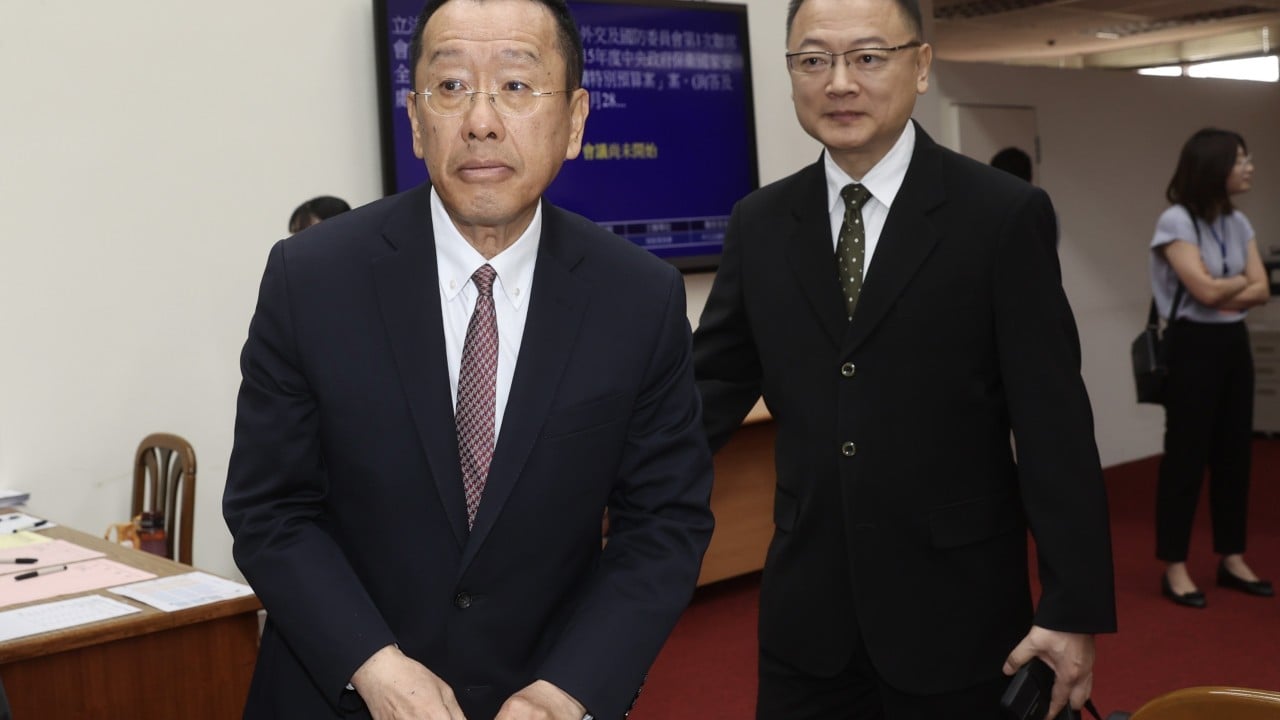
When the acting US Navy Secretary, Hung Cao, told a congressional hearing that Washington is pausing a massive $14 billion weapons package to Taiwan, it should have triggered red alerts across the Taiwan Strait. Cao blamed "Epic Fury"—the ongoing American military operations in Iran—stating that the US military needs to secure its own missile and munition stockpiles before shipping hardware abroad. Recently making waves in this space: Latvia Political Theater and the Myth of the Four Party Savior.
You would expect Taiwan's leadership to be furious or terrified. Instead, they are calm.
Taiwan’s presidential office spokesperson, Karen Kuo, smoothly downplayed the panic. She noted that Taipei has received zero official notification from Washington regarding structural changes to the deal. It is a striking display of public optimism in the face of what looks like a brutal strategic setback. Additional details regarding the matter are covered by USA Today.
Is this public confidence justified, or is Taipei simply putting on a brave face while the ground shifts beneath its feet? The reality behind the paused arms deal reveals a messy mix of Middle Eastern conflict, aggressive political posturing, and a high-stakes poker game between Donald Trump and Xi Jinping.
The Real Reason Behind the Weapons Hold
The immediate justification for the arms freeze is logistics. The US military launched an intense, grinding war against Iran on February 28, which has since devolved into a highly unstable, fragile ceasefire. That conflict devoured an astronomical volume of precision-guided munitions and advanced missiles.
When Senator Mitch McConnell pressed Cao on whether this critical hardware would ever reach the island democracy, Cao deflected. He kicked the responsibility up the chain of command, stating that Secretary of State Marco Rubio and Pentagon chief Pete Hegseth would make the final call.
While the munitions shortage caused by the Iran war is real, the political timing is impossible to ignore. This suspension dropped right after President Trump returned from a high-profile summit with Xi Jinping in Beijing. Trump has openly abandoned the long-standing Washington rule of avoiding consultations with China regarding Taiwan's defense. Instead, he explicitly called the multi-billion-dollar weapons packages a "very good negotiating chip."
For Taiwan, the strategic math has changed overnight. They are no longer just dealing with bureaucratic delays in Washington factories. They are now an asset in a superpower trade and security negotiation.
Why Taipei Refuses to Show Fear
Taipei's public optimism is not a sign of naivety. It is a calculated survival strategy driven by regional geopolitics and legal frameworks.
The Shield of the Taiwan Relations Act
Taiwanese planners know that despite Trump's transactional rhetoric, American law restricts how far any administration can push the island aside. Under the decades-old Taiwan Relations Act, Washington is legally mandated to provide Taipei with the necessary military hardware to maintain a sufficient self-defense capability. While a president can stall timelines or alter the specific mix of hardware, completely severing the supply line would trigger an immediate, explosive legal and political showdown with a deeply hawkish Congress.
Weaponizing the Appearance of Stability
If Taipei panics publicly, Beijing wins. The Chinese Communist Party relies heavily on psychological warfare to convince the Taiwanese public that resistance is futile and that America will inevitably abandon them. By maintaining a cool, unbothered posture, Taiwan denies Beijing a easy propaganda victory. They are sending a direct message to both the local population and regional markets that the fundamental alliance remains intact, regardless of temporary political theater in Washington.
The Stalled $14 Billion Arsenal
To understand why this delay hurts, you have to look at what is actually sitting on the table. While the US approved a record-breaking $11 billion arms transfer in late 2025, this separate $14 billion package contains critical modern upgrades designed to transform Taiwan into an unassailable "porcupine."
The delayed package focuses on asymmetric warfare capabilities designed to break an amphibious invasion. This includes advanced mobile anti-ship missiles, sea mines, precision drone swarms, and critical command-and-control infrastructure.
Crucially, the package is also tied to Taipei’s efforts to rebuild its struggling naval defenses. Taiwanese military planners have been aggressively pushing to secure over a dozen MH-60R Seahawk anti-submarine warfare helicopters. Taiwan's current anti-submarine fleet relies on aging S-70C helicopters. These older platforms have been plagued by maintenance issues and a string of fatal accidents that reduced their operational fleet to just 17 units.
The MH-60R Seahawks, equipped with advanced dipping sonars, MK54 torpedoes, and laser-guided rockets, are vital for hunting Chinese submarines lurking in the deep waters off Taiwan’s eastern coast. Pausing this equipment directly slows down Taiwan's ability to protect its vulnerable sea lines of communication.
How Taiwan is Playing the Next Move
Taipei is not sitting around waiting for Washington to sort out its supply chain issues. They are actively pivoting to protect their sovereignty through practical, domestic initiatives.
If you want to understand how Taiwan plans to survive this diplomatic friction, watch these specific developments over the coming months:
- Aggressive Scaling of Domestic Defense: Expect Taipei to pour emergency capital into the National Chung-Shan Institute of Science and Technology. If American anti-ship and land-attack missiles are delayed, Taiwan will ramp up mass production of its homegrown Hsiung Feng III supersonic missiles and Wan Chien stand-off weapons.
- Calling Trump's Phone Line: President Trump has teased a potential direct phone call with Taiwanese President Lai Ching-te. Taipei has already stated it is fully open to the dialogue. If this call happens, expect Lai to bypass the Pentagon's bureaucracy and pitch Taiwan's defense needs directly to Trump as a win-win economic deal for American defense manufacturing jobs.
- Leveraging Capital for Leverage: Taiwan will likely offer to pay upfront or invest directly in American manufacturing lines to expedite production. By framing their defense spending as a major boost to the US industrial base, they appeal directly to the transaction-heavy style of the current administration.
Relying on a foreign superpower always carries immense risk. The current pause proves that global empires will always prioritize their immediate conflicts over distant alliances. Taiwan understands this reality perfectly. Their calm response isn't blind faith in Washington; it is the quiet confidence of an island that has spent more than seventy years learning exactly how to navigate the crosswinds of global politics.