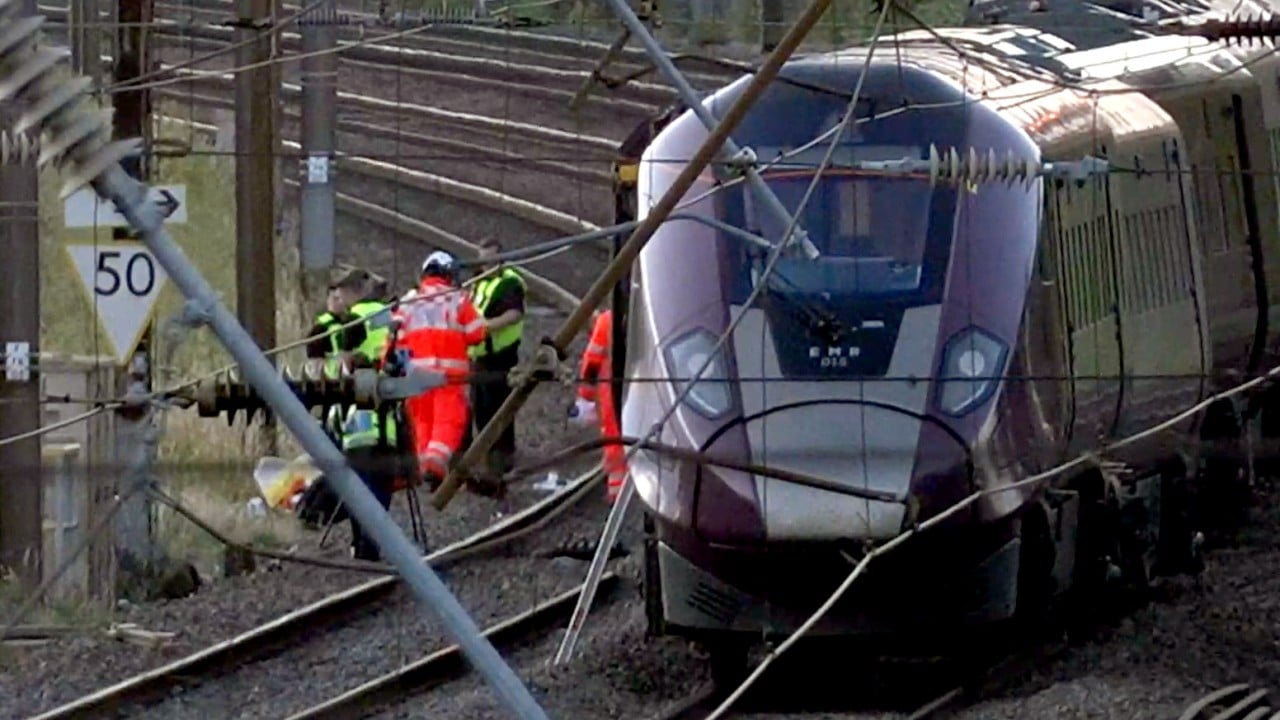
A fatal two-train collision north of London has left one person dead and dozens injured, exposing severe vulnerabilities in the rail network's automated safety infrastructure. The incident occurred when a passenger service slammed into a stationary freight train, a disaster that modern signaling systems are explicitly designed to prevent. While initial reports focus heavily on driver error or immediate mechanical failure, the root cause points to a more troubling reality. British rail infrastructure is buckling under deferred maintenance and fragmented safety oversight.
This disaster is not an isolated piece of bad luck. It is the predictable result of a system operating on the razor's edge of capacity with legacy technology.
The Illusion of Fail Safe Technology
For decades, the public has been assured that modern rail networks rely on fail-safe mechanisms. If a driver misses a signal, automatic braking takes over. If a train stalls, the block behind it locks down. Yet, those systems only work when the underlying data layer remains flawless.
In this instance, the tracking data failed. Investigative indicators suggest a localized blackout of the European Train Control System (ETCS) components or a legacy track circuit failure left the oncoming passenger service blind to the obstruction ahead. When the safety net relies on a patchwork of Victorian-era steel and digital overlays, the joints are bound to split.
The industry refers to these gaps as "dark territories"—segments of the track where real-time positioning loses granularity. Network managers have known about these blind spots for years. They tolerated them because upgrading physical track circuits requires capital expenditure that public-private rail budgets simply cannot support right now.
The Cost of Deferred Maintenance
Safety culture in rail transportation deteriorates slowly, then all at once. Over the last decade, funding structures have favored high-profile high-speed rail projects while starving the commuter veins that feed the capital.
Consider the anatomy of a signaling failure. It rarely starts with a catastrophic explosion. It begins with rainwater leaking through an unmaintained junction box, corroding a copper wire over eighteen months. It continues when a routine inspection crew gets rescheduled due to budget cuts. By the time a signal turns green when it should be red, the disaster has been months in the making.
The Fragmented Oversight Trap
Britain’s rail model splits responsibility between track infrastructure managers and private train operating companies. This divide creates a dangerous game of bureaucratic hot potato.
- The Infrastructure Provider blames the operating company for poorly trained drivers or outdated rolling stock.
- The Train Operator points the finger at poorly maintained tracks and faulty signaling.
- The Regulators issue reports years after the fact, when the public has already moved on.
This friction paralyzes immediate safety overhauls. When a vulnerability is identified, deciding who pays for the upgrade takes longer than engineering the solution.
The Driver Burden
We place an impossible cognitive load on train drivers. Even with automated backups, a driver must interpret a dizzying array of lineside signals, in-cab displays, and radio alerts while moving at high speeds.
When an automated system suffers a micro-glitch—dropping connection for just three seconds—the responsibility drops entirely back onto human shoulders. A train traveling at 90 miles per hour covers 132 feet every single second. A three-second data dropout means nearly 400 feet traveled in total blindness. By the time the human brain registers that the digital display has frozen, the braking distance is already gone.
To blame a driver for failing to stop in these conditions is a cover-up. It protects the executives who signed off on the system's operational tolerances.
The Missing Upgrades
The technology to prevent this exists. Satellite-based tracking and continuous cellular train control can pinpoint a carriage down to the centimeter, independent of trackside infrastructure.
Implementing it across the entire network requires stopping the bleeding elsewhere. It means halting cosmetic station renovations and diverting funds directly into the gray boxes lining the tracks. It means admitting that the current network architecture is fundamentally fragile.
The wreckage north of London is being cleared, and the tracks will reopen within days. Commuters will board the same trains, pass the same signals, and trust the same invisible safety nets. But until the underlying infrastructure mismatch is corrected, every journey remains a calculated gamble against a system running on borrowed time.