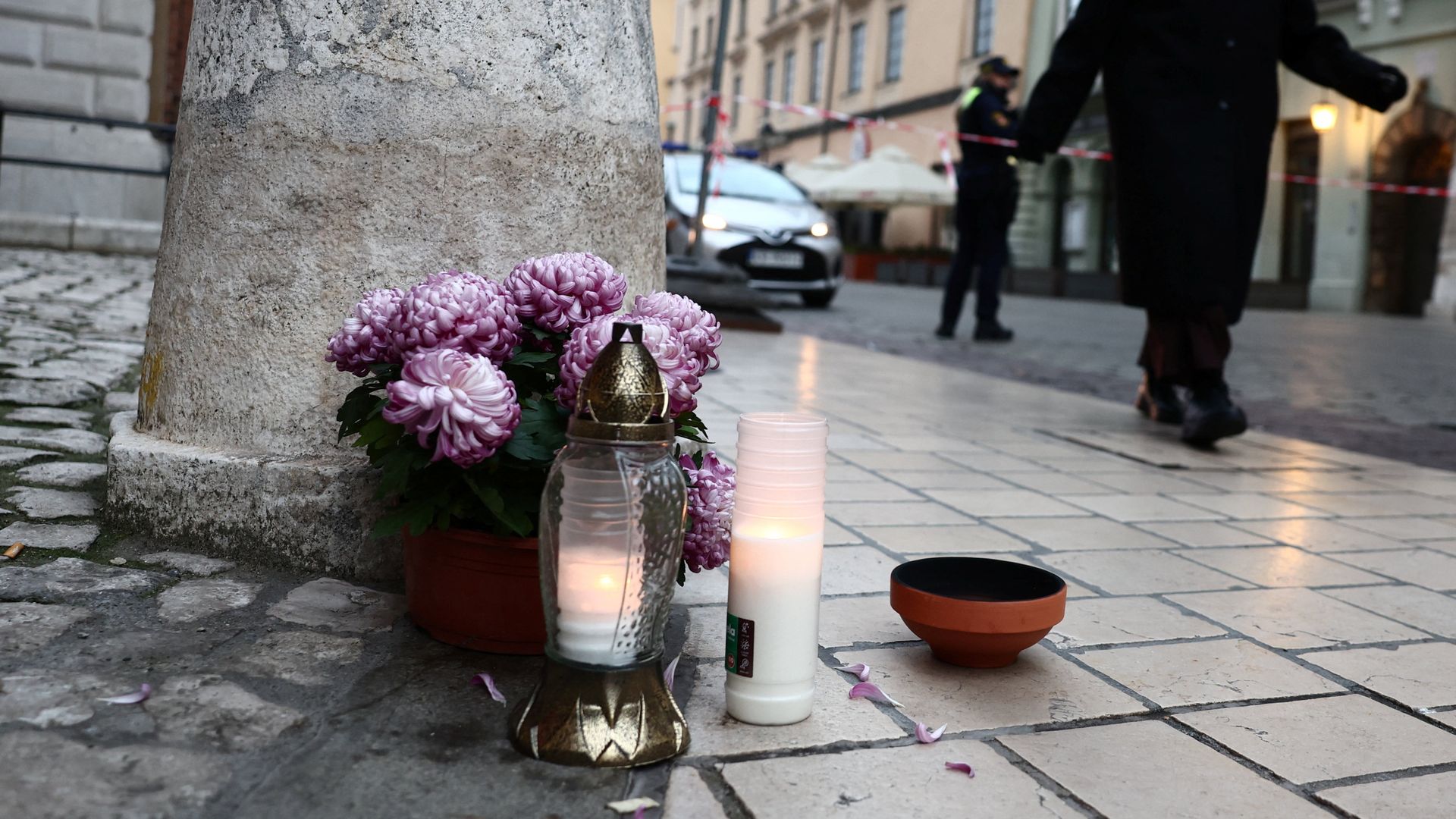
When a shooting suspect dies in a hospital bed following an armed confrontation in Krakow, the immediate public threat ends, yet a far more complicated institutional failure often begins. A death in custody or following police intervention immediately halts a criminal prosecution, strips victims of a courtroom verdict, and forces prosecutors, hospital administrators, and law enforcement oversight bodies into an intense, high-stakes examination of what went wrong before the first shot was ever fired.
In Poland, and specifically within a major urban center like Krakow, fatal shootings remain statistical anomalies compared to Western Europe or North America. Because gun ownership is tightly regulated under the Polish Act on Weapons and Ammunition, any firearm incident that ends with a suspect dying in a Krakow hospital triggers an extraordinary chain of legal and medical protocols. Surface-level news reports usually stop at the confirmation of death. They treat the hospital pronouncement as the final period at the end of a violent sentence. That is a mistake. In investigative terms, the death of a suspect is merely the opening gavel of a silent, behind-the-scenes inquiry into gun proliferation, emergency response times, and the psychological screening mechanisms meant to keep firearms out of unstable hands.
The Legal Vacuum Left Behind
Under the Polish Code of Criminal Procedure, specifically Article 17, the death of an accused person or suspect mandates the immediate discontinuation of criminal proceedings against that individual. The file does not go to a judge. There is no cross-examination, no formal defense, and no public airing of motive in a criminal trial. For families of victims or bystanders caught in the crossfire, this procedural reality feels like a second wound.
Yet the paperwork does not disappear. Instead, the District Prosecutor's Office in Krakow splits the investigation into two distinct tracks. The first track examines the underlying crime itself—how the suspect acquired the weapon, whether accomplices provided logistical support, and what led to the violent confrontation. Even if the primary shooter cannot be tried, anyone who supplied an illegal firearm faces severe penalties under Article 263 of the Polish Penal Code, which carries sentences of up to eight years in prison for unauthorized possession and up to ten years for illegal trafficking.
The second track is far more sensitive. Prosecutors are legally required to open an independent inquiry into the actions of the responding officers and the medical personnel who treated the suspect. When a suspect dies in a hospital after an encounter with law enforcement, investigators must determine whether the use of lethal force complied strictly with the Act on Direct Coercion and Firearms. Every shell casing is mapped. Every radio transmission is timestamped.
Inside the Trauma Bay Protocol
Public perception often simplifies a hospital death into a binary outcome—either the suspect survived or they did not. Inside a major trauma facility in Krakow, such as the University Hospital or the Ludwik Rydygier Memorial Specialized Hospital, the reality is a grueling race against physiological collapse complicated by armed police guards.
When an ambulance brings in a gunshot suspect under police escort, the emergency department shifts into a high-security posture. Medical teams operate under strict triage ethics. They do not know the patient's criminal history, nor are they permitted to let it influence the quality of care. Their sole objective is hemodynamic stabilization.
The Golden Hour and Ballistic Trauma
High-velocity gunshot wounds cause catastrophic internal cavitation, tearing vascular structures far beyond the visible entry point. Trauma surgeons must manage massive hemorrhage, prevent hypothermia, and reverse coagulopathy—the lethal breakdown of the blood's ability to clot. If a suspect arrives with multiple thoracic or abdominal wounds, survival odds drop precipitously with every passing minute on the street prior to ambulance transport.
At the same time, armed officers remain stationed outside the operating theater and intensive care unit. Hospital administrators must balance patient privacy under Polish medical law with the state's duty to prevent an escape or a retaliatory attack. If the suspect succumbs to injuries hours or days after admission, the body immediately becomes state evidence. Hospital staff are barred from releasing the remains to the family until forensic pathologists at the Department of Forensic Medicine at Jagiellonian University Medical College complete a court-ordered autopsy.
How Firearms Enter a Tightly Regulated City
To understand why a shooting occurs in Krakow at all, you have to look past the police tape and examine the underground mechanics of Central European arms smuggling. Poland maintains one of the lowest rates of civilian gun ownership in the European Union, hovering around 2.5 firearms per 100 residents. Obtaining a standard sporting or collector's permit requires months of background checks, psychiatric evaluations, medical exams, and practical testing.
Illegal guns do not come from local sporting clubs. They flow through predictable regional channels.
- Deactivated Weapons Reactivation: Across Slovakia and the Czech Republic, older legislation once allowed the relatively easy purchase of acoustic or deactivated firearms. Criminal workshops in the border regions have spent years drilling out blocked barrels and replacing firing pins, turning legal collectibles back into lethal weapons before smuggling them north into Lesser Poland.
- Warzone Leakage: Proximity to Eastern European conflict zones has put European law enforcement agencies on permanent high alert. While border guards intercept the vast majority of contraband, organized criminal networks continuously test smuggling routes along the eastern frontier, moving small arms and ammunition westward into major transit hubs like Krakow.
- Illicit Darknet Markets: Encrypted messaging platforms and decentralized marketplaces allow buyers with zero traditional underworld connections to purchase converted blank-firing pistols or black-powder revolvers—which remain legal without a permit in Poland if modeled on pre-1885 designs—alongside illegal modern ammunition.
Black-powder revolvers represent a particularly contentious blind spot in Polish law. Because replicas of nineteenth-century percussion firearms do not require a license, an individual with a violent history or acute psychiatric distress can legally purchase a multi-shot revolver over the counter, load it with black powder and lead balls, and inflict fatal damage. Whenever a shooting suspect dies in Krakow, ballistic examiners immediately check whether the weapon was a modern smuggled pistol or an unregulated historical replica.
The Forensic Reconstruction of Motive
Without a living defendant to interrogate, detectives rely entirely on digital and physical forensics to answer the question the public cares about most. Why did this happen?
Investigators execute immediate search warrants on the deceased suspect's residence, vehicles, and electronic devices. Forensic IT specialists extract data from smartphones, cloud backups, and encrypted chat applications. They look for search histories indicating target selection, manifestos, financial distress, or recent confrontations with acquaintances.
Toxicology plays an equally decisive role. During the autopsy at Jagiellonian University, pathologists test blood and vitreous humor samples for synthetic cathinones, amphetamines, alcohol, and psychiatric medications. In numerous European violent incidents over the past decade, post-mortem toxicology has revealed either acute stimulant intoxication or the abrupt cessation of prescribed antipsychotic medication.
Consider a hypothetical scenario to see how this plays out in practice. Suppose a forty-year-old man with no prior criminal record opens fire near a commercial district in Krakow, is shot by responding police, and dies in intensive care twelve hours later. Without a trial, rumors quickly spread on social media blaming terrorism or organized crime. Two weeks later, toxicological screening reveals severe levels of synthetic stimulants alongside an absence of prescribed mood stabilizers, while digital forensics uncover a series of paranoid messages sent to family members days earlier. The public narrative shifts entirely from organized terror to an acute, unaddressed mental health crisis intersecting with weapon access.
The Burden of Proof on Police Use of Force
When a suspect dies following a police shooting, the officers involved face an immediate, grueling administrative and legal ordeal. In Poland, police officers are trained to treat their service weapon as an absolute last resort. Every discharge of a firearm outside a shooting range must be reported in writing immediately, triggering an automatic review by the Internal Affairs Bureau of the Police and the regional prosecutor.
The investigation scrutinizes four strict criteria:
- Imminence of Threat: Did the suspect pose an immediate danger to the life or health of the officer or a third party at the exact millisecond the trigger was pulled?
- Proportionality: Were non-lethal alternatives—such as verbal commands, pepper spray, conducted energy devices, or warning shots—reasonably exhausted or rendered impossible by the speed of the attack?
- Target Selection: Standard Polish police doctrine instructs officers to minimize lethality when feasible, though close-quarters dynamic engagements rarely allow for precision limb shots.
- Post-Shooting Medical Aid: Did officers immediately secure the scene and render first aid, such as applying tourniquets or chest seals, while waiting for emergency medical services?
In recent years, the rollout of body-worn cameras across Polish municipal patrols has transformed these inquiries. Where prosecutors once relied on conflicting eyewitness accounts from terrified bystanders, high-definition audio and video now capture the exact seconds leading up to the gunfire. Yet body cameras have limitations. Arms cross in front of lenses during physical struggles, low-light conditions obscure weapon movements, and microphones clip under the acoustic shock of a 9mm gunshot. Prosecutors must synchronize body-camera footage with municipal CCTV networks and acoustic shot-detection logs to build a frame-by-frame timeline.
Media Coverage and the Premature Closure Trap
Fast-moving digital newsrooms thrive on definitive headlines. When a hospital spokesperson confirms that a shooting suspect has died, editors frequently mark the story as resolved and move resources to the next breaking event. This creates a dangerous information vacuum.
Incomplete reporting fuels conspiracy theories. When newspapers publish the initial flash report of a fatal shooting in Krakow and then fail to follow up months later when the prosecutor's office quietly closes the investigation, readers are left with unresolved anxiety. They remember the sirens and the hospital death, not the subsequent findings regarding weapon origin, toxicology, or police accountability.
Responsible journalism requires staying with the story long after the forensic vans leave the hospital loading bay. The real public interest lies in the systemic audits that follow. Did emergency dispatchers route the ambulance through Krakow's dense urban traffic without delay? Did local social services or psychiatric clinics miss warning signs prior to the incident? Did a border checkpoint fail to flag an illegal firearm shipment?
Accountability Without a Verdict
A courtroom trial provides society with a structured ritual of accountability. A judge weighs evidence, lawyers argue intent, and a verdict assigns moral and legal responsibility. When a suspect dies in a hospital bed, that ritual is permanently denied.
What replaces it must be rigorous institutional transparency. The Krakow prosecutor's office, forensic pathologists, and police oversight boards carry the obligation to publish clear, factual findings once the technical investigations conclude. Families deserve to know how a weapon reached their city. Citizens deserve proof that lethal force was used lawfully and that emergency medical systems functioned without hesitation. Until those answers are placed on the public record, a death in a hospital room is never the end of the story—it is the exact place where public scrutiny has to dig deepest.