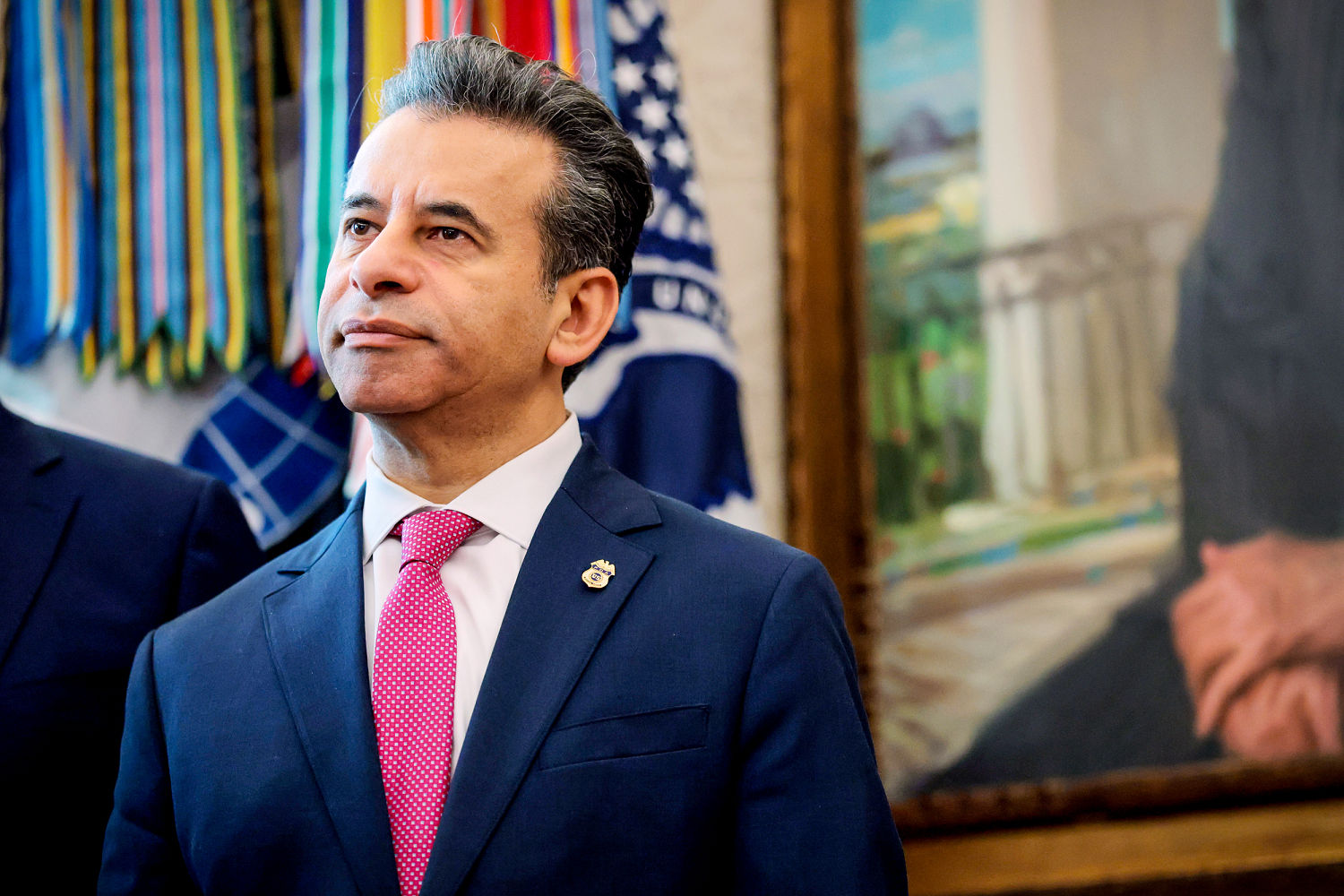
The halls of the Food and Drug Administration are paved with data, but the air is thick with politics. When Dr. Marty Makary walked into that building as the leader of the most powerful regulatory body in the world, he wasn't just another bureaucrat with a title. He was a man who had spent his career holding a mirror up to the medical establishment and asking why it looked so broken. Now, that chapter has closed.
Makary is out.
The departure of a commissioner usually triggers a flurry of dry press releases and sterile LinkedIn updates. But this isn't just a personnel change. It is a moment of friction in the long, grinding history of American public health. To understand why his exit matters, you have to look past the "resignation" headlines and into the operating rooms and research labs where life-and-death decisions are made every single day.
The Outsider in the Inner Circle
Dr. Marty Makary didn't come from the standard pipeline of career politicians. He was a Johns Hopkins transplant surgeon first. Imagine the weight of that responsibility. You are standing over a patient, the scent of antiseptic sharp in the air, knowing that the difference between a successful recovery and a tragedy rests in the precision of your hands and the integrity of the tools you use.
He wrote The Price We Pay. He wrote Accountability. He made a name for himself by calling out "the cartel" of healthcare pricing and the lack of transparency in how we treat the sick. When a person like that is handed the keys to the FDA, the shockwaves are immediate.
The FDA is a behemoth. It oversees everything from the cereal you eat for breakfast to the experimental gene therapies that represent a final hope for the terminally ill. It is a world of massive pharmaceutical interests, entrenched lobbyist groups, and a workforce of thousands who have "always done things this way."
Makary walked into this environment like a surgeon approaching a tumor. He wanted to cut out the waste. He wanted to speed up the approvals for life-saving drugs. He wanted to pull back the curtain on how decisions were made.
But the body of the bureaucracy often rejects the transplant.
The Invisible Stakeholders
Consider a hypothetical patient named Sarah. Sarah has a rare form of neurodegenerative disease. For her, the FDA isn't a government agency; it’s a gatekeeper. If the agency is too slow, Sarah loses time she doesn't have. If the agency is too fast and overlooks a safety signal, Sarah suffers from a side effect that could have been prevented.
This is the impossible tightrope a commissioner walks.
Makary’s tenure was defined by an attempt to shift the weight toward the patient’s perspective. He pushed for "common sense" in a world of red tape. He questioned why certain medications were stuck in a decade-long limbo while patients were dying for lack of options.
However, his approach wasn't without its critics. In the high-stakes world of federal regulation, one man’s "efficiency" is another man’s "deregulation disaster." The tension between the need for speed and the necessity of rigorous, peer-reviewed safety standards is a permanent feature of the landscape. Makary’s exit signals a temporary truce in that war, or perhaps a tactical retreat.
The friction often boiled down to a simple, uncomfortable question: Who does the FDA serve? Is it the scientific community? Is it the massive corporations that fund the clinical trials? Or is it the people like Sarah, waiting in doctor’s offices with a folder full of bad news?
A Departure Without a Script
The news of his exit came with the usual professional polish, but the timing feels like a jagged edge. When a leader who promised radical transparency leaves the room, the silence that follows is loud.
We are living in an era of deep skepticism. Trust in public health institutions has been battered by years of conflicting advice, political posturing, and the creeping influence of "Big Pharma." Makary was, for many, a sign that the system was willing to listen to its harshest critics. He was the "disruptor" in a field that usually treats disruption as a pathogen.
His departure leaves a void that isn't just about a name on a door. It’s about the momentum of reform.
Think about the process of getting a new drug to market. It costs billions. It takes years. It is a marathon run through a maze. Makary wanted to simplify the maze. He talked about "the medicine of the future"—one based on data, not just tradition. He championed the idea that we should be looking at the root causes of chronic illness rather than just managing the symptoms with a never-ending cycle of prescriptions.
When that kind of voice is silenced or chooses to leave, the maze often grows more complex again. The walls get higher. The gatekeepers get more cautious.
The Weight of the Status Quo
There is a specific kind of exhaustion that comes with trying to change a federal agency. It is a slow-motion battle. You don't win with a single speech; you win—or lose—through thousands of tiny meetings, memos, and policy adjustments.
The reports suggest that the exit was part of a broader shift in the administration's direction, a recalibration of priorities. But for the people watching from the outside, it feels like a return to the mean. The status quo is a powerful force. It has a gravity all its own.
The FDA isn't just a building in Maryland. It is a reflection of our collective values. Do we value absolute safety above all else, even if it means slowing down progress? Or do we value innovation and the "right to try," even if it carries inherent risks?
Makary leaned toward the latter. He was a champion of the idea that patients should have more agency in their own care. He pushed for the "democratization" of health data. He wanted people to see the prices. He wanted them to see the results.
Now, the direction of the agency is once again an open question.
The Patient in the Waiting Room
Behind every headline about "FDA Commissioner Marty Makary," there is a real-world consequence.
Maybe it’s a small startup developing a way to detect cancer through a simple blood test, now wondering if the regulatory pathway just became more opaque.
Maybe it’s a family doctor in the Midwest, frustrated by the lack of clear guidance on a new treatment, wishing for the transparency Makary promised.
Maybe it’s just the average person at the pharmacy, looking at the price of their insulin and wondering why nothing ever seems to change.
The tragedy of modern healthcare isn't a lack of brilliance. We have the best scientists, the best surgeons, and the most advanced technology in human history. The tragedy is the friction between that brilliance and the systems meant to deliver it.
Makary’s exit is a reminder that the system is remarkably resilient to change. Even when the person at the top wants to fix it, the machine keeps humming along, following the tracks laid down decades ago.
He wasn't a perfect figure—no one in that position ever is. Every decision a commissioner makes involves a trade-off. Every "yes" to a drug carries a risk, and every "no" carries a cost. But he was a figure who forced the conversation into the light. He made people talk about the things that are usually discussed in hushed tones in the back of committee rooms.
The Residual Echo
What happens next isn't just about who takes his place. It’s about whether the questions he raised will continue to be asked.
Will the agency continue to push for transparency in clinical trials?
Will there be a renewed focus on the metabolic health of the nation, rather than just the pharmacological management of it?
Or will the curtains be drawn once again?
The story of Marty Makary at the FDA isn't a story of failure. It’s a story of the cost of entry. It costs a lot to try and change the way a country thinks about its health. It costs time, reputation, and, eventually, your seat at the table.
As he returns to the world of clinical practice and public advocacy, he leaves behind a legacy of agitation. He was a grain of sand in the oyster of the federal government. The hope, for those who believed in his mission, was that he would produce a pearl of lasting reform. Instead, we are left with the irritation.
But sometimes, irritation is exactly what a stagnant system needs. It’s the only thing that reminds the body that something isn't right.
The surgeon has stepped away from the table. The patient—the American public—is still waiting for the results of the operation. We are left looking at the monitors, watching the steady, rhythmic pulse of a bureaucracy that has outlasted another reformer, wondering if the next hand to take the scalpel will be quite as bold.
The lights in the commissioner’s office have dimmed, but the questions he left on the desk are still glowing in the dark.