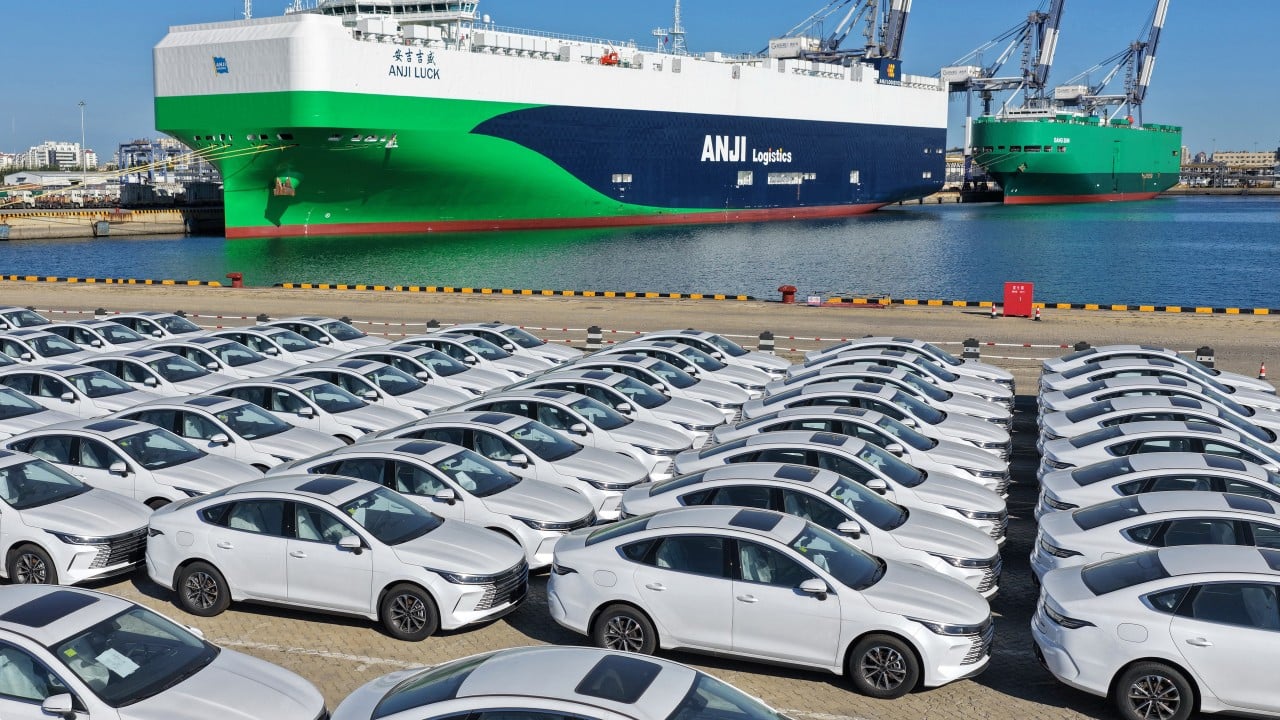
Read the standard coverage of Chinese hybrid car exports to the EU and you will see the exact same panic button pushed again. Exports jump more than 200 percent. A tariff or import cap looms. Headlines scream that Beijing found a loophole to flood European showrooms.
Lazy consensus. Lazy math.
A 200 percent surge sounds apocalyptic until you look at the baseline. When a category starts from near-zero volumes because Chinese automakers spent five years betting heavily on pure battery electric vehicles for Europe, tripling or quadrupling a small base does not equal a sudden takeover of the European passenger car market. More importantly, treating that jump as an accidental evasion tactic misses how trade policy, manufacturing economics, and powertrain engineering actually collide.
I have watched legacy automakers and trade analysts misread supply-chain shifts for years. I have seen companies blow millions on defensive lobby campaigns aimed at yesterday's bottleneck while ignoring the margin and compliance math driving the next one. When Brussels slapped countervailing duties on battery electric vehicles made in China, it did not stop Chinese automakers from selling cars in Europe. It changed which drivetrains made financial sense to ship across the water.
The Wrong Question Everyone Is Asking
Most commentary asks whether Chinese hybrid car exports to the EU can be stopped before they wreck European dealers. That is the wrong question. The real question is why European trade rules made hybrids—a transition technology many policymakers claimed to be phasing out—suddenly look like an attractive commercial play for exporters.
To understand the mechanics, start with the definitions. A conventional hybrid electric vehicle (HEV) uses an internal combustion engine paired with a small battery and electric motor to recapture braking energy, without plugging into the grid. A plug-in hybrid electric vehicle (PHEV) carries a larger battery pack that can be charged externally, allowing short electric-only trips alongside a petrol or diesel engine for longer runs.
When tariffs target pure battery electric vehicles (BEVs) built in China, the unit economics shift immediately. BEV tariffs hit vehicles whose core value proposition relies on competitive pricing and battery supply chains. Hybrids sit in a different regulatory and cost bucket. Even when duties or quotas are discussed or applied across broader electrified categories, automakers weigh customs exposure against bill-of-materials costs, shipping capacity, and local European assembly options.
Imagine a scenario where a Chinese automaker has excess production capacity for both plug-in hybrids and battery electric vehicles, alongside a European dealer network already set up to move volume. If tariff pressure eats into pure-EV margins while hybrid models face lighter immediate friction or stronger buyer demand in markets where charging infrastructure still lags, shifting export mix is not a clever trick. It is basic profit-and-loss management.
Why "Loophole" Thinking Misses European Buyer Reality
Every time a trade flow spikes, analysts love to cry foul about circumvention. Sometimes trade rules do get tested around the edges. Often, though, the buyer does the heavy lifting.
European drivers never switched to pure EVs at the uniform speed Brussels projected. High electricity prices in several countries, patchy public fast-charging in multi-family housing areas, and long-distance highway habits kept range anxiety alive. Plug-in hybrids and conventional hybrids bridge that gap without forcing a household to gamble its daily routine on a public charger.
Chinese automakers noticed that hesitation faster than some of their legacy rivals admitted. While traditional European carmakers wrestled with software delays, high labor costs, and volatile EV demand curves, Chinese OEMs spent years refining dual-motor hybrid architectures, thermal management, and integrated power electronics at scale.
A surge in exports is not a conspiracy by itself; it is a mirror held up to consumer friction and tariff design.
What People Also Ask About This Surge
Are Chinese hybrids taking over European showrooms overnight?
No. Rapid percentage growth from a modest starting point looks dramatic on a chart, yet total market share still faces real-world hurdles: brand trust, dealer service footprints, residual value uncertainty, and regulatory scrutiny. European buyers do not hand over tens of thousands of euros on spec sheets alone.
Will an EU import cap kill Chinese hybrid exports?
Caps and quotas rarely erase a cost advantage cleanly; they distort it. When volume is capped, exporters push higher-margin trims, build local assembly or CKD/SKD partnerships inside Europe, or route capital into regional plants to jump the fence. Protectionism changes the route more often than it kills the destination.
Are Chinese hybrids actually better than European hybrids?
On paper, many offer aggressive tech specs, strong electric-only range on plug-in variants, and sharp pricing. In practice, long-term reliability in harsh climates, over-the-air software polish, and parts availability over a seven-to-ten-year ownership cycle remain live tests rather than settled facts.
The Heavy Hitters and the Real Tradeoff
Look at the broader research coming out of institutions like the Rhodium Group, the Kiel Institute for the World Economy, and Transport & Environment. Across years of trade and industrial policy analysis, their findings point to the same uncomfortable reality: tariffs on finished vehicles from China often push Chinese manufacturers to invest in local European manufacturing or joint ventures rather than simply retreating.
That brings us to the tradeoff of taking a contrarian view on this surge. Downplaying the headline percentage does not mean ignoring the competitive pressure. If Chinese brands use hybrids to build brand familiarity, service volume, and fleet presence across Europe while localizing production later, dismissing a 200 percent jump as "just a small base" is a mistake of its own.
The real danger for European automakers is not a sudden wave of cheap hybrids alone. It is competing against rivals whose engineering iterations move faster and whose supply chains were built for vertical integration from day one.
What Actually Works Instead of Panic
If you run strategy, supply chain, or investment analysis around autos and trade, stop reacting to every monthly export headline and start tracking three concrete signals:
- Track customs classification and localization announcements, not just monthly export percentages. Watch where factories, battery packs, and assembly lines are being announced inside Europe.
- Watch residual values and fleet adoption. Retail buyers hesitate, but leasing companies and corporate fleets expose true total-cost-of-ownership math fast.
- Audit European powertrain lineups for real-world value. If legacy brands price hybrids high while cutting physical controls or lagging on infotainment, export volume from abroad will keep finding an open door.
Brussels wrote rules to protect its auto industry from a pure-EV squeeze and handed hybrids a spotlight in the process.