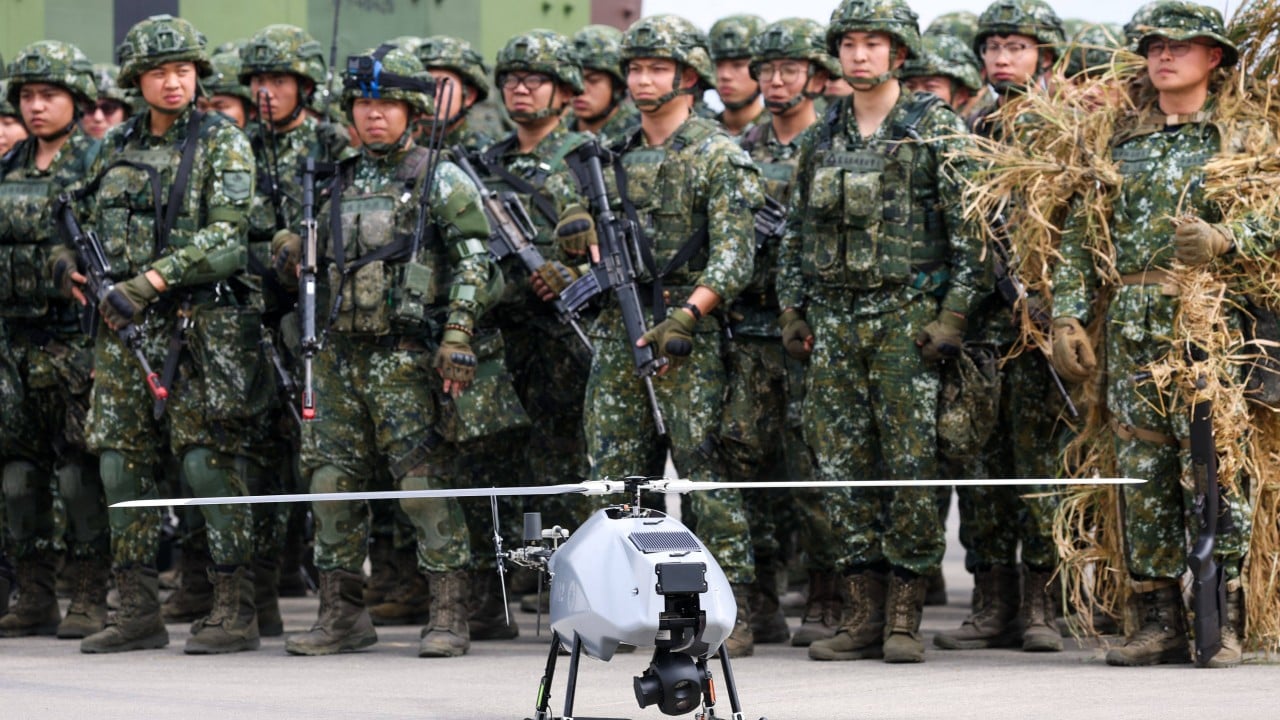
The arrest of two Taiwanese executives over the integration of mainland Chinese components into military-grade drones exposes a fragile reality. Modern defense supply chains are porous, complex, and deeply reliant on the very industrial ecosystems they are designed to counter.
When prosecutors moved against the executives, it was framed as a localized breach of national security. But looking closer reveals a systemic failure of verification. Defense manufacturing has chased efficiency for decades. The result is a hyper-globalized network where tracking the true provenance of a microchip, a sensor, or a lithium-ion battery management system is nearly impossible.
The Illusion of Autonomy
Governments mandate domestic sourcing, but the fine print tells a different story. True end-to-end sovereignty in electronics manufacturing is a myth.
Consider the modern tactical drone. It requires high-density printed circuit boards, rare earth magnets, power management integrated circuits, and encrypted radio frequency transceivers. Even if the final assembly happens in a secure facility in Taipei, Austin, or Warsaw, the upstream dependencies stretch straight back to factories regulated by Beijing.
When companies face severe cost pressures and tight delivery timelines, shortcuts happen. Sometimes those shortcuts involve substituting a certified western component with an unverified equivalent that performs identically on paper. The economic incentive to cut corners collides violently with geopolitical risk.
How the Breach Happened
The mechanics of the recent arrests point to a well-worn playbook of subcontracting obfuscation.
A primary defense contractor wins a bid to supply unmanned aerial vehicles. To meet aggressive margin targets, intermediate suppliers quietly sub-tier their manufacturing processes. They buy sub-assemblies from commercial vendors who source raw silicon and passive components from the most cost-effective global markets. Documentation is altered, certificates of origin are laundered through shell companies in third-party jurisdictions, and the hardware slips past inspection gates.
Intelligence agencies call this grey-market infiltration. Industry veterans call it Tuesday.
The danger is not just economic espionage. It is the persistent threat of hardware trojans and remote telemetry backdoors embedded deep within firmware and silicon gates. A drone operating in a contested theater relies entirely on the integrity of its navigation and communication loops. If a component can report location data back to an unverified external server, the entire tactical advantage evaporates.
The Cost of Decoupling
Fixing this requires more than criminal indictments. Arresting executives treats the symptom while leaving the disease untouched.
True reform demands a painful financial reckoning. Defense budgets must absorb the astronomical cost of rebuilding localized silicon foundries, rare earth processing plants, and component verification laboratories. Procurement officers can no longer prioritize the lowest bidder without inviting strategic compromise.
Until governments are willing to pay a massive premium for verified, zero-trust hardware, supply chains will remain vulnerable. The arrest in Taiwan is not an isolated incident. It is a warning siren for every nation attempting to build modern military power on a foundation built by its greatest geopolitical rival.


