The air turned the color of bruised slate.
At precisely eleven-the-hour, the temperature dropped. Not by degrees, but by seasons. A sudden, sharp chill bit at the flannel sleeves of fishermen on the docks of Newlyn and the windcheaters of children huddled on the granite cliffs of Land's End. For a brief, suspended span of minutes, the familiar machinery of the English day stuttered.
You do not truly understand an eclipse until you stand beneath one in a place like Cornwall. The Atlantic stretches out before you, grey and indifferent, until the shadow of the moon races across the water at thousands of miles an hour. It is a physical presence. It arrives not as a metaphor, but as a weight.
Before the sky darkened, the roads choked. Caravans, camper vans, and city cars squeezed down narrow rural lanes that were built for sheep and cart wheels, turning the southwest tip of Britain into a parking lot of anticipation. Locals watched with a mix of amusement and quiet dread. They had seen the summer crowds before, but this was different. This was a pilgrimage to nothingness. People had traveled hundreds of miles to watch the light go away.
Consider the silence that followed.
When the moon finally bit clean through the solar disc and locked into place, the gulls stopped crying. That is the detail that stays with you. Thousands of seabirds, confused by the sudden, eerie twilight, dropped silent and circled back toward the cliffs. Streetlights flickered on across Penzance, confused automated bulbs blinking awake in the middle of a late-morning gloom.
And then, the people.
Cornwall is a patchwork of tight-knit communities, places where families have worked the tin mines, fished the mackerel, and farmed the sparse soil for generations. They are pragmatic people, weathered by salt and rain. Yet, on that morning, as the corona flared out in pearly wisps around the black void of the moon, strangers grabbed each other's shoulders.
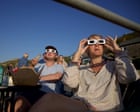
An elderly woman named Martha, who had lived her entire eighty-two years in a stone cottage overlooking Mount's Bay, later described it as the world holding its breath. She had stood in her garden with a makeshift cardboard filter pressed to her eyes, watching the sun shrink to a glowing crescent. When the totality hit, she lowered the cardboard. She did not look at the sky. She looked at the faces around her.
Every face was tilted upward. Every expression was identical: a slack-jawed, childlike wonder that wiped away decades of cynicism, politics, and exhaustion. For two minutes and twelve seconds, the modern world—with its buzzing notifications, relentless news cycles, and economic anxieties—simply vanished.
There were no arguments about housing prices. No complaints about the tourist traffic clogging the A30. There was only the collective inhalation of a peninsula staring into the cosmic dark.
Science tells us precisely what happened. The Moon passed directly between the Earth and the Sun, its shadow casting an umbra across the globe at a supersonic clip. Alignment. Geometry. Gravity. We can predict these moments down to the fraction of a second centuries in advance. We know the math.
Yet math cannot account for the goosebumps.
When the diamond ring burst forth—that blinding, single point of sunlight signaling the return of day—a ragged cheer rippled along the coast. It started in St Ives, rolled over the hills of Zennor, and echoed out toward the Lizard. People clapped. Some laughed out loud for no reason. Others wiped away quiet tears.
The warmth returned slowly at first, then rushed back all at once, as if a furnace door had been thrown open. The gulls shook their feathers and resumed their raucous arguments over scraps. The streetlights flickered off, embarrassed. The traffic began its slow, grinding crawl back up the peninsula, a serpent of brake lights snaking toward the horizon.
The eclipse was over. The sky was just the sky again, a pale, stubborn British blue behind stubborn clouds.
Yet the room in the air had changed. The people packing up their lawn chairs and folding telescopes were different than they had been two hours prior. They had shared a secret with the universe. They had stood together in the shadow of the moon and remembered, if only for a heartbeat, how small we are, and how miraculous it is to be here to watch the dark roll by.


