The air in July carries a specific weight. It smells of dry dust, baked asphalt, and the sharp, sudden ozone of an afternoon thunderstorm that refuses to break. For most of Europe, July is a season of locked doors against the heat, of vacation plans hastily pinned to refrigerators, of long twilight hours spent arguing about where to eat dinner.
Across a border just a few hours east, July wore a different face entirely.
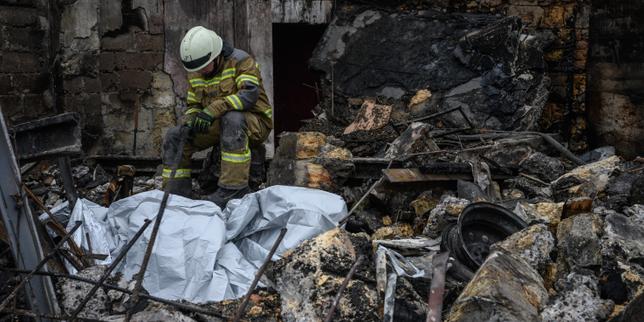
Statistics are cold things. They arrive on sterile screens in neat, gray rows, stripped of pulse and breath. When the United Nations released its ledger for July, the data pointed to a grim milestone. It was the deadliest month for civilians in Ukraine since the spring of 2022. More than two years of war had worn grooves into the earth, deep trenches of endurance, yet the middle of summer proved more lethal than the freezing winters that preceded it.
Numbers do not bleed. They do not cough. They do not leave behind half-finished cups of tea on a kitchen table where the windowpane has turned to jagged teeth.
To understand what those numbers mean, you have to shrink the lens.
Consider a hypothetical neighborhood in a city like Dnipro or Kharkiv. Let us call her Olha. Olha is seventy-one years old, and she possesses that specific, stubborn resilience found only in people who have survived the collapse of empires and the shifting of borders. Her hands are permanently stained with the purple juice of late-season cherries. She remembers when the street outside her apartment block was lined with linden trees that dropped heavy, fragrant blossoms every June.
By this July, the linden trees were gone, snapped like toothpicks during an autumn barrage a year prior. In their place stood a crater patched over with gravel.
Olha still wakes up at five in the morning. Not because she wants to, but because the rhythm of the war demands it. The early hours are quieter. The drones—those buzzing, mechanical hornets—tend to lose their hunting patience as the sun climbs too high and the air thickens, or perhaps they hunt harder in the dark. It is impossible to predict the logic of a machine steered by someone sitting miles away in a damp basement, watching a pixelated screen.
When the air raid siren wails, it does not sound like a movie. It sounds like a dying metallic scream, echoing off concrete facades that have already lost their plaster.
We talk about escalation as if it were a weather pattern, a natural front moving across a map with blue and red arrows. We say things like intensified aerial campaigns and munitions density. These are linguistic shock absorbers. They cushion our minds so we do not have to picture the kinetic reality of a glide bomb striking a residential courtyard.
A glide bomb is not a surgical instrument. It is a tonnage of steel and explosive dropped from miles above the clouds, meant to flatten structures before ground troops ever arrive. When one of these weapons lands in a populated district, the physics of survival change instantly. Concrete turns to flour. Glass becomes shrapnel traveling at the speed of a bullet.
July saw an unprecedented wave of these wide-area impacts hitting dense urban cores, places where children play football on cracked concrete and old women sell radishes from plastic buckets.
Why now? Why did the summer heat bring a sharper harvest?
The machinery of war evolves through a dark Darwinism. Tactics are refined, production lines in distant factories catch up with demand, and new delivery methods bypass defensive shields. When air defenses are spread thin—protecting a power station here, a military depot there—the gaps between the nets widen. And into those gaps fall the apartments, the markets, the maternity wards.
Think of an old dam holding back a rising river. For a long time, the cracks are small, manageable, plugged with sandbags and sweat. People learn to live with the dampness on their cellar walls. They plant tomatoes in the mud near the seepage. They even begin to believe that the wall will hold because it has held until now.
Then comes the day when the water pressure doubles, tripled by upstream rains nobody bothered to measure.
That is what happened beneath the July sky. The accumulation of constant, grinding pressure—thousands of small strikes compounding over months—finally breached the threshold of civilian endurance. The UN monitors, sitting behind laptops in Geneva and Kyiv, count the bodies one by one, verifying identification papers, matching hospital records with morgue logs. By the time they publish their monthly bulletin, the families have already buried their dead in hastily dug municipal plots, marked with temporary wooden crosses that will weather and fade before the first snow.
There is a terrible intimacy to survival in a war zone. It reduces life to the distance between a bed and a basement.
Olha knows the acoustics of her building better than she knows her own grandchildren's phone numbers. A low whistle followed by a sharp crack means artillery—somewhat distant, manageable, the daily background noise of existence. A heavy, rolling thud that rattles the teacups in the sideboard means a missile or a guided bomb has landed within a kilometer.
When that heavy thud hits, the air inside the apartment goes flat. The pressure drops for a fraction of a second, popping your ears just before the sound wave arrives to rattle your teeth.
You do not think about geopolitics in that moment. You do not analyze trade sanctions or diplomatic communiqués. You think about the three steps to the hallway. You think about whether the water in the plastic jerrycan is enough for another day if the pipes fail again. You think about the neighbor's cat that yowls every time the sirens start.
We live in a world saturated with information, yet insulated from experience. We scroll past images of collapsed roofs and charred car frames between bites of breakfast toast. We swipe away from grief because grief is heavy, and our screens are designed to keep us moving, keep us light, keep us entertained.
The danger of this distance is not just a lack of empathy. It is a quiet erosion of reality. When a month like July becomes just another line in a news feed, we accept the unacceptable. We begin to view mass casualties as a permanent feature of the physical world, like monsoons in the tropics or blizzards in the arctic.
We forget that every single digit in that UN report was a person who woke up with plans for the afternoon. A man who promised to fix his daughter’s bicycle tire. A woman who was saving up for a new yellow coat. A teenager who was arguing about music online five minutes before the roof came down.
The summer eventually cools. The dust settles into the mortar of ruined walls. The linden trees, stubborn things, will try to push green shoots through the rubble next spring, because nature has no ideology other than persistence.
Yet the ledger remains. July stands as a monument to what happens when violence becomes institutionalized, normalized, and integrated into the daily forecast. It reminds us that peace is not simply the absence of a formal declaration of war; it is the fragile, labor-intensive preservation of ordinary human life against the dark gravity of destruction.
The sun went down tonight over the eastern plains in a smear of bruised purple and gold. Somewhere down there, in the dark between the sirens, a window rattled, a floorboard creaked, and a human being held their breath, waiting to see if the morning would still belong to them.