The prevailing public narrative treats the summer coronavirus wave as an inconvenient scheduling anomaly, a stubborn ghost haunting an era we thought we had safely archived. Warm weather used to mean a reprieve. Air conditioning units hummed, windows stayed wide, and transmission curves flattened into quiet summer valleys.
That baseline has evaporated.
Across emergency departments and outpatient clinics, a predictable rhythm of seasonal respiratory illness has been replaced by relentless year-round volatility. The virus does not care about the solstice. It evolves, adapts, and exploits human fatigue. When a new summer COVID surge hits, it arrives with a shifting constellation of physical complaints that routinely catch patients and primary care physicians off guard.
Understanding this shift requires looking past broad public health summaries and examining the granular reality of how the pathogen interacts with an increasingly vaccinated, previously infected human population. The symptoms have shifted because our immune systems have changed. The virus had to adapt or die out. It chose adaptation, optimizing for immune evasion over sheer destructive force, altering the clinical presentation in ways that frequently mimic allergies, routine summer colds, or acute gastrointestinal bugs.
The Symptom Shift Explained
Years ago, the diagnosis was straightforward. You lost your sense of taste or smell, developed a dry, persistent cough, and ran a high fever. That triad served as an efficient triage tool for millions.
Today, relying on those classic markers is a fast track to misdiagnosis.
The modern summer COVID surge presents primarily through upper respiratory inflammation, severe fatigue, and localized pain that targets the throat with surprising aggression. Patients frequently describe a sensation akin to swallowing broken glass, an intensity of pharyngitis that matches traditional strep throat rather than what we historically expected from a coronavirus.
This transformation stems directly from viral evolution. Recent subvariants within the Omicron lineage have developed a tighter binding affinity for upper respiratory tissue while modifying how they interact with systemic inflammatory pathways.
- Pharyngitis and throat pain: Often the initial and most debilitating complaint, appearing days before any systemic signs of illness.
- Persistent fatigue: A profound, bone-deep exhaustion that lingers long after acute respiratory viral panels return to negative.
- Gastrointestinal manifestations: Nausea, loss of appetite, and loose stools occasionally precede respiratory symptoms entirely, leading many to assume they contracted a foodborne illness.
- Sinus congestion and pressure: Facial pain and severe nasal blockage that closely mirror acute bacterial sinusitis or severe seasonal allergies.
Fever, once considered the unavoidable baseline of a coronavirus infection, is now absent in a significant percentage of adult cases. This absence breeds a dangerous false sense of security. An individual experiencing a scratchy throat, brain fog, and mild exhaustion assumes their air conditioning is kicking up allergens or that they simply slept poorly. They walk into crowded offices, board flights, and gather at outdoor barbecues while shedding high viral loads into the ambient air.
Why Warm Weather Transmission Defies Logic
Public health analysts spent the early years of the pandemic debating seasonality. Virologists pointed to humidity, ultraviolet radiation, and indoor congregation patterns as the primary drivers of viral ebbs and flows.
Those models failed because they underestimated human behavioral adaptation.
When ambient temperatures climb past comfortable thresholds, modern societies retreat indoors. We seal our buildings, crank up centralized HVAC systems, and huddle in climate-controlled environments that recycle air with varying degrees of filtration efficiency. In effect, a July afternoon in a sealed office building mimics the atmospheric dynamics of a January morning.
Furthermore, holiday travel and summer gatherings create dense pockets of population mixing. A variant circulating in one region lands at a packed music festival hundreds of miles away, finding a naive or waning immune system within hours.
Immune waning acts as the primary engine behind these warm-weather waves. Protection acquired from a winter booster or a spring infection steadily degrades over a four-to-six-month window. By mid-summer, population-level neutralizing antibodies sit at a nadir.
The virus exploits this trough with clinical precision. It does not need to invent a radical new biological mechanism to cause a wave; it simply relies on the passage of time and our collective desire to move past the threat.
The Diagnostics Dilemma
Catching the virus early has never been more difficult, and the mechanics of modern testing contribute directly to the confusion.
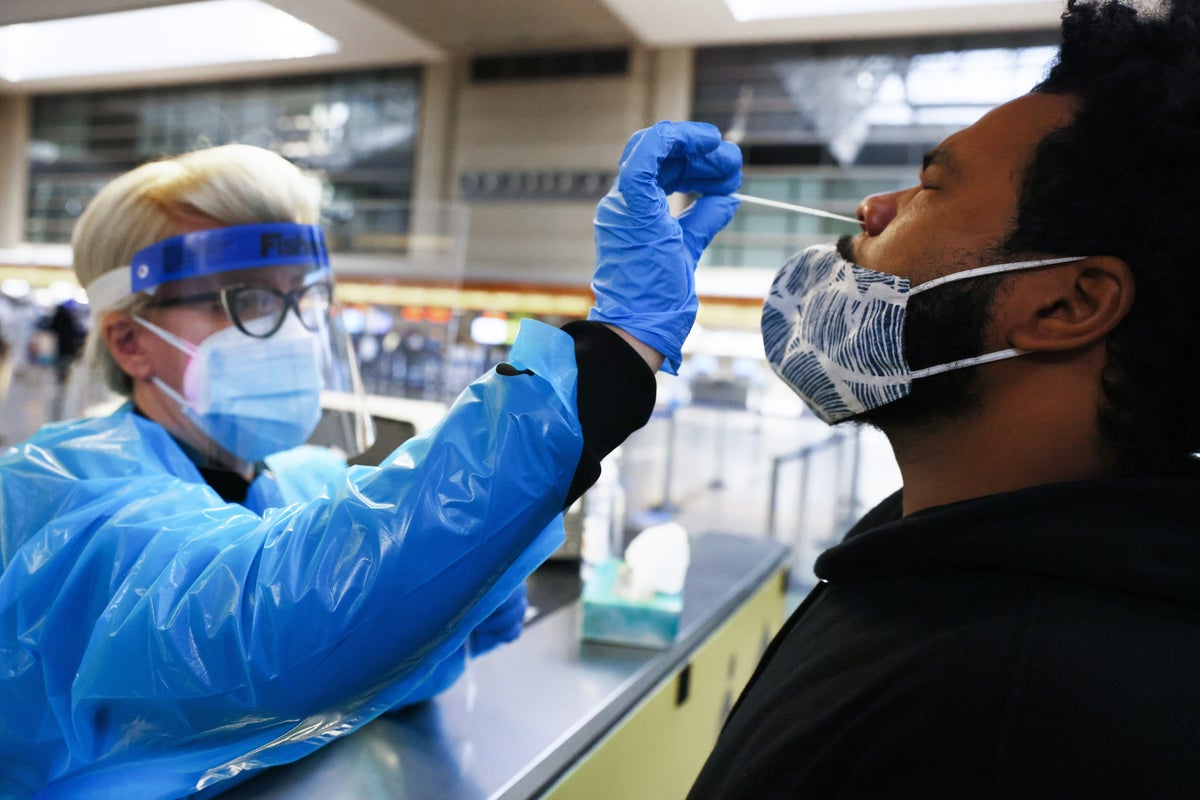
At-home rapid antigen tests, which served as reliable household fixtures, were designed and calibrated against earlier viral iterations. While they still detect active infection, their sensitivity during the first forty-eight hours of symptom onset has declined against newer subvariants.
Many patients experience intense throat pain and fatigue for two full days, test negative on a rapid nasal swab, and breathe a sigh of relief. By day four, when the viral load migrates further down into the nasal passages or when they finally take a combined throat-and-nose sample, the test turns positive. By then, the transmission window is already well advanced.
Relying on a single negative rapid test taken at the very first sign of a scratchy throat is an invitation to spread the virus. Swabbing the back of the throat alongside the nasal passages often catches infections days earlier, though standard protocols officially lag behind clinical reality.
This diagnostic lag creates friction in clinical settings. Physicians must navigate patients presenting with vague viral syndromes who demand answers but resist isolation protocols because their initial home tests cleared them. The result is a quiet, continuous low-grade spread that avoids the dramatic spikes of previous years but exacts a steady toll on workforce productivity and vulnerable populations.
Navigating the Terrain
Mitigating the impact of a summer wave requires abandoning rigid seasonal assumptions. The virus does not operate on a school calendar or a holiday schedule.
Individuals who wish to protect themselves and high-risk family members must recalibrate how they interpret minor physical symptoms. A sudden onset of unusual fatigue or a sharp throat ache during July requires immediate skepticism, regardless of the sunshine outside.
Antiviral therapies remain remarkably effective at preventing severe disease, hospitalization, and long-term complications, but their utility depends entirely on rapid administration within the first five days of symptom onset. Waiting for a definitive confirmation from a sluggish diagnostic test or hoping symptoms will resolve on their own squanders the narrow therapeutic window these medications require.
We are living in an era of persistent viral adaptation. Pretending the threat dissolves with the arrival of warm weather is an administrative comfort, not a biological reality. The data tells a clear story of shifting symptoms, evolving immune evasion, and year-round persistence. Acknowledging that reality is the only way to navigate it without stumbling.