Sudan's war just hit its third anniversary, and the silence from the rest of the world is deafening. While cameras are fixed on other global flashpoints, a country of 50 million people is being dismantled piece by piece. On April 15, 2026, UN Secretary-General António Guterres finally said what everyone in the humanitarian circuit has known for years: this isn't just a domestic "squabble." It's a fueled, funded, and outsourced massacre.
If you’re looking for a simple explanation for why the fighting won't stop, look at the planes landing in the desert, not just the soldiers on the ground. Guterres is demanding an end to the "arms flow" because the two warring factions—the Sudanese Armed Forces (SAF) and the Rapid Support Forces (RSF)—aren't making their own drones or high-tech munitions. They’re buying them with gold and gum arabic, or getting them from "friends" abroad who see Sudan as a strategic playground.
Why the guns keep firing after three years
You'd think a country would run out of bullets after 1,000 days of constant combat. It hasn't happened in Sudan because the borders are porous and the interests are global. The UAE has been repeatedly accused of backing the RSF, while Iran and Russia have been linked to the SAF. These aren't just rumors; they're the logistical backbone of the conflict.
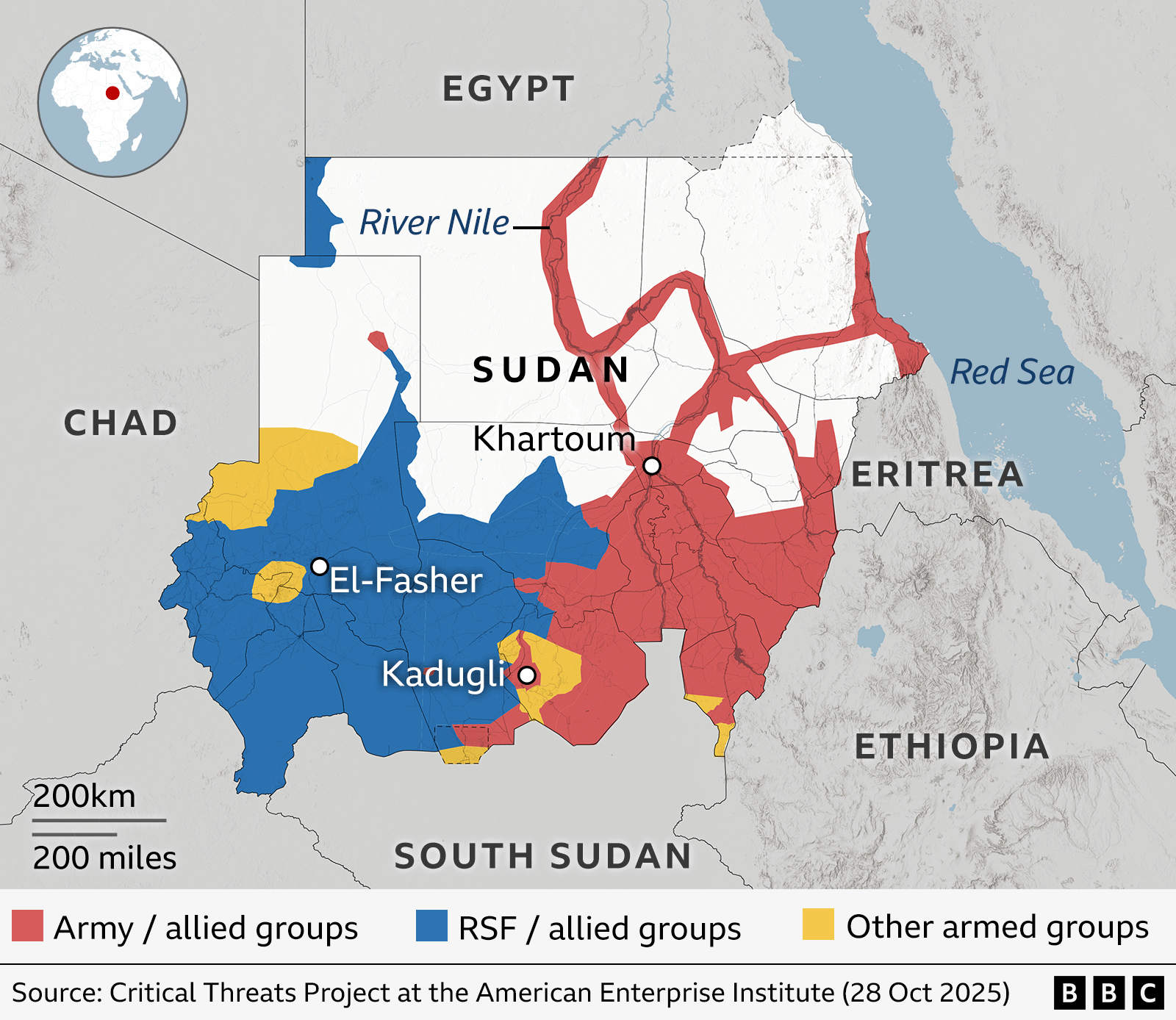
The RSF has managed to hold onto territory because they have access to sophisticated drone tech and a steady supply of fuel and cash. Meanwhile, the SAF uses its air superiority to level entire neighborhoods. Guterres's plea to stop the arms flow is a direct shot at the external actors who are essentially treating Sudan like an "atrocities laboratory," as some UN officials have put it.
- The Gold Connection: About 70% of Sudan’s exports are gold. Much of it is smuggled out through informal networks to pay for the very weapons killing the people who mine it.
- The Gum Arabic Monopoly: If you've had a soda or used cosmetics today, you've likely used a product from Sudan. The war hasn't stopped the trade; it's just shifted the profits into the pockets of warlords.
A humanitarian disaster by the numbers
Let's be blunt: the stats coming out of Sudan are horrific. We're talking about the world’s largest displacement crisis. Over 11 million people have fled their homes. That’s like the entire population of Greece suddenly becoming homeless and wandering into the desert.
Food isn't just scarce; it's being used as a weapon. In places like El Fasher and Kadugli, people are literally eating leaves and animal feed to stay alive. We’ve seen reports of "Global Acute Malnutrition" rates hitting 53%. In the medical world, anything over 15% is an emergency. At 53%, it’s a death sentence for a generation of children.
The health system has basically evaporated. About 70% of hospitals are non-functional. Imagine trying to treat a cholera outbreak or a shrapnel wound when you don't even have clean bandages, let alone electricity or surgeons.
The failure of the international community
Guterres mentioned that "funding alone" won't fix this. He's right. While a recent donor conference in Berlin pulled in about $1.5 billion, it’s a band-aid on a gash that needs surgery. The "inclusive, civilian-led political process" that the UN keeps talking about feels like a fantasy when the people actually holding the guns have no reason to put them down.
The global community has a habit of "monitoring" situations until there's nothing left to monitor. Sanctions have been sluggish and often miss the mark. The economic networks that sustain these generals—the banks, the front companies, and the middle-men in neighboring countries—are still largely untouched.
What actually needs to happen
If we're serious about ending the Sudan war, the strategy has to shift from "pity and pennies" to "pressure and power."
- Enforce the Embargo: The UN arms embargo on Darfur is a joke. It needs to be expanded to the whole country and actually enforced with satellite monitoring and real consequences for the countries sending the crates.
- Follow the Money: Targeting the gold trade is the only way to starve the war machine. If the warlords can't pay their mercenaries, the "loyalty" of their troops will vanish overnight.
- Direct Aid Access: Stop waiting for "permission" from the warring parties to feed starving people. Cross-border aid from Chad and South Sudan must be ramped up regardless of whether the generals in Khartoum or the RSF commanders like it.
Sudan doesn't need more "concern." It needs the world to stop selling the bullets that are tearing it apart. Pay attention to the flight paths and the gold shipments, because that’s where the war actually lives.