Long-term economic planning in specialized jurisdictions requires navigating severe structural constraints, particularly when shifting from a service-dominated entrepot model toward an advanced industrial and innovation-driven economy. Hong Kong’s inaugural economic blueprint attempts this transition by introducing a quantitative framework spanning twenty-two binding and aspirational indicators. Deconstructing this strategy reveals the operational mechanisms, capital allocation models, and institutional bottlenecks that will determine whether the territory can successfully double its domestic expenditure on research and development relative to gross domestic product.
The Capital Allocation Mechanics
The central pillar of the policy agenda relies on expanding domestic research and development expenditure from its baseline of approximately 1.63 percent to a target of 3 percent following 2030. Achieving this shift requires more than public sector expenditure; it necessitates a structural change in how private enterprises allocate capital toward intangible assets.
Historically, corporate investment in the territory favored asset-heavy real estate and short-cycle trade logistics. To alter this incentive structure, the blueprint deploys targeted fiscal instruments, including a ten billion Hong Kong dollar Innovation and Technology Industry-Oriented Fund. This fund acts as patient capital, designed to crowd in venture capital and private equity by absorbing early-stage execution risk in specialized sectors such as artificial intelligence, robotics, and life sciences.
The underlying economic challenge involves the cost of capital for high-tech manufacturing and foundational research. Because research and development outlays depreciate rapidly compared to traditional physical infrastructure, corporate balance sheets require institutional safeguards. The introduction of tax incentives, such as half-rate profit tax provisions for eligible research activities, alters the corporate tax friction coefficient, making long-term technological experimentation financially viable for enterprises operating within the region.
Spatial Reengineering and the Northern Metropolis Vector
Economic agglomeration depends heavily on physical geography. For decades, the primary urban core concentrated economic activity in financial services around Victoria Harbour, creating a high-cost environment prohibitive to advanced manufacturing and wet-lab research facilities.
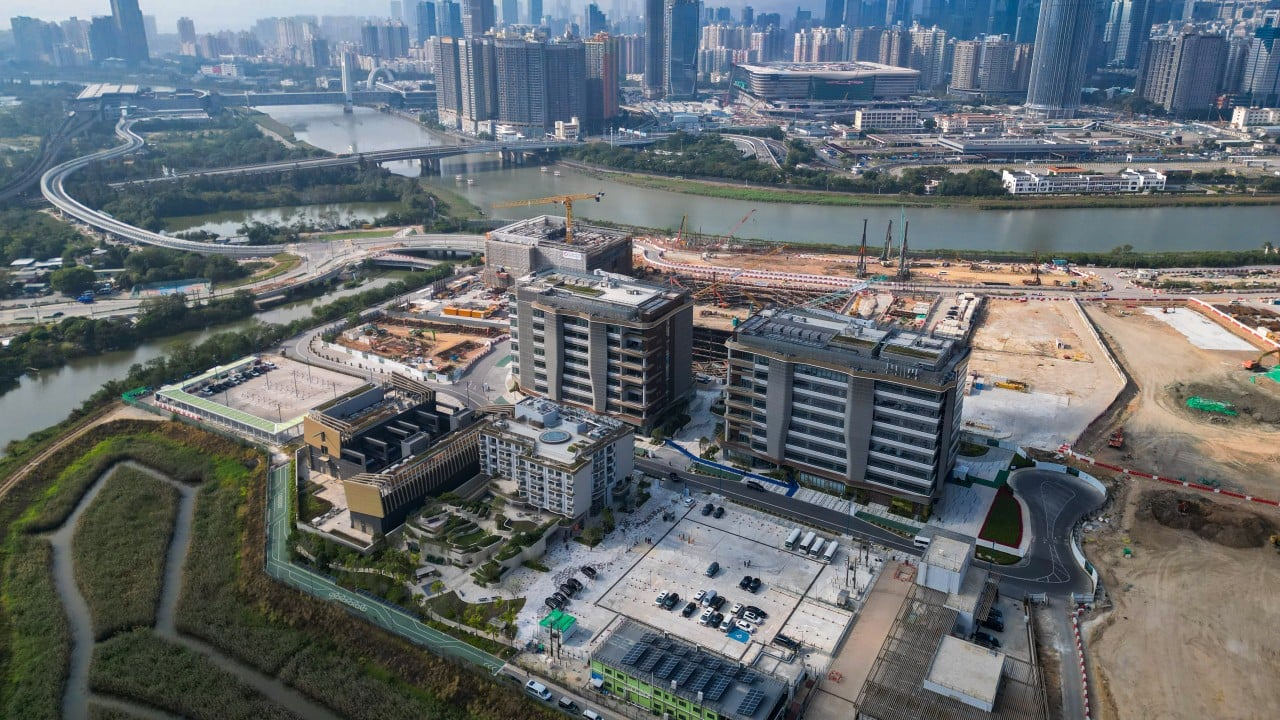
The strategy addresses this spatial constraint through the development of the Northern Metropolis. This initiative reallocates land use across more than thirty thousand hectares, establishing a north-central-south spatial layout anchored by specialized technology hubs.
| Zone Function | Primary Focus | Integration Vector |
|---|---|---|
| San Tin Technopole | Artificial intelligence, microelectronics, advanced manufacturing | Direct cross-border synergy with Shenzhen innovation clusters |
| Hung Shui Kiu | Applied post-secondary education, smart manufacturing | Regional talent cultivation and vocational technical alignment |
| Ta Kwu Ling | Emerging industries and traditional industrial upgrades | Supply chain localization and modern logistics support |
By placing specialized university towns within these zones and increasing funded research postgraduate places, the framework attempts to solve the region's historical disconnect between academic output and commercial productization. The proximity to Shenzhen's hardware manufacturing ecosystem allows firms to bridge the gap between prototype design and volume production—a capability previously absent within the territory's borders.
The Manufacturing and Value-Added Transformation
A key quantitative indicator within the plan is the target to lift the value added of manufacturing and new industries from a baseline of 3.8 percent to 5.5 percent after 2030. This metric addresses the vulnerability of an economy overly reliant on financial intermediation and trade velocity.
The mechanism for this transition is designated as "new industrialization," which emphasizes smart, green, and high-end production processes rather than low-margin assembly. Initiatives targeting microelectronics—led by the Microelectronics Research and Development Institute—and the commercialization of original grant patents aim to secure intellectual property rights within the jurisdiction. By lowering patent examination bottlenecks and expanding short-term patent frameworks, the government intends to capture higher margins along the technology supply chain.
However, this transition faces an operational bottleneck: talent acquisition and retention. The strategy attempts to counteract demographic pressures through aggressive talent attraction frameworks and the establishment of an international legal and vocational training posture. The efficacy of these programs depends entirely on the net migration of engineering and scientific personnel relative to regional competitor hubs like Singapore.
Dual-Engine Growth and Financial Infrastructure Integration
While industrial policy forms the physical core of the plan, the financial sector functions as the liquidity engine. The blueprint reinforces the city's position as the world's largest offshore Renminbi business hub, expanding product supply and liquidity pools to support cross-border capital deployment.
Simultaneously, the integration of physical trade routes with digital and sustainable transitions—such as developing regional sustainable aviation fuel supply chains in coordination with Guangdong—creates captive markets for advanced industrial outputs. By anchoring gold trading ecosystems and enhancing commodity storage capacities, the financial architecture diversifies revenue streams away from traditional equity and real estate cycles.
Strategic Execution Playbook
- Monitor Capital Deployment Velocity: Track the actual disbursement rate of the ten billion Hong Kong dollar technology fund against private venture capital co-investments to measure crowding-in efficiency.
- Audit Real Estate Absorption in San Tin: Evaluate the commercial occupancy rates and lease conversion speeds within the Northern Metropolis technopoles to gauge enterprise migration from legacy districts.
- Track Patent Commercialization Metrics: Measure the ratio of original grant patents filed in life sciences and artificial intelligence against commercial licensing agreements executed within the first thirty-six months.
- Calibrate Talent Retention Ratios: Measure net inflows of specialized engineering and R&D personnel against the quantitative targets established for elite talent programs and university town expansions.