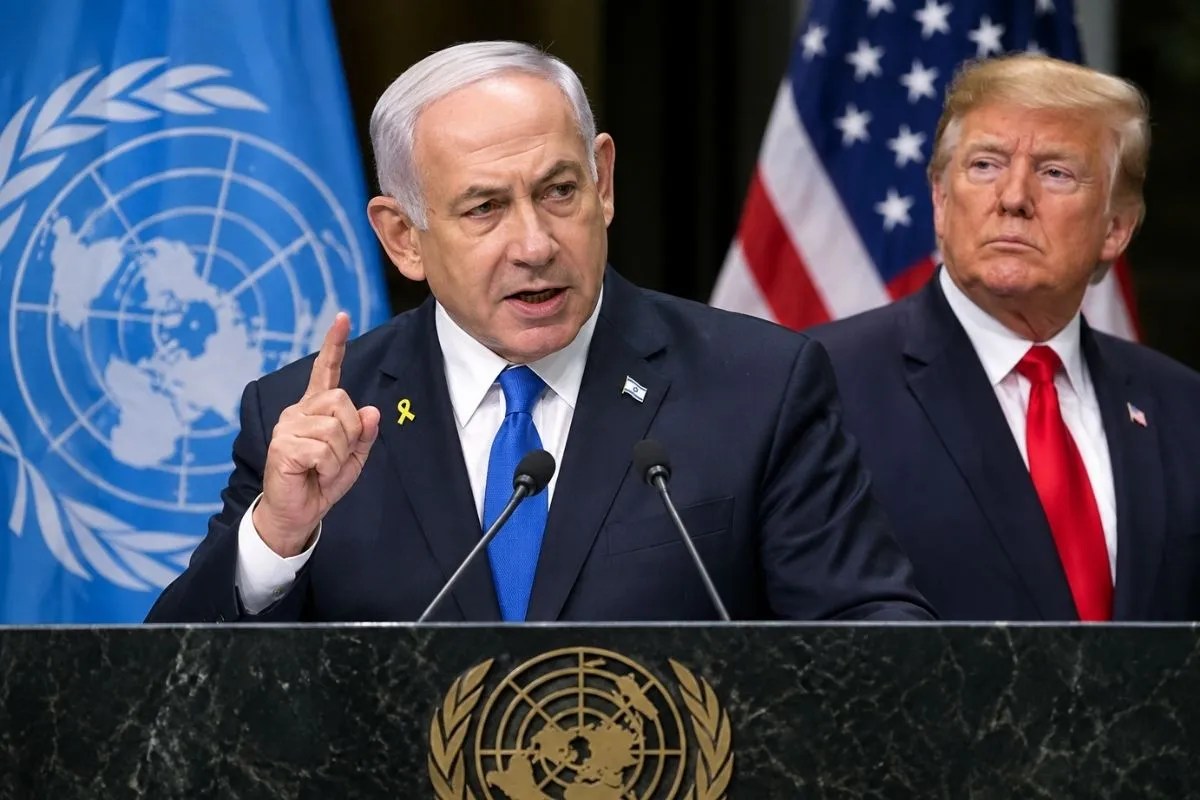
Geopolitical equilibrium between major state actors relies less on rhetorical alignment and more on the institutionalization of risk mitigation channels. When diplomatic summits occur between Washington and Beijing, the primary underlying objective is the establishment of predictable boundaries to prevent systemic friction from escalating into uncontrolled economic or security shocks. Analyzing high-level bilateral engagements requires looking past public signaling to examine the structural variables that constrain or compel cooperation.
The Asymmetric Incentives of Strategic De-escalation
State actors enter high-level negotiations when the marginal cost of open friction exceeds the domestic political cost of compromise. For export-dependent economies and capital-intensive global enterprises, operational uncertainty acts as an immediate tax on long-term planning.
The primary driver of bilateral stability is risk containment. Neither state benefits from an unmanaged deterioration of commercial channels, maritime communication lines, or currency valuation mechanisms. Consequently, diplomatic engagement functions as a signaling mechanism designed to reassure internal and external markets that worst-case scenarios remain bounded by mutual disincentive.
- Commercial Exposure: Integrated supply chains create a mutual hostage situation where unilateral disruptions produce immediate inflationary and contractionary pressures domestically.
- Security Red Lines: High-level channels establish explicit parameters around territorial and operational flashpoints, reducing the probability of tactical miscalculation.
- Domestic Narrative Control: Both administrations utilize diplomatic engagement to signal strength and control to internal constituencies while preserving operational flexibility.
The Mechanics of Friction Management
Diplomatic frameworks designed to foster stability rely on institutionalized mechanisms rather than transient goodwill. Without permanent working groups, technical dialogues, and bilateral communication protocols, bilateral relations default to reactionary volatility driven by domestic political cycles.
Effective friction management requires separating strategic competition from operational interdependence. While technological competition and security postures remain adversarial, economic and environmental communication channels require continuous maintenance to prevent systemic contagion.
+-------------------------------------------------------------+
               Bilateral Stability Architecture
+-------------------------------------------------------------+
| 1. Strategic Containment    -> Bounded Security Competition |
| 2. Operational Interdependence -> Maintained Commercial Flow |
| 3. Institutional Channels   -> Crisis Communication Protos  |
+-------------------------------------------------------------+
Economic Interdependence as a Stabilizing Variable
Trade flows and capital allocation exert a gravitational pull on political rhetoric. When capital markets price in structural hostility, investment horizons shrink, capital expenditure declines, and asset prices reflect elevated political risk premiums.
Economic policymakers operate under a different set of incentives compared to national security apparatuses. While security planners optimize for worst-case threat scenarios, economic planners optimize for liquidity, market access, and cost minimization. High-level summits serve as the political clearinghouse where these competing institutional priorities are balanced.
The durability of any diplomatic arrangement depends on the alignment of domestic interest groups. If domestic industrial sectors benefit from normalized commercial relations, they act as a stabilizing lobby against unilateral escalation. Conversely, if national security priorities completely displace commercial considerations, economic decoupling accelerates, rendering diplomatic summits largely symbolic.
Assessing the Limits of Managed Competitiveness
Managed stability is not an alliance; it is an armistice designed to prevent friction from turning destructive. The structural contradictions between two superpowers with divergent governance models and competing regional objectives cannot be resolved through diplomatic communiques.
Instead, structured engagement aims to institutionalize guardrails. These guardrails operate on three distinct tiers:
- Tactical De-escalation: Immediate resolution or shelving of minor commercial disputes to prevent retaliatory spirals.
- Strategic Signaling: Clear articulation of national red lines regarding sovereign claims, technological dominance, and financial infrastructure.
- Institutional Continuity: Preservation of mid-level bureaucratic communication channels that function even when high-level political relations deteriorate.
Strategic Outlook and Operational Trajectory
Long-term projections indicate that bilateral relations will remain defined by structural competition coupled with tactical pragmatism. Neither actor possesses the incentive to pursue total decoupling without incurring catastrophic systemic costs, nor do they possess the ideological alignment required for genuine partnership.
The operational reality for multinational enterprises, institutional investors, and strategic planners is an environment of managed volatility. Risk models must account for a permanent baseline of regulatory friction punctuated by periodic diplomatic stabilization efforts. Strategic planning must therefore decouple operational resilience from geopolitical forecasts, assuming that structural competition is a permanent condition rather than a temporary phase.