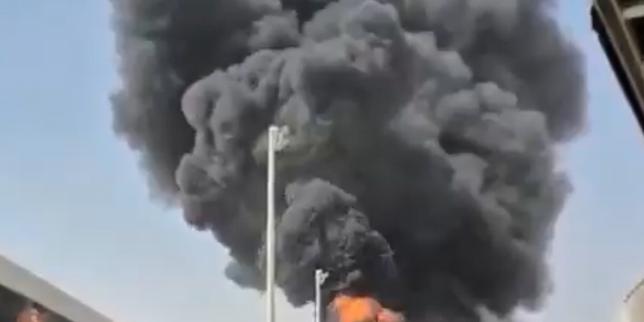
Geopolitical volatility exposes structural weaknesses in critical civil aviation and transport networks, transforming regional geopolitical friction points into high-consequence operational hazards for international travelers and logistics operators. When an attack disrupts a primary hub like the Riyadh airport, the cascading effects extend far beyond immediate physical damage, exposing vulnerabilities in passenger manifest tracking, diplomatic crisis response protocols, and corporate duty-of-care frameworks. Analyzing such events requires moving past surface-level news reporting to dissect the operational mechanics of transport security failures, risk mitigation gaps, and the cost function of crisis management in high-threat environments.
The Architecture of Transport Hub Vulnerabilities
Civilian airports operating within volatile regions function as high-value, highly concentrated nodes. Their vulnerability stems from the inherent tension between maintaining high-throughput commercial accessibility and implementing fortress-grade perimeter defense.
The security architecture of a modern international airport relies on concentric rings of defense:
- Outer perimeter surveillance and intelligence-led interdiction.
- Access-controlled transport corridors and vehicular checkpoints.
- Terminal-level screening and passenger segregation.
- Airside security and aircraft parking protection.
When an asymmetric threat—such as a drone or missile strike—bypasses outer defenses, the failure rarely points to a single point of weakness. Instead, it exposes systemic latency in early warning integration and air defense prioritization. Commercial terminals are engineered for rapid passenger evacuation and processing, not ballistic shock resistance. Consequently, an incident generates structural breaches that immediately endanger thousands of non-combatants, including foreign nationals whose extraction relies on fractured consular mechanisms.
The Mechanics of International Consular and Corporate Crisis Response
When a foreign national, such as a French citizen, is injured in a foreign infrastructure attack, the incident triggers a multi-layered institutional response framework. This response operates under severe information asymmetry during the initial hours following the event.
The response mechanism relies on three distinct operational tiers:
- Local Emergency Triage: Immediate medical stabilization provided by host-nation emergency services, governed by local medical infrastructure capacity and bilateral security protocols.
- Consular Intervention: Diplomatic missions activate emergency response cells to verify identities, liaise with local hospitals, issue emergency travel documents, and coordinate with the host government's security apparatus.
- Corporate Duty of Care: For business travelers, employers must activate travel risk management (TRM) providers to handle medical evacuation insurance, secure local legal representation, and manage family communications.
The friction in this system lies in communication delays and bureaucratic silos. Host nations managing security crises prioritize operational security and state narrative control over immediate casualty transparency. This creates an intelligence void for foreign ministries, delaying accurate consular notification and complicating repatriation logistics.
Quantifying the Cost Function of Regional Aviation Risk
Risk assessment models for international travel typically multiply the probability of a threat event by its potential impact. In the context of Middle Eastern aviation hubs, the statistical probability of a direct infrastructure strike remains low, but the tail-risk severity is catastrophic.
$$\text{Expected Risk} = \text{Probability of Asymmetric Attack} \times \text{Severity of Operational Disruption}$$
Standard corporate travel policies often misprice this risk by treating regional stability as a binary state rather than a continuous spectrum of localized threats. Organizations frequently rely on lagging indicators, such as official travel advisories, rather than real-time threat intelligence feeds that account for localized air defense engagements and supply chain disruptions.
To optimize travel risk frameworks, organizations must shift from reactive crisis management to proactive exposure mapping. This involves:
- Auditing flight paths and layover hubs against real-time conflict telemetry.
- Establishing mandatory check-in protocols for personnel transiting high-risk airspace or ground transport corridors.
- Contracting private security and medical extraction providers with guaranteed response time SLAs in secondary and tertiary markets.
Organizations and travelers operating within high-tension corridors must abandon the assumption that civil aviation infrastructure operates outside the blast radius of regional conflicts. Mitigating these risks requires continuous systemic stress-testing, automated real-time intelligence integration, and an explicit acknowledgment that consular rescue cannot replace rigorous corporate preparation.