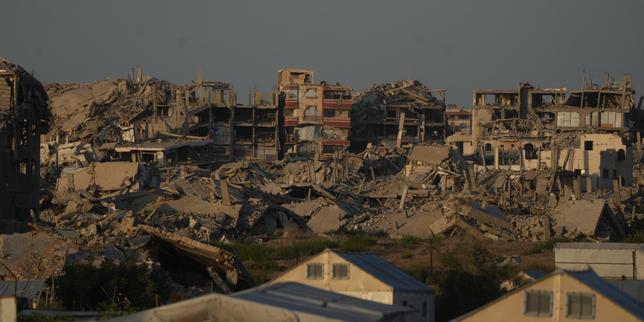
The operational environment in conflict zones rarely shifts through decisive strategic engagements; instead, it evolves through persistent, low-amplitude attrition. When civilian infrastructure absorbs continuous kinetic pressure, the cumulative effect cannot be understood merely through individual casualty reports. It requires an analytical framework that accounts for resource scarcity, population density thresholds, and the systemic breakdown of local civil defense mechanisms. Analyzing reports of localized strikes and civilian casualties in urban theaters reveals a predictable degradation curve of municipal endurance.
Urban combat environments operate under severe informational constraints. External observers frequently rely on localized civil defense teams and first-response units to document kinetic impacts. However, these reporting mechanisms are themselves subject to operational stress. To model the true cost of ongoing strikes, analysts must separate tactical reporting from systemic impact. The persistent baseline of daily casualties represents more than a static metric; it functions as an indicator of systemic fatigue within emergency response networks.
Every localized engagement within a densely populated urban corridor triggers a cascading failure across multiple logistical and social vectors. Understanding this dynamic requires examining three core systemic pressures that govern urban conflict survival: the displacement threshold, infrastructure dependency, and civil response capacity.
The displacement threshold defines the point at which civilian population movement transitions from a tactical maneuver to a humanitarian bottleneck. In high-density settings, structural damage to residential sectors forces lateral migration into progressively narrowing safe zones. Because logistical pathways are restricted by debris and security checkpoints, the velocity of displacement drops significantly. This creates localized overcrowding, which exponentially increases vulnerability to subsequent kinetic events.
Infrastructure dependency acts as the primary multiplier of civilian harm. Modern urban centers rely on centralized grids for water, power, sanitation, and medical care. When kinetic strikes target or disrupt these nodes, the secondary and tertiary effects dwarf the immediate blast impact. A strike that results in nominal casualties can trigger a critical failure in nearby medical facilities due to power interruptions or supply chain severances. The analytical mistake is evaluating the event solely by the immediate mortality count rather than the systemic shock delivered to adjacent support networks.
Civil response capacity represents the final buffer between tactical engagement and total humanitarian collapse. Local civil defense units operate with finite reserves of heavy extraction equipment, fuel, and medical consumables. Each structural collapse demands resource allocations that deplete future response capabilities. As these reserves approach zero, the efficiency of rescue operations declines linearly, leading to higher mortality rates from identical kinetic inputs over time.
The relationship between strike frequency and municipal collapse is non-linear. Initially, redundancy within local networks absorbs shocks. Infrastructure repairs, makeshift medical triage, and decentralized relief efforts mitigate the damage. However, as cumulative damage passes a critical inflection point, the system enters a phase of accelerated degradation. At this stage, minor kinetic events produce disproportionately severe humanitarian outcomes because no structural buffers remain.
Strategic actors within protracted urban conflicts calibrate their operations around these exact thresholds. Understanding the metrics of municipal decay provides clarity on why tactical pauses or localized interventions fail to alter the broader humanitarian trajectory. Without restoring primary infrastructure and unhindered access for heavy relief logistics, any reduction in kinetic frequency merely pauses the degradation curve rather than reversing it. Future analysis must abandon isolated casualty tabulation in favor of longitudinal tracking of infrastructural and institutional resilience.