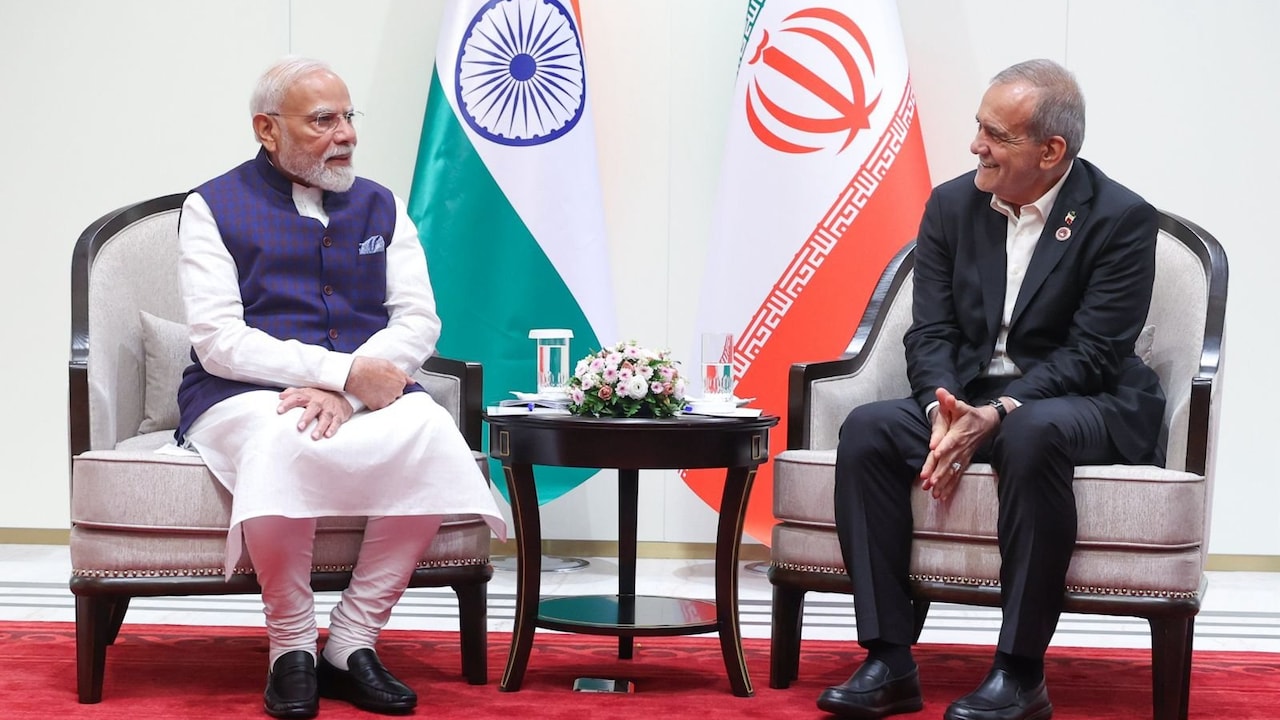
Geopolitical alignment is rarely driven by ideological harmony; it is a mechanical response to unipolar structural pressure. When a single state maintains exorbitant privilege through control over global liquidity, technology choke points, and security architecture, peripheral powers face a binary optimization problem: accept systemic subordination or construct friction mechanisms to redistribute transaction costs. The convergence of Beijing, Moscow, and New Delhi at multilateral summits represents an institutionalized effort to build parallel financial plumbing and diplomatic buffer zones, designed not to immediately overthrow the existing order, but to arbitrage American leverage.
Understanding this dynamic requires abandoning diplomatic communiques and analyzing the underlying incentives of each actor. The Eurasian core is bound by a shared vulnerability to secondary sanctions, maritime trade chokepoints controlled by Western navies, and the weaponization of the SWIFT messaging network. By examining the structural vectors of this alignment, we can isolate the exact friction points being introduced into global trade and security networks.
The Asymmetry of Sanction Evasion and Financial Plumbing
The primary mechanism driving non-Western heads of state toward alternative institutional frameworks is the weaponization of financial infrastructure. When the United States and its allies froze approximately 300 billion dollars of Russian central bank assets following the invasion of Ukraine, it served as a definitive empirical demonstration to every other capital that sovereign reserves held in Western jurisdictions are conditional assets subject to political expropriation.
This single event altered the cost-benefit matrix of dollar dominance. Central banks outside the G7 periphery immediately recognized a systemic risk factor: exposure to the dollar clearinghouse exposes domestic stability to extraterritorial US legal jurisdiction.
To mitigate this systemic risk, the participating states are accelerating three distinct financial workarounds:
- Bilateral Currency Swaps: Bypassing the dollar as an intermediary currency by settling trade in renminbi, rubles, or rupees reduces transactional velocity for US regulators and limits visibility into illicit or sanctioned trade flows.
- Alternative Messaging Systems: Expanding non-Western messaging networks, such as China’s Cross-Border Interbank Payment System (CIPS) and Russia’s System for Transfer of Financial Messages (SPFS), attempts to replicate SWIFT functionality within closed loops.
- Commodity Pricing Independence: Establishing regional oil and raw material benchmarks denominated in non-dollar units shifts the pricing power away from Western exchanges like the Intercontinental Exchange or the New York Mercantile Exchange.
The limitation of these alternatives lies in liquidity depth and capital controls. Renminbi internationalization is artificially constrained by Beijing's capital account restrictions; foreign entities holding yuan cannot easily deploy them into a deep, liquid, open market of sovereign debt without encountering regulatory friction. Consequently, these financial workarounds function as high-cost insurance policies rather than true replacements for the depth of Western capital markets. They represent an architecture of resistance rather than an architecture of replacement.
The Friction of Strategic Divergence
While the surface narrative of multilateral summits emphasizes solidarity against Western hegemony, structural tensions among the participating states impose severe ceilings on operational integration. A functioning alliance requires shared threat perceptions, interoperable military architectures, and complementary economic structures. The Eurasian alignment satisfies none of these requirements.
The structural relationship between Beijing and New Delhi is defined by a persistent security dilemma along a disputed Himalayan border, structural competition for influence in Central Asia and the Indian Ocean, and an asymmetrical trade deficit that heavily favors Chinese manufacturing. New Delhi views Beijing as its primary long-term strategic threat, making deep military integration or a formal anti-Western military pact an explicit impossibility from the perspective of Indian grand strategy.
Conversely, Moscow’s current economic isolation forces an asymmetric junior-partner relationship with Beijing, trading raw commodities at a discount for industrial goods and microelectronics. This creates a divergence in strategic horizons: Moscow seeks immediate disruption of the Western security architecture, Beijing requires stable global trade routes to sustain its export-driven economic model, and New Delhi pursues a multi-aligned stance designed to extract technological and diplomatic concessions from both Washington and Beijing.
The intersection of these contradictory vectors produces an institutional design characterized by breadth rather than depth. Organizations like the Shanghai Cooperation Organisation and BRICS function as diplomatic clearinghouses for grievance rather than operational command centers for geopolitical execution. They lower the diplomatic cost of non-alignment for developing nations while avoiding binding mutual defense obligations that could drag members into conflicts outside their national interest.
Resource Geopolitics and Supply Chain Redundancy
The economic engine of this counter-hegemonic movement relies on securing resilient commodity corridors that are insulated from naval interdiction by the United States Navy. Maritime geography heavily favors Washington, which maintains the capacity to choke critical maritime trade arteries such as the Strait of Malacca, the Bab-el-Mandeb, and the Strait of Hormuz.
To neutralize this structural vulnerability, state planners are investing heavily in terrestrial transport corridors. The International North-South Transport Corridor connects Russian ports on the Baltic through Iran to Indian ports on the Arabian Sea, creating a multimodal network of ship, rail, and road infrastructure that operates entirely outside Western maritime jurisdiction. Similarly, the expansion of overland pipelines for natural gas and crude oil from Siberia to East Asia bypasses maritime choke points entirely.
This pivot toward terrestrial logistics introduces its own economic inefficiencies. Maritime transport remains exponentially cheaper per ton-mile than rail or overland trucking. By substituting cheap maritime shipping with complex land corridors, these states are intentionally absorbing higher logistical overhead as a structural insurance premium against naval blockade.
Simultaneously, resource nationalism over critical minerals—particularly rare earths, lithium, and polysilicon—is being deployed as a strategic counter-leverage. Just as the West controls advanced semiconductor lithography and financial software, the Eurasian core controls significant segments of the extraction and mid-stream processing capacity for the transition minerals required for both green technology and advanced defense manufacturing. By consolidating control over these nodes, these states can introduce targeted supply restrictions that mirror the extraterritorial reach of Western export controls.
Strategic Execution for Western Policy and Corporate Risk
For multinational corporations and state planners operating within this fractured global economy, the analytical takeaway is the death of frictionless globalization and the birth of a fragmented, high-friction operational environment. Compliance costs will scale exponentially as regulatory regimes diverge. Supply chains must be stress-tested not merely for cost efficiency and just-in-time delivery, but for jurisdictional vulnerability and dual-use technological exposure.
The trajectory of this alignment points toward a permanently bifurcated economic baseline. Future capital allocation will be dictated by the ability to navigate parallel financial rails, anticipate secondary sanctions before they are enacted, and manage the operational drag of redundant supply chains. Organizations that treat geopolitical realignment as temporary diplomatic theater rather than a permanent structural reorganization of global power will find their asset bases exposed to sudden, systemic regulatory shocks.