Epidemic velocity is not driven merely by viral lethality, but by the operational friction of containment infrastructure. When official Ministry of Health tallies in the Democratic Republic of the Congo (DRC) hit 999 deaths out of 2,473 total recorded cases, public reporting treated the milestone as a static mortality metric. That interpretation misses the underlying systemic breakdown.
Reaching 1,000 fatalities in less than three months represents a structural acceleration in Ebola transmission dynamics. During the 2013–2016 West Africa epidemic, the pathogen required nearly eight months to cross the 1,000-death threshold. During the 2018–2020 North Kivu crisis, reaching similar infection totals required over seven months. The current transmission curve indicates an exponential contraction in doubling time, transforming what was historically a localized containment effort into a compounding system failure.
The Triad of Epidemic Acceleration
Understanding why transmission compression occurs requires deconstructing epidemic velocity into three interdependent operational variables: effective contact frequency, diagnostic latency, and isolation leak rate.
Epidemic Expansion Rate = (Contact Frequency × Transmission Probability) - (Diagnostic Speed + Isolation Efficiency)
When institutional interventions fail to outpace this equation, transmission rates scale non-linearly.
Contact Frequency in High-Density Internally Displaced Persons (IDP) Hubs
The geographic focus of the current crisis centered on Bunia and surrounding transit corridors. High population density within displacement camps—where tens of thousands of individuals reside in close proximity—creates an uncalibrated contact multiplier. Unlike agrarian rural outbreaks where secondary exposures remain bounded by household geography, IDP camp infrastructure generates continuous, high-volume secondary exposure vectors.
Diagnostic Latency and Symptom-to-Isolation Gaps
Containment breaks down when the time delta between symptom onset and formal isolation widens. In stable operational settings, rapid mobile PCR diagnostics reduce this gap to under 24 hours. Current field conditions in eastern DRC pushed this gap beyond 72 hours. During this uncontrolled window, symptomatic individuals remain active within communal spaces, raising the effective reproduction number ($R_0$) far above baseline expectations.
Isolation Leak Rate and Nosocomial Feedback Loops
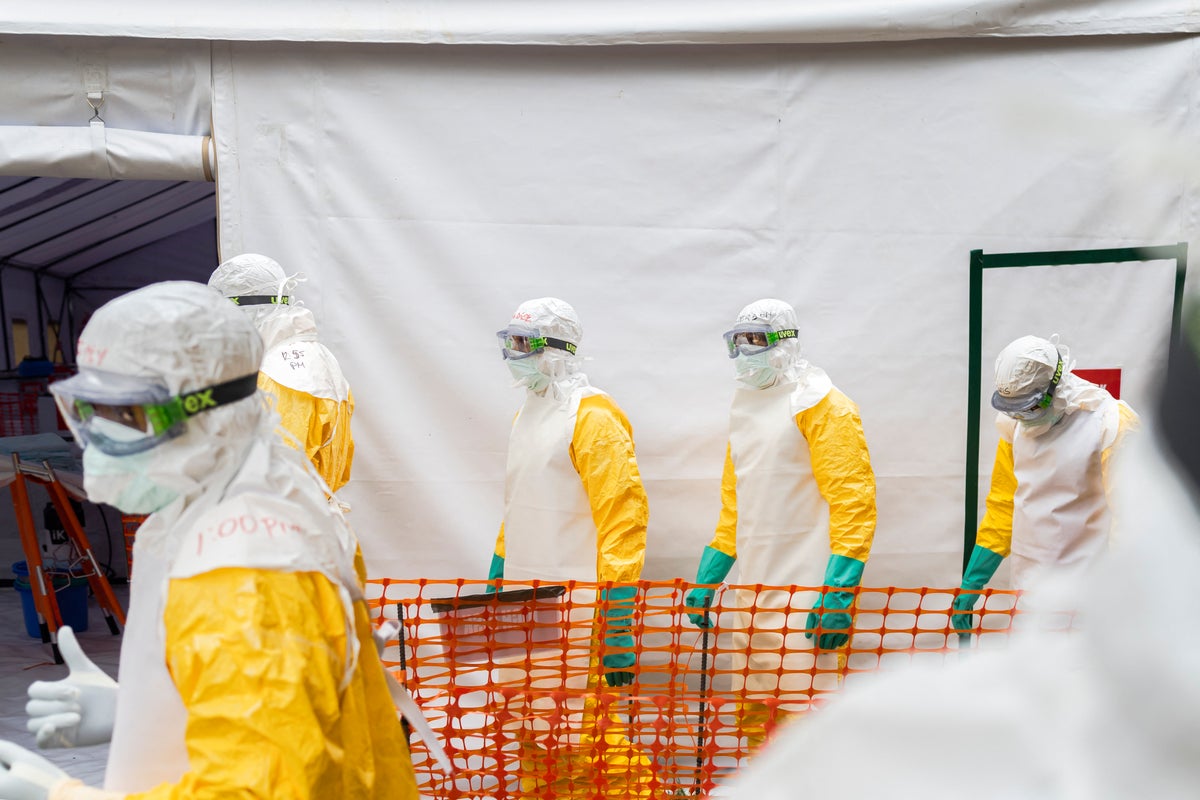
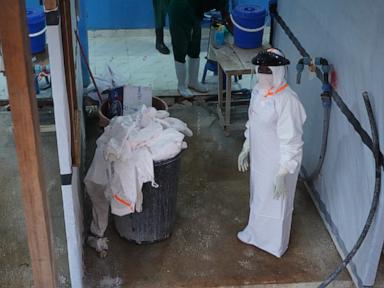
Hospital-acquired infections represent a primary acceleration mechanism. When field triage facilities lack strict physical zoning, personal protective equipment (PPE) supply continuity, or dedicated water and sanitation systems, healthcare settings transition from containment barriers to amplifiers. At least 737 patients currently reside in isolation wards, where high operational load increases cross-contamination risks between suspected and confirmed cases.
Supply Chain Degradation and Institutional Bottlenecks
A health crisis of this scale exposes systemic weaknesses across three core operational pillars: operational logistics, ring vaccination distribution, and community trust architecture.
- Cold-Chain and Biological Logistics: The standard Ervebo vaccine ($rVSV\Delta G-ZEBOV-GP$) requires continuous ultra-cold storage between $-80^\circ\text{C}$ and $-60^\circ\text{C}$. Operating an ultra-cold supply chain across regions with compromised grid electricity and contested transport routes causes severe distribution bottlenecks. When temperature thresholds fail, vaccine viability degrades, reducing the protective buffer required for effective ring vaccination around confirmed clusters.
- Targeted Isolation Protocol Exhaustion: Ring vaccination relies on identifying 100% of primary contacts and secondary contacts around an index case. In active conflict zones, contact tracing efficiency collapses. Field teams face incomplete contact rosters, preventing targeted immunizations from establishing a protective perimeter around active transmission chains.
- Institutional Distrust as an Epidemiological Variable: Community resistance directly impacts disease metrics. Avoidance of formal health facilities, clandestine home care, and traditional burial practices that involve direct handling of deceased individuals feed unmonitored transmission chains. When community reporting declines, official case counts capture only a fraction of true infection volumes, distorting case-fatality ratio (CFR) calculations.
Mortality Rate Divergence: Operational Realities vs. Clinical Capacity
The current reported case-fatality ratio stands at approximately 40.4% based on 999 deaths from 2,473 confirmed cases. While lower than historical uncontrolled Ebola outbreaks that exceeded 60% to 80% CFR, this figure reflects systemic operational constraints rather than a decline in viral virulence.
| Outbreak Metric | 2013-2016 West Africa Outbreak | 2018-2020 DRC Outbreak | Current DRC Context |
|---|---|---|---|
| Days to 1,000 Deaths | ~240 days | ~235 days | < 90 days |
| Primary Vectors | Cross-border urban centers | Conflict zones, rural nodes | High-density IDP camps, transit corridors |
| Diagnostic Lag | High (5-10 days initially) | Moderate (2-4 days) | High (3-5 days in rural pockets) |
| Containment Primary Tool | Late-stage isolation wards | Monoclonal antibodies + Ervebo Ring Vaccination | Resource-constrained supportive care + Targeted Ring Vaccination |
Therapeutic interventions such as mAb114 (Ansuvimab) and REGN-EB3 (Inmazeb) significantly reduce mortality when administered early in the disease progression. The primary driver of the current death toll is not therapeutic efficacy, but access capacity.
When therapeutic administration occurs late in the viral lifecycle—typically after systemic vascular leakage and multi-organ failure begin—the survival benefit drops dramatically. High mortality figures reflect a failure in early detection and rapid patient transport, rather than a lack of effective clinical tools.
Operational Execution for Outbreak Interdiction
Halting the expansion curve requires shifting from passive containment to an integrated operational deployment model focused on four structural priorities.
+-----------------------------------------------------------------------+
|                 INTERDICTION STRATEGY ARCHITECTURE                     |
+-----------------------------------------------------------------------+
| 1. DECENTRALIZED POINT-OF-CARE DIAGNOSTICS                            |
|    Deploy gene-amplification platforms to cut turnaround times < 4 hrs|
+-----------------------------------------------------------------------+
                                   |
                                   v
+-----------------------------------------------------------------------+
| 2. DECENTRALIZED COLD-CHAIN NODES                                     |
|    Establish solar-powered ultra-low temperature battery storage units|
+-----------------------------------------------------------------------+
                                   |
                                   v
+-----------------------------------------------------------------------+
| 3. INCENTIVIZED COMMUNITY CONTACT SURVEILLANCE                        |
|    Integrate local leaders into contact tracing and safe burial protocols|
+-----------------------------------------------------------------------+
                                   |
                                   v
+-----------------------------------------------------------------------+
| 4. PROTECTED TRANSPORTATION & ISOLATION CORRIDORS                     |
|    Secure transit routes to prevent nosocomial spread during patient care|
+-----------------------------------------------------------------------+
Deploy Point-of-Care Molecular Diagnostics
Replace centralized testing facilities with automated, battery-powered gene-amplification systems directly at triage points. Reducing time-to-result from 72 hours to under 4 hours prevents unconfirmed, highly infectious individuals from spending nights in mixed holding wards.
Decentralize Ultra-Low Temperature Storage
Shift vaccine logistics from a hub-and-spoke model dependent on regional capitals to modular, solar-powered ultra-low freezer units placed at primary field hospitals. Eliminating long transport legs preserves vaccine potency and enables rapid ring-vaccination responses within hours of confirmed index cases.
Restructure Community-Led Surveillance Frameworks
Transition contact tracing operations from external mobile teams to local community health representatives. Equipping respected community members with simplified digital reporting tools removes the stigma and suspicion associated with external intervention teams, increasing self-reporting rates and reducing clandestine home care.
Secure Medical Logistics Corridors
Establish protected transport routes dedicated strictly to medical supply lines and patient transfer. Ensuring secure, unhindered movement for rapid response teams reduces delivery lag for critical therapeutics like mAb114 and maintains consistent stocks of single-use personal protective equipment across all field isolation units.
Execute a total transition to point-of-care molecular testing within 14 days across all regional transit hubs. Reallocate immediate international aid capital away from centralized administrative infrastructure and directly into field-level cold-chain preservation units and locally recruited contact-tracing networks. Suppressing the transmission curve requires reducing diagnostic latency to zero before exponential growth overwhelms existing containment infrastructure.