Leadership succession within the United Nations Secretariat represents a severe institutional stress test. When a new Secretary-General assumes office, they inherit a structural deficit defined by intersecting geopolitical gridlock, systemic underfunding, and expansive mandate inflation. Analyzing this leadership transition requires moving beyond journalistic hand-wringing about global conflict and instead examining the mechanics of institutional failure. The organization operates under a paradox: its authority is universal, but its operational capacity is bottlenecked by the sovereign vetoes of the Permanent Five members of the Security Council and chronic liquidity crises driven by member state arrears.
The modern multilateral apparatus functions under three core constraints: security paralysis, fiscal insolvency, and administrative bureaucracy. Each variable interacts with the others, creating a feedback loop that degrades operational efficacy. To understand what the incoming chief faces, one must deconstruct these pillars and evaluate the actual cost function of international diplomacy.
The Architecture of Security Paralysis
The primary function inscribed in the foundational charter of the organization is the maintenance of international peace and security. In practice, this mechanism is structurally hobbled. The Security Council operates on the principle of great power unanimity, codified as the veto power held by China, France, Russia, the United Kingdom, and the United States.
When geopolitical competition intensifies among these states, the Security Council ceases to function as a conflict resolution body and devolves into a diplomatic theater of vetoes and counter-vetoes. Contemporary conflicts in Eastern Europe, the Middle East, and parts of Africa expose this limitation with clinical precision. A Secretary-General possesses no independent military force. They rely entirely on peace operations mandated by the Security Council and funded through separate budgetary assessments.
When the Council deadlocks, field missions remain under-resourced, politically constrained, or entirely impossible to deploy. The incoming chief must operate within this structural straitjacket, utilizing back-channel mediation, normative persuasion, and moral authority rather than coercive power. Yet, moral authority depreciates rapidly when backed by structural impotence.
The Liquidity Crisis and the Cost Function of Multilateralism
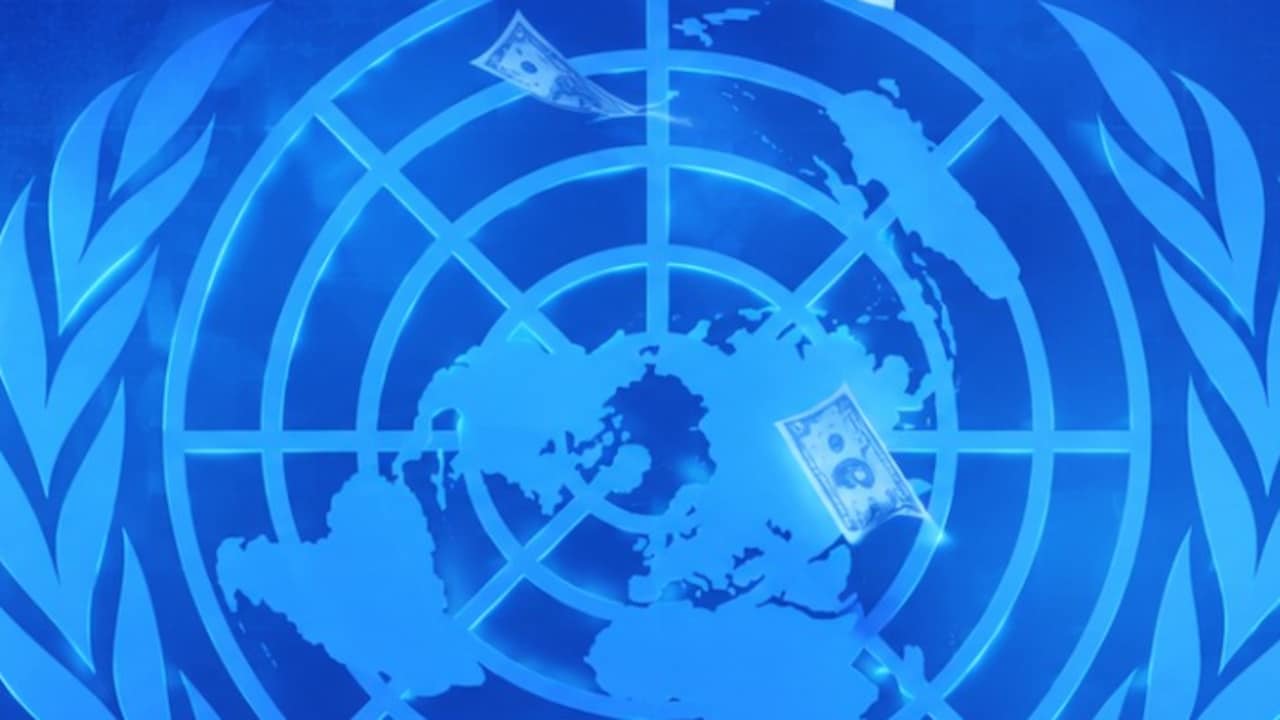
Media narratives frequently characterize the institutional budget as an "empty bank account," but this metaphor obscures the actual mechanics of the fiscal crisis. The organization does not operate on commercial debt markets; it relies on assessed contributions from its 193 member states, calculated according to a formula based on national wealth and capacity to pay.
The deficit is structural rather than accidental. It stems from two distinct behaviors:
- Delayed payments by major economies, which create severe cash-flow troughs mid-fiscal year.
- Chronic withholding of specific assessed dues by states objecting to particular mandates or political investigations.
This creates a perverse cost function. The regular budget funds administrative infrastructure, while peacekeeping operations are funded through a separate, highly volatile account. When member states delay their payments to the peacekeeping budget, troop-contributing nations—often developing economies that rely on these reimbursements to maintain their armed forces—absorb the financial shock.
The incoming executive must manage these liquidity squeezes through austerity measures, freezing hiring, deferring maintenance, and cross-borrowing between funds. This undermines long-term strategic planning, forcing leadership into a perpetual cycle of short-term cash management rather than programmatic execution.
Mandate Inflation Versus Resource Deflation
A critical point of failure in global governance is the divergence between assigned responsibilities and allocated resources. Member states routinely pass resolutions in the General Assembly and Security Council creating new mandates—ranging from digital governance frameworks and climate adaptation monitoring to complex human rights investigations.
However, these legislative bodies rarely couple new mandates with commensurate budgetary allocations. This phenomenon, known as mandate inflation, forces the Secretariat to stretch existing administrative capacity across an expanding surface area.
The institutional response to this imbalance is administrative triage. Essential core functions—such as humanitarian coordination and emergency relief logistics—compete with normative reporting and bureaucratic compliance mechanisms. Without a mechanism to sunset outdated programs or reject unfunded mandates, the organization suffers from institutional bloat coupled with operational anemia.
The Mechanics of Reform and Strategic Positioning
Navigating this environment requires a precise tactical playbook rather than broad rhetorical appeals to multilateral solidarity. A newly installed chief must prioritize structural interventions across three distinct operational vectors.
First, liquidity optimization requires shifting from voluntary compliance models to enforceable financial penalties for chronic arrears. While amending the charter requires consensus among the major powers—an unlikely prospect—enforcing administrative restrictions on voting rights in subsidiary bodies for delinquent states provides a viable lever.
Second, operational decoupling is necessary to insulate humanitarian logistics from political gridlock. By establishing pre-positioned supply chains and decentralized funding pools managed via independent trust structures, the Secretariat can bypass paralyzed Security Council approvals during acute crises.
Third, the incoming leadership must master the art of strategic framing. Because the chief lacks legislative or military power, their primary asset is agenda-setting capacity. By ruthlessly prioritizing three or four systemic threats—such as AI-driven security risks, sovereign debt distress in the Global South, or systemic climate displacement—and ignoring low-impact mandates, a disciplined executive can force member states to confront real trade-offs.
The incoming executive takes the helm not merely of a diplomatic forum, but of a complex, undercapitalized enterprise operating in a hostile macroeconomic and geopolitical environment. Success is defined not by the elimination of global conflict—an impossibility given the structural nature of state rivalry—but by the preservation of institutional integrity and the efficient allocation of scarce diplomatic capital.