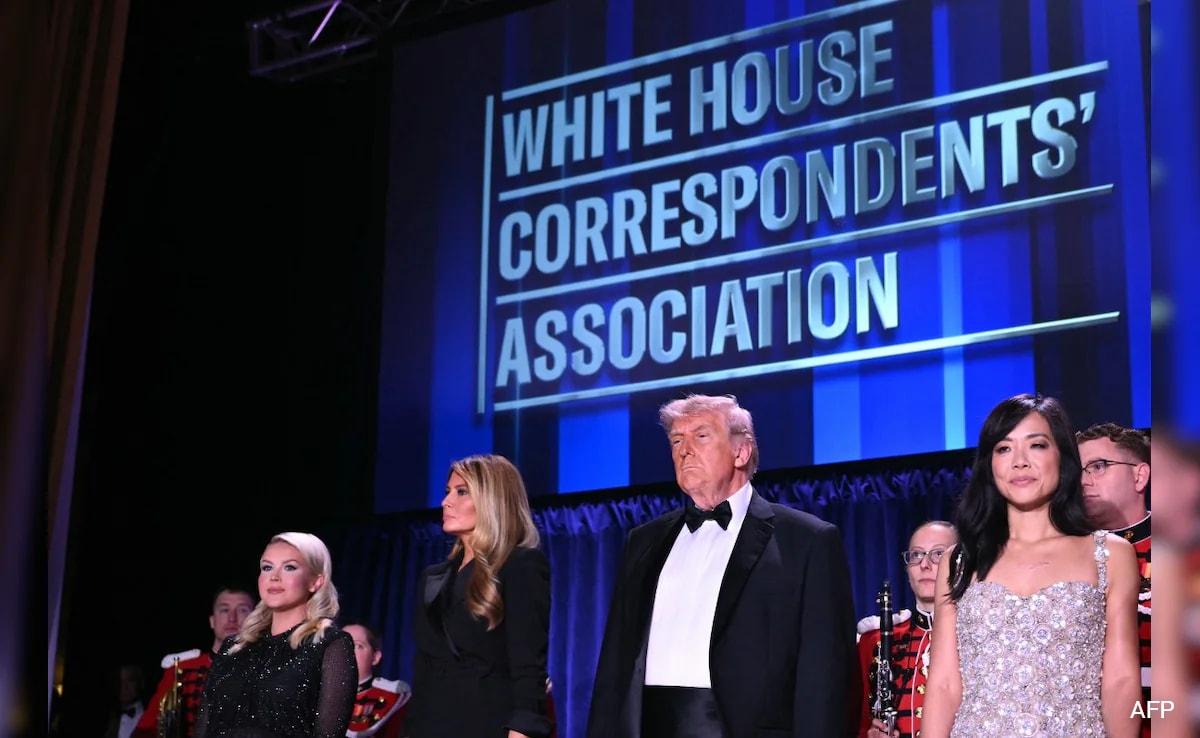
The arrest and charging of Cole Tomas Allen for the attempted assassination of Donald Trump exposes a critical vulnerability in the protective perimeter strategy currently employed by federal law enforcement. This incident represents a failure of deterrence and a breach of the psychological barrier that historically separated high-profile political targets from lone-actor threats. Analyzing this event requires a move away from sensationalist reporting toward a rigorous deconstruction of the operational environment, the suspect's methodology, and the systemic gaps in modern executive protection.
The Triad of Operational Failure
Security for a presidential candidate operates on three distinct planes: the physical perimeter, the digital intelligence net, and the behavioral intervention threshold. The Allen case indicates a degradation across all three sectors.
The first failure exists in the Detection-to-Action Lag. Law enforcement agencies often possess fragments of data—social media posts, travel patterns, or purchase histories—that, when viewed in isolation, do not meet the legal threshold for detention. However, the mechanism of the Allen threat suggests that the threshold for "actionable intent" is calibrated for a pre-digital era. When a suspect moves from ideation to physical mobilization, the window for interception shrinks to minutes. Allen’s ability to position himself within striking distance suggests that the outer rings of the security "onion" are currently porous to individuals who do not fit traditional terrorist profiles.
The second failure involves Target Hardening vs. Open Access. Political campaigns are inherently public-facing, creating a fundamental conflict between security requirements and democratic engagement. The Secret Service manages this conflict through a cost-benefit analysis of risk. In this instance, the risk assessment failed to account for the speed at which a low-tech, high-intent actor can exploit gaps in crowd control and ingress points.
Quantifying the Lone Actor Threat Matrix
The threat posed by Cole Tomas Allen is categorized under the "Lone Actor" framework, which is notoriously difficult to model because it lacks the signature communications of a coordinated cell. To understand how Allen reached the point of indictment, we must examine the internal logic of his progression through the Pathway to Violence model:
- Grievance Formulation: The suspect identifies a specific individual or institution as the source of perceived systemic or personal failure.
- Ideation: The transition from passive anger to the belief that violence is the only viable resolution.
- Research and Planning: Identifying the target’s schedule, travel routes, and security density.
- Preparation: The acquisition of tools—firearms, surveillance equipment, or transportation.
- Breach: The physical movement into the target’s secure zone.
Allen’s progression through these stages was likely obscured by the sheer volume of digital noise. Modern surveillance systems are designed to catch "spikes" in activity. A lone actor who maintains a steady, low-frequency presence can bypass automated alerts, only becoming visible when they enter the terminal phase of the operation.
The Geography of Risk
Presidential security relies on a concentric circle model. The innermost circle is the physical detail; the middle circle is the tactical team; the outer circle is the local law enforcement and surveillance layer. The charges against Allen suggest a breach of the outer and middle circles.
[Image of concentric circles of security]
This breach is a function of Spatial Entropy. As the distance from the protectee increases, the number of variables (pedestrians, vehicles, line-of-sight obstructions) grows exponentially. Security details often struggle with the "last mile" of the outer perimeter, where jurisdiction shifts from federal agents to local police. Allen’s proximity to the target indicates that this jurisdictional handoff is a point of structural weakness.
The mechanism of the attempt—the use of a firearm from a concealed or semi-concealed position—exploits the "Visual Blind Spot." Human eyes and cameras are naturally drawn to movement and faces. An individual who remains stationary or blends into the background of a high-density event can stay "below the fold" of active observation until the moment of engagement.
Legal Thresholds and Federal Indictment Logic
The charging document for "attempting to assassinate" carries a high evidentiary burden. Federal prosecutors must prove not just that Allen had a weapon, but that he took a "substantial step" toward the killing. This is a technical distinction that separates a general threat from a criminal attempt.
The legal framework here is governed by the Theory of Proximity. A substantial step is defined by how close the actor came to completing the crime. In the Allen case, the presence of a weapon in a restricted zone, combined with documented intent found in digital forensics, creates a closed-loop case for the prosecution.
The structural problem for the Secret Service is that the legal system is reactive. It punishes the attempt after the "substantial step" has occurred. Security, conversely, must be proactive. If the "substantial step" occurs within the inner perimeter, the security apparatus has already failed its primary objective.
The Psychological Profile of Modern Political Violence
The Allen case is a data point in a larger trend of the "atomization of radicalization." Unlike the 20th-century model of political assassination, which was often tied to clear ideological movements, 21st-century threats are frequently "self-radicalized." This process is fueled by:
- Algorithmic Reinforcement: Recommendation engines that prioritize high-conflict content, pushing individuals toward extreme conclusions.
- The Hero Complex: The belief that a single act of violence will serve as a catalyst for a broader societal shift.
- Availability of Logistics: The ease with which high-capacity tools can be acquired without triggering red flags.
These factors create a "Risk Floor" that is significantly higher than it was 30 years ago. The baseline probability of a motivated individual reaching the target has increased because the friction required to plan and execute such an act has decreased.
The Failure of Current Deterrence Models
Deterrence works on the assumption that the actor fears the consequences. In the context of presidential assassination attempts, the actor often expects a terminal outcome (death or life imprisonment). Therefore, traditional law enforcement deterrence—patrols, visible weapons, and the threat of arrest—is ineffective.
The only viable counter-strategy is Disruption through Friction. If you cannot deter the actor's mind, you must complicate their logistics. This involves:
- Randomizing the Inner Perimeter: Changing movements and entry points to invalidate any prior research the actor has conducted.
- Expanding the Digital Net: Using predictive analytics to identify behavioral clusters (e.g., specific search terms combined with travel bookings to a campaign site).
- Hardening the Target Environment: Implementing physical barriers that require more than one person to bypass, thereby forcing the lone actor to seek help and potentially expose themselves to discovery.
Resource Misallocation and the Protection Gap
There is a measurable gap between the budget allocated for presidential security and the efficacy of that security in open-air environments. Much of the expenditure goes toward personnel and armored vehicles. However, the Allen incident suggests that the real threat is found in the Information Asymmetry between the protector and the attacker.
The attacker has the advantage of time and focus. They can study the target for months. The security detail must protect the target 24/7 against an infinite number of potential attackers. To bridge this gap, the Secret Service must transition from a reactive "bodyguard" model to an intelligence-led "anticipatory" model.
This requires a shift in how resources are deployed. Instead of more agents on the ground, the priority should be the integration of real-time sensor data with historical behavioral patterns. The objective is to identify "anomalous stillness" or "anomalous movement" within a crowd before a weapon is ever drawn.
Strategic Realignment of Executive Protection
The arrest of Cole Tomas Allen is not an isolated event but a symptom of a shifting threat landscape. The primary strategic play for security agencies is the adoption of a Zero-Trust Physical Architecture.
In a Zero-Trust environment, no individual is assumed to be safe simply because they are outside the inner perimeter. Every person within a five-mile radius of a high-value target is a potential data point. This requires a level of surveillance and data integration that currently sits at the edge of legal and ethical boundaries, yet it is the only logical response to the decreasing barrier to entry for lone-actor threats.
The secret service must now prioritize "Red Teaming"—hiring individuals to think like Cole Tomas Allen and find the gaps in their own perimeters. If the agency continues to rely on static protocols and manual observation, the next attempt may move past the "substantial step" and into the "completed act" phase. Security is not a state of being but a process of constant adaptation to the adversary's evolving cost-to-benefit ratio.