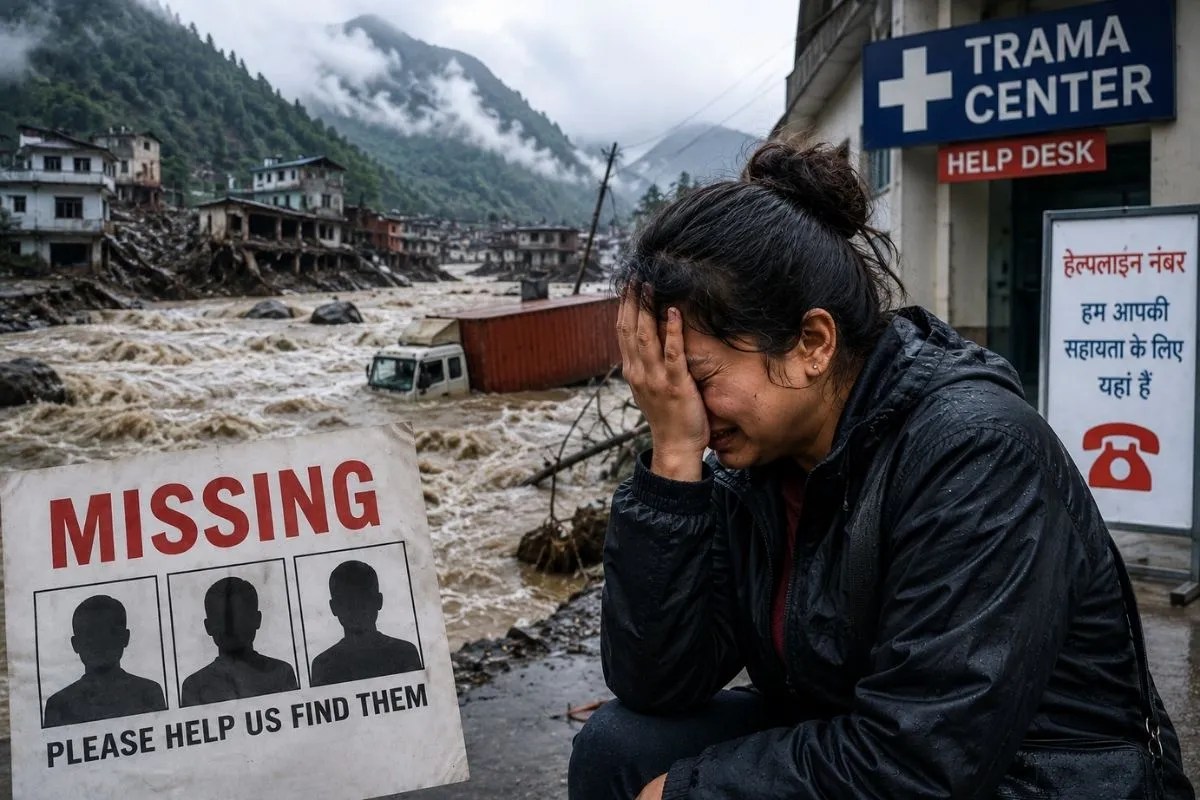
Disaster response systems in South Asia rely heavily on post-event extraction rather than predictive risk mitigation, creating catastrophic information asymmetries during monsoon season. When structural integrity fails across river basins, the collapse of institutional communication channels forces civilian populations into self-directed search operations. The operational mechanics of recent flood events in Nepal reveal systemic vulnerabilities in emergency resource allocation, regional coordination protocols, and family-level economic exposure during natural disasters.
The primary driver of civilian casualty tracking failures is the absence of centralized, real-time telemetry across decentralized rural districts. Localized flash floods destroy transport infrastructure and telecommunication towers simultaneously, severing the feedback loops required for rapid deployment of search and rescue assets. Emergency management agencies operate under rigid bureaucratic hierarchies that delay tactical dispatch until formal verification procedures are completed by municipal authorities. This procedural latency transforms survivable extraction windows into recovery operations, inflating the mortality rate among trapped individuals.
Civilian populations absorb the direct cost of institutional inertia. Without active tracking mechanisms for displaced persons, families must navigate informal networks of morgues, temporary relief camps, and riverbanks independently. This imposes severe financial and psychological burdens on surviving relatives, who must fund their own transportation, lodging, and logistical coordination while managing acute trauma. The economic friction of searching for missing kin diverts scarce household capital away from basic survival and reconstruction needs.
Resource allocation models during monsoonal events suffer from acute regional prioritization biases. Urban centers and major transit corridors receive immediate logistical support, while remote river valleys experience prolonged isolation. Rescue operations depend on manual grid searches rather than drone-assisted thermal imaging or hydrological modeling that could predict body displacement vectors in swift-moving water. This manual approach reduces recovery probability exponentially with every passing 24-hour cycle.
Institutional frameworks must transition from reactive rescue paradigms to predictive catchment management and automated census tracking during evacuation orders. Emergency response protocols require decentralized decision-making authority at the district level, bypassing multi-tiered bureaucratic sign-offs to deploy specialized water-rescue units instantly. Establishing mandatory digital check-ins at designated relief hubs would eliminate the information vacuums that currently force families into perilous, self-funded recovery quests along treacherous river systems.