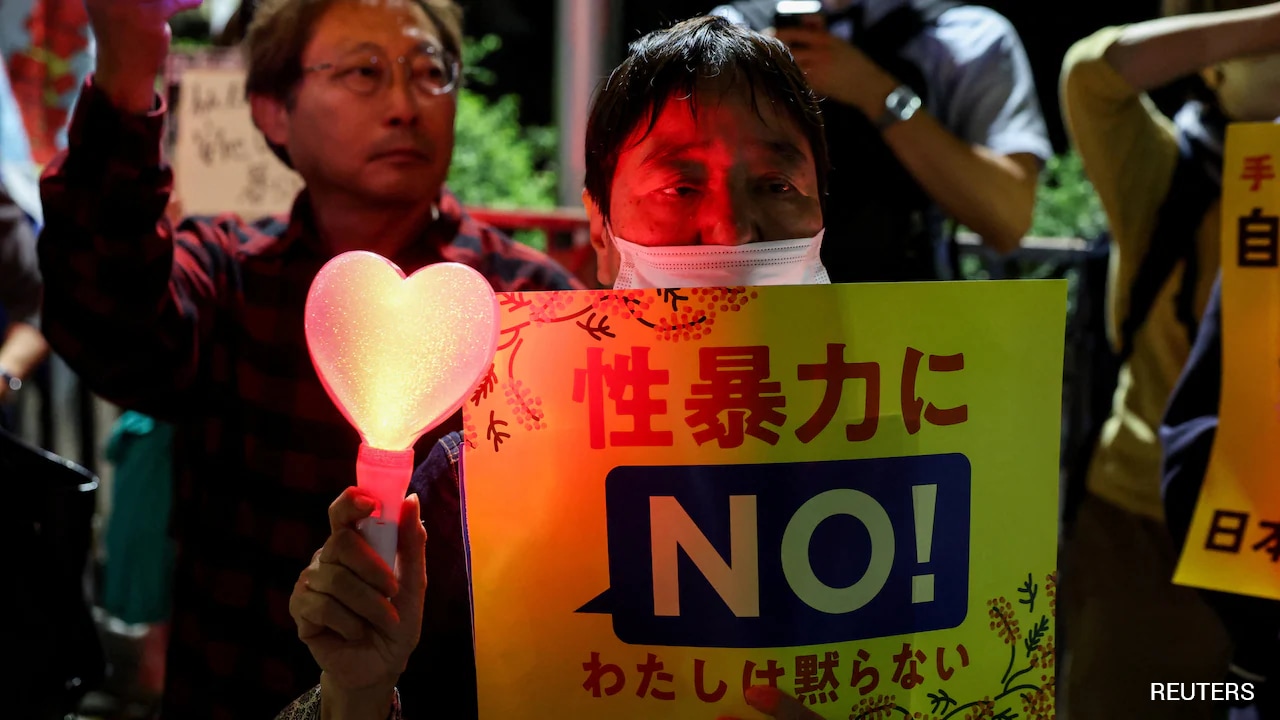
The security architecture of the United States-Japan alliance faces a recurring systemic vulnerability in Okinawa, where geographic concentration intersects with acute civilian friction. Following the arrest of a U.S. Marine on robbery and murder charges, command authorities enacted sweeping liberty restrictions, including a midnight-to-0500 curfew, a temporary operational pause, and phased alcohol prohibitions. While these measures function as immediate political containment tools, they represent a recurring cycle of behavioral mitigation rather than structural deterrence.
The Cost Function of Behavioral Containment
When a localized criminal act threatens a bilateral strategic framework, military leadership typically deploys a standardized intervention matrix. This matrix relies on three primary variables: temporal restriction (curfews), substance limitation (alcohol bans), and collective accountability (blanket liberty curtailment).
The economic and operational logic of this approach assumes that modifying environmental constraints will suppress high-risk behaviors among junior personnel. However, operational data from successive incidents over decades demonstrates that blanket restrictions exhibit diminishing marginal returns.
- The Suppression Horizon: Curfews reduce the window of exposure during high-risk nocturnal hours, but they fail to alter the behavioral baselines of individuals predisposed to severe misconduct.
- The Compliance Variance: Broad alcohol prohibitions achieve total compliance among the disciplined majority while creating enforcement blind spots for the marginal demographic that already operates outside institutional norms.
- The Enforcement Friction: As observed in subsequent incidents involving off-duty personnel breaching containment protocols, punitive measures unaccompanied by predictive screening merely drive transgressive behavior underground.
Friction Points in Host-Nation Integration
The concentration of roughly 54,000 U.S. military personnel in Japan—with a disproportionate share located in Okinawa Prefecture—creates an asymmetric pressure gradient. From a strategic standpoint, Okinawa provides indispensable power-projection capabilities for regional deterrence. From a local governance standpoint, the prefecture bears the negative externalities of this footprint, including noise, environmental strain, and the recurring shock of high-profile crimes.
When criminal acts occur, the political cost cascades instantly through diplomatic channels. The Governor of Okinawa and national defense officials engage in high-level crisis management, demanding systemic overhauls. Command authorities respond with tactical reassurance packages—such as joint patrols with prefectural police and extended reflection periods.
This dynamic reveals a persistent misalignment between military necessity and local civic trust. The alliance operates on the premise that deterrence against external state actors outweighs the friction of internal friction points. Yet, repeated breaches of conduct erode the political consensus required to sustain base access.
Limits of Institutional Remediation
Command climates within tactical units often treat discipline as a reactive compliance metric rather than a continuous diagnostic process. Training pauses and mandatory briefings executed in the wake of an incident address the symptoms of organizational failure but leave diagnostic blind spots regarding root causes.
- Predictive Gap: Traditional screening tools capture administrative readiness and tactical proficiency, but they lack psychological indicators for aberrant predatory behavior.
- Supervision Deficit: Junior enlisted personnel transition from highly structured operational environments to unstructured liberty environments without adequate intermediate echelons of leadership engagement.
- Remediation Decay: Punitive timelines—such as 30-day or 60-day restriction windows—exhibit a predictable half-life. Once the political and media scrutiny subsides, enforcement mechanisms frequently relax, returning the garrison to baseline operational tempos.
Strategic Forecast and Operational Recalibration
The recurrence of severe misconduct in Okinawa indicates that conventional disciplinary levers are structurally insufficient to eliminate high-impact friction. Future stability within the prefecture depends on shifting from reactive blanket restrictions to localized behavioral tracking and predictive risk mitigation.
Commanders must decouple generalized force protection measures from isolated criminal acts, targeting interventions specifically at high-risk demographics through enhanced mentorship and strict individual accountability rather than collective punishment. Without a transition from cyclical containment to rigorous behavioral auditing, the alliance will continue to absorb the political shock of preventable failures, maintaining a permanent state of crisis management at the friction point of Indo-Pacific security.


