The friction observed between United States and Iranian delegations at the United Nations nuclear weapons conference is not merely a diplomatic disagreement; it is the physical manifestation of a structural breakdown in the Treaty on the Non-Proliferation of Nuclear Weapons (NPT) framework. The current impasse functions as a zero-sum game where the perceived security requirements of one state directly negate the proliferation safeguards of the international community. To understand this clash, one must move past the rhetoric of "tensions" and examine the three specific friction points: the degradation of monitoring latency, the erosion of the "atoms for peace" paradox, and the strategic decoupling of regional security from global treaties.
The Mechanism of Monitoring Latency and Breakout Capacity
At the core of the U.S. grievance is the concept of "breakout time"—the theoretical duration required for a state to produce enough weapons-grade uranium ($U-235$) for a single nuclear explosive device. The U.S. position rests on the quantitative reality that Iran’s current enrichment levels, specifically at the 60% purity threshold, have significantly narrowed this window. You might also find this connected story useful: The Major Security Failure at the White House Correspondents Dinner.
The technical logic is non-linear. Enriching natural uranium to 3.5% (standard power reactor grade) requires roughly 70% of the total work needed to reach 90% (weapons grade). By the time a state reaches 60%, approximately 95% of the total "separative work units" (SWU) are complete. This creates a high-sensitivity monitoring environment where the International Atomic Energy Agency (IAEA) must maintain near-instantaneous verification to prevent a "fait accompli" breakout.
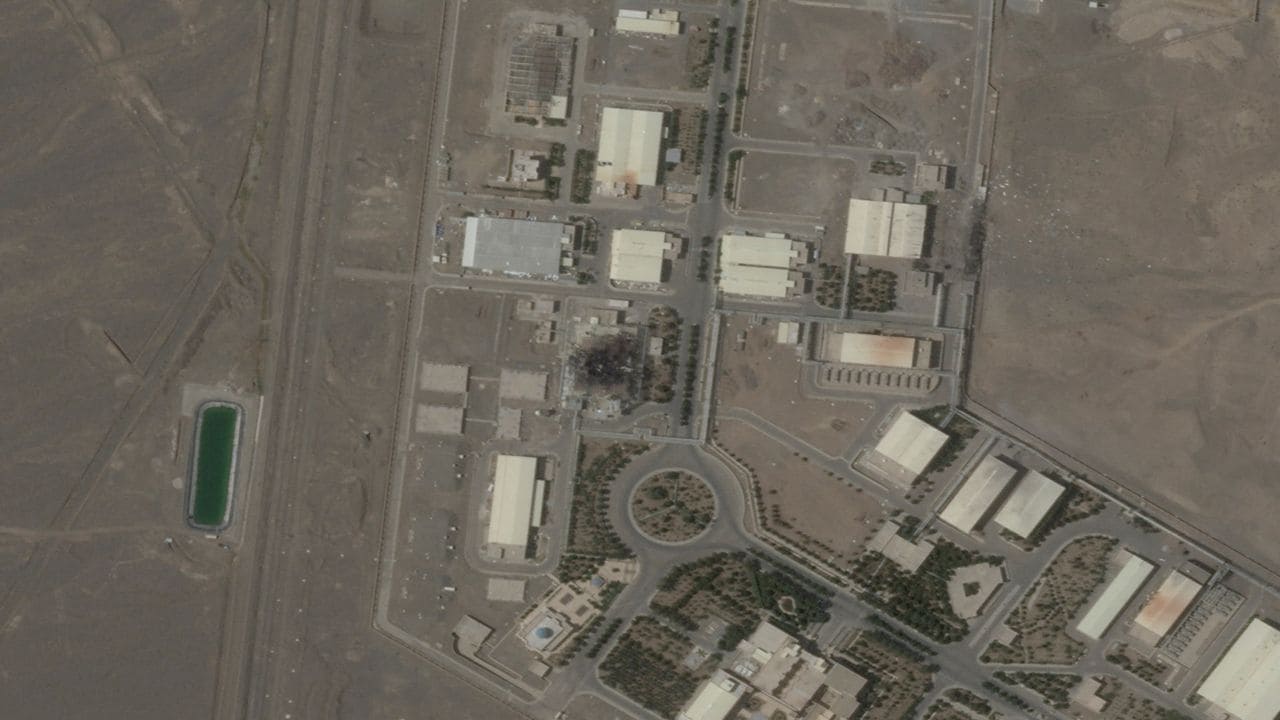
When Iranian officials restrict access to specific sites or deactivate surveillance equipment, they are not just protesting sanctions; they are intentionally increasing "monitoring latency." This latency serves as a strategic buffer, providing the state with optionality while stripping the NPT of its primary enforcement mechanism: early warning. The clash at the UN is a debate over the acceptable margin of error in an environment where the physical time required to pivot from civilian to military application has been reduced to weeks. As reported in recent coverage by Associated Press, the effects are significant.
The Atoms for Peace Paradox
The NPT is built upon a fundamental bargain: non-nuclear weapon states (NNWS) waive their right to nuclear armaments in exchange for access to peaceful nuclear technology. Iran utilizes Article IV of the NPT to justify its enrichment program as an "inalienable right." Conversely, the U.S. and its allies argue that Article IV is contingent upon Article II (the commitment not to seek weapons) and Article III (the requirement to accept safeguards).
This creates a logic loop that the UN conference cannot easily resolve. The "Atoms for Peace" paradox states that the infrastructure required for a robust civilian nuclear power program is functionally identical to the infrastructure needed for a clandestine weapons program. Specifically:
- Centrifuge Cascades: The same gas centrifuges used to produce low-enriched uranium for energy can be reconfigured in a "step-up" cascade to produce highly enriched uranium.
- Dual-Use Expertise: The human capital developed for reactor maintenance and fuel fabrication is directly transferable to weaponization R&D.
- Fuel Supply Independence: States argue that domestic enrichment is necessary for energy security to avoid reliance on foreign suppliers, yet this independence eliminates the most potent external lever—the threat of a fuel cutoff.
The American delegation’s strategy focuses on "Objective Non-Proliferation," which argues that intent is secondary to capability. If a state possesses the capability to bridge the gap to a weapon in a timeframe shorter than the international community can respond, the NPT has failed, regardless of the state's stated peaceful intent.
The Cost-Benefit Calculus of Sanctions vs. Enrichment
The Iranian delegation’s defense relies on the "Maximum Pressure" failure hypothesis. From their perspective, the U.S. withdrawal from the Joint Comprehensive Plan of Action (JCPOA) in 2018 invalidated the "compliance for relief" model. This led to a tactical shift in Iranian strategy toward "Strategic Escalation."
In this model, enrichment is treated as a commodity in a high-stakes negotiation. Every increase in purity (from 20% to 60%) and every addition of advanced centrifuges (moving from IR-1 to IR-6 models) is designed to increase the "cost of inaction" for the U.S. and Europe.
However, this creates a secondary effect known as "Security Dilemma Feedback." As Iran increases its technical capabilities to gain leverage, regional rivals—specifically Saudi Arabia and Israel—adjust their security postures. This decentralizes the conflict. What was once a bilateral negotiation between Washington and Tehran has fractured into a regional arms race logic. The U.S. is now forced to manage not just the Iranian program, but the potential "proliferation cascade" where neighboring states demand equivalent enrichment rights to maintain a regional balance of power.
Information Asymmetry and the Verification Gap
A significant portion of the UN clash revolves around "unexplained particles"—uranium traces found at undeclared sites in Iran. This represents a breakdown in the "Correctness and Completeness" standard of IAEA safeguards.
In a data-driven security environment, the IAEA operates on the principle of a "State Level Concept." This involves analyzing a state’s entire nuclear ecosystem. When a state refuses to explain past activities, it creates an "information asymmetry." The U.S. contends that without a full accounting of past activities, current monitoring is built on a foundation of unknown variables.
Iran’s refusal to address these "archival" issues is a calculated move to prevent the IAEA from establishing a baseline. Without a baseline, any future agreement is susceptible to "blind spots." This is the technical bottleneck that prevents a return to a formalized treaty: one side demands a full audit before reinvesting, while the other side views the audit as a tool for permanent political surveillance.
The Geopolitical Decoupling
The most critical failure of the current UN conference is the inability to account for the changing global power structure. Previously, the "P5+1" (U.S., UK, France, China, Russia, and Germany) presented a unified front on non-proliferation. Today, the fragmentation of the P5 due to the conflict in Ukraine and U.S.-China competition has granted Iran "Great Power Cover."
Russia and China have increasingly viewed Iranian nuclear compliance through the lens of their broader strategic competition with the West. This removes the "Unanimous Penalty" threat. If a state knows that a UN Security Council referral will be vetoed, the cost of non-compliance drops precipitously. The clash at the UN is therefore a performance for a divided audience; the U.S. speaks to the "Rules-Based Order," while Iran speaks to a "Multipolar Reality" where Western sanctions can be mitigated through trade with the East.
Strategic Divergence in Long-Term Objectives
The U.S. objective is "Permanent Denuclearization," or at least a program so constrained that its breakout time is measured in years. The Iranian objective is "Threshold Capability"—maintaining the status of a "virtual nuclear state." A virtual nuclear state possesses all the components, knowledge, and material to build a weapon but chooses not to cross the final threshold, thereby avoiding the diplomatic and military costs of actual possession while reaping the deterrent benefits of being "one turn of a screwdriver" away from the bomb.
The NPT was never designed to handle the "Threshold State." It was designed for a binary world: you have the bomb, or you don't. This creates the primary friction point seen at the UN. The U.S. tries to push Iran back into the "Non-Nuclear" category, while Iran operates within the grey zone of the "Threshold" category.
The path forward requires a shift from "Status Quo Maintenance" to "Dynamic Containment." The international community must move away from the binary hope of a total Iranian roll-back and toward a "Real-Time Verification Architecture." This would involve a new set of protocols that focus exclusively on the "final mile" of weaponization: high-speed electronics, neutron initiators, and explosive lens testing.
By shifting the focus from enrichment (which is dual-use and legally contested) to weaponization (which is purely military and legally indefensible), the U.S. can potentially rebuild a global consensus. If the focus remains on enrichment, the clash at the UN will remain a cyclical exercise in diplomatic theater, while the physical reality on the ground continues to move toward a permanent threshold status. The strategic play is to decouple the right to energy from the capability of weaponization through a new tier of intrusive, technology-specific monitoring that targets the "bottleneck components" of a nuclear device rather than the broad-spectrum fuel cycle.