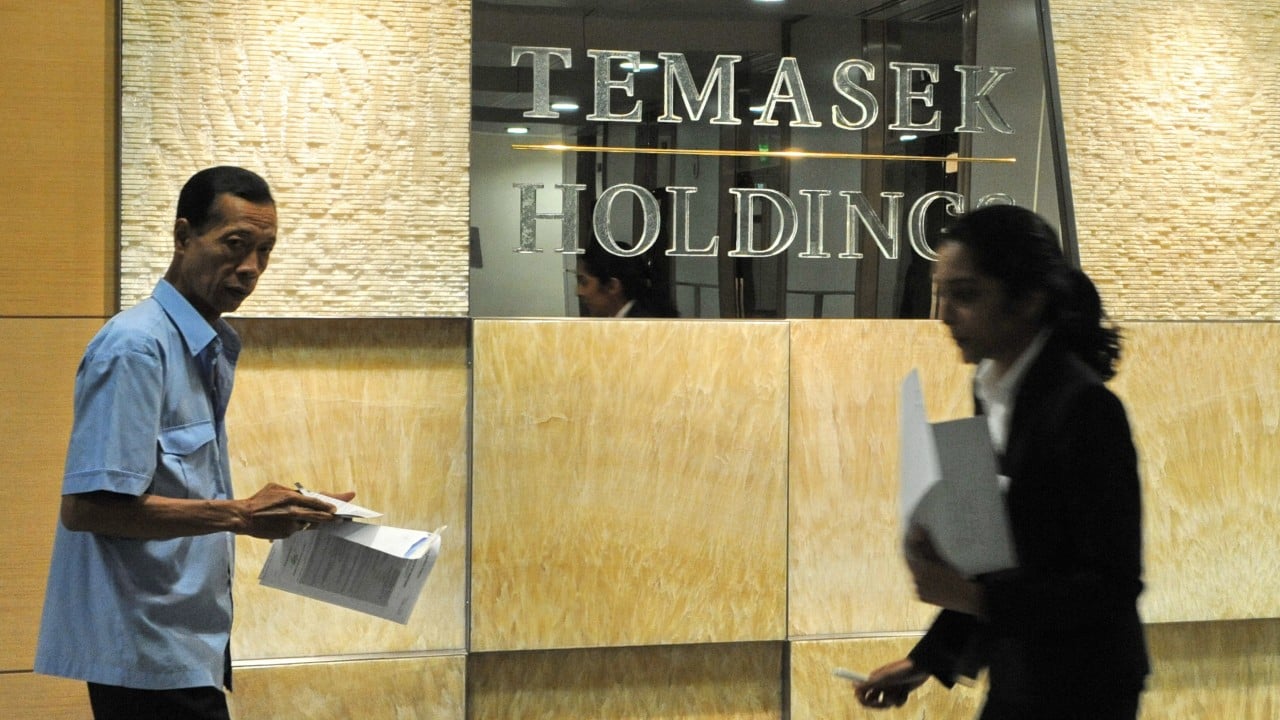
Singapore Airlines and its majority state-linked investor Temasek face an acute strategic test as Air India pursues an estimated USD 1.5 billion equity injection. The carrier's 25.1 percent stake in India's consolidated airline group exposes its balance sheet to multi-billion-dollar losses, triggering intense political friction in Singapore and illuminating the harsh economic realities of cross-border airline turnarounds. Evaluating this exposure requires stripping away corporate public relations to examine the underlying cost functions, structural limitations of hub economics, and the severe friction coefficients inherent in legacy airline restructuring.
The Geoeconomic Logic of the Second Hub Imperative
A primary driver for Singapore Airlines remaining locked into the Air India ecosystem is the structural ceiling of its home base. Changi Airport operates as a world-class primary hub, but its physical and airspace growth parameters are fundamentally bounded by Singapore's geographical footprint. To capture long-term traffic flows across Asia without hitting terminal capacity walls, network carriers must secure secondary geographic anchors.
India represents the world's third-largest domestic and international aviation market, making it the logical territory for such an anchor. By holding a minority stake alongside the Tata Group, Singapore Airlines attempted to bypass greenfield startup costs and instantly plug into an established domestic distribution network, first via Vistara and subsequently through the consolidated Air India entity.
However, substituting organic market entry with an acquisition-led turnaround strategy introduces complex operational debt. The economic mechanics of acquiring a bloated, formerly state-owned enterprise involve absorbing legacy labor structures, fragmented IT infrastructure, and misaligned fleet configurations. The strategic thesis assumes that scale benefits will eventually offset these integration penalties. Yet, the current financial hemorrhage indicates that the velocity of cash burn is vastly outpacing the realization of network synergies.
The Cost Function of Legacy Restructuring
Air India and its budget subsidiary, Air India Express, reported combined losses scaling past USD 2.3 billion for the fiscal year, doubling previous deficits. This financial deterioration stems from a convergence of structural cost pressures and external operational shocks.
External Shocks (Airspace Closures, Fuel Volatility)
       │
       ▼
Extended Route Geometries & Burn Rates
       │
       ▼
Accelerated Equity Devaluation & Capital Calls (~USD 1.5B)
       │
       ▼
Shareholder Friction (Temasek Exposure vs. Parliamentary Scrutiny)
The operational constraints currently throttling the carrier's margin expansion include:
- Route Geometry Penalties: Geopolitical airspace restrictions—specifically the closure of corridors over Pakistan for Indian carriers—force westbound flights on extended vectors, compounding jet fuel consumption.
- Input Cost Volatility: Spikes in aviation turbine fuel driven by Middle Eastern conflicts directly compress operating margins faster than yield management systems can adjust ticket pricing.
- Asset Integration Friction: Fleet renewal cycles require massive capital outlays before older, high-maintenance aircraft can be retired, creating a dual-cost burden of heavy maintenance reserves and new acquisition financing.
- Technical and Workforce Legacy: Transitioning disparate reservation systems, maintenance protocols, and enterprise resource planning software introduces operational downtime and training overhead.
These variables interact non-linearly. When combined with safety incidents and subsequent fleet grounding or schedule rationalization, revenue generation stalls while fixed ownership costs remain entirely inelastic.
Shareholder Mechanics and the Exit Trap
The debate within Singapore’s parliament and financial circles highlights a classic corporate finance dilemma: the sunk cost fallacy versus the cost of abandonment. Minority stakes in distressed international airlines carry asymmetrical governance power. Singapore Airlines holds board representation and technical input responsibilities, but lacks operational control, which rests firmly with the Tata Group as the 74.9 percent majority owner.
An exit strategy for Singapore Airlines is practically non-viable under current market conditions. Tata Sons stands as the sole logical buyer for the 25.1 percent stake, meaning any divestment would occur at a severe discount, forcing a massive write-down of accumulated capital investments. Consequently, management faces a binary choice: participate in subsequent capital calls to protect the initial investment value, or dilute their position and accept a permanent impairment.
This dynamic explains Temasek’s public defense of the long-term horizon. State-backed holding entities must frame capital allocation through a multi-decade lens to insulate operational management from short-term political backlash. Nevertheless, public market scrutiny and legislative objections from opposition lawmakers signal that the tolerance threshold for continuous capital injections is finite.
Allocating Capital Under Asymmetric Risk
To safeguard enterprise value, Singapore Airlines must enforce strict conditional milestones before deploying any portion of the requested USD 1.5 billion capital tranche. Management should tie future equity releases directly to operational key performance indicators rather than broad restructuring timelines. These conditions must mandate structural unit cost reductions, accelerated retirement schedules for legacy widebody aircraft, and measurable improvements in technical dispatch reliability. If the Tata Group declines to match governance transparency or operational reforms, Singapore Airlines must cap its exposure, accept minority dilution, and insulate its domestic balance sheet from further external shocks.