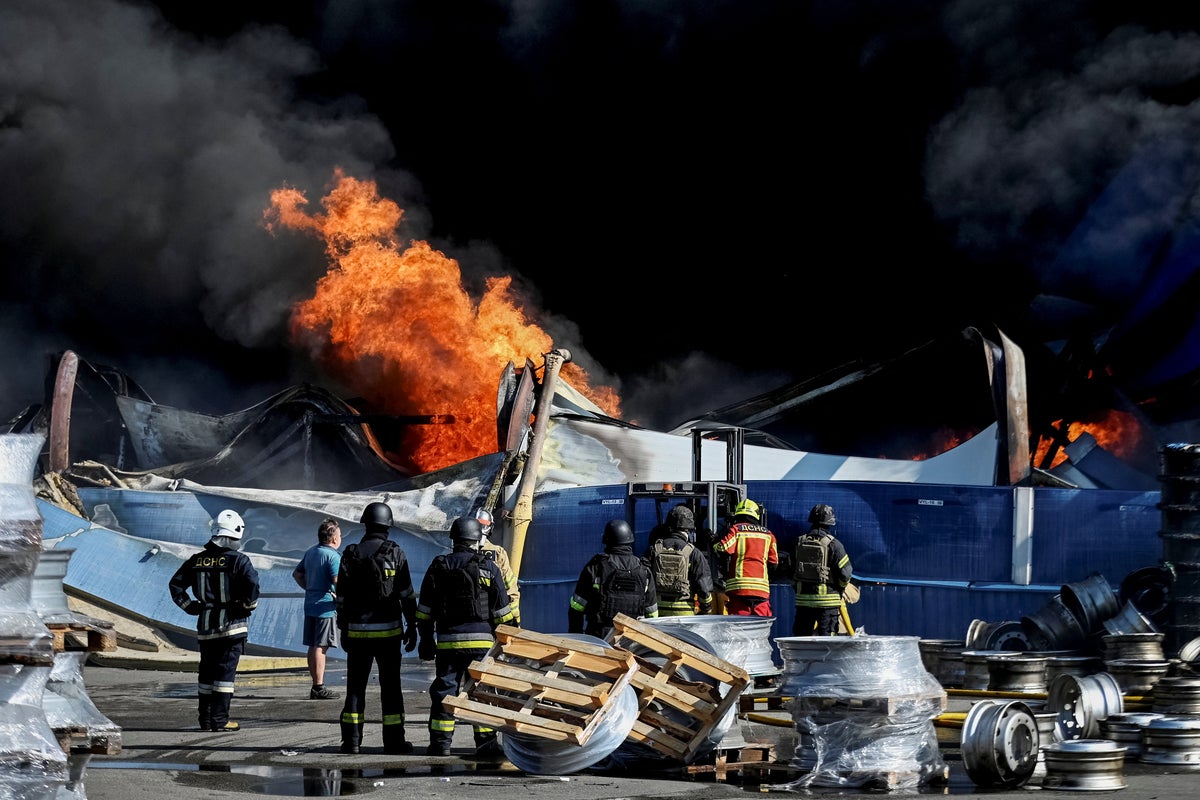
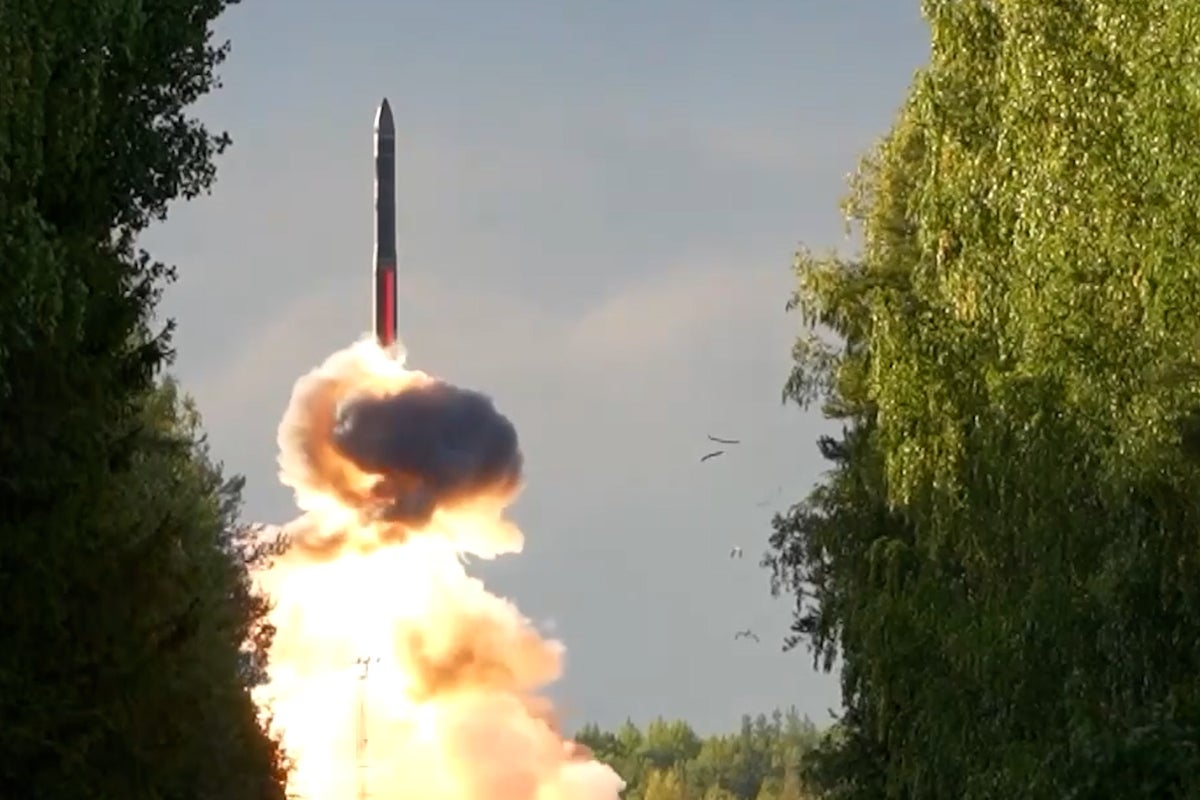
Air defense efficiency operates under a strict economic and mathematical threshold known as the cost-exchange ratio. When a regional air defense architecture experiences mass saturation, the underlying mechanism is not merely a lack of interceptor units, but a complete degradation of tracking throughput, radar horizon limits, and kinetic replenishment capacity. Recent intensive strikes targeting the Kyiv periphery resulting in twenty-seven fatalities demonstrate the precise structural breaking points that occur when an asymmetric swarm tactic collides with a localized point-defense grid.
To understand why traditional surface-to-air missile batteries fail under high-density salvo conditions, we must deconstruct the operational variables governing modern airspace management. The system failure observed is a multi-layered cascading breakdown involving target identification latency, radar cross-section minimization, and magazine depth constraints.
The Three Operational Constraints of Point Defense
Air defense systems do not operate in an infinite capacity vacuum. Every battery, radar installation, and command post functions under three hard operational constraints that dictate its survival probability under heavy attack.
1. The Sensor Resolution and Track Capacity Bottleneck
Modern phased-array radars track multiple targets simultaneously by allocating radar pulses to confirmed tracks while reserving a percentage of power for searching new sectors. When low-radar-cross-section munitions, such as modified turbojet or combustion-driven loitering munitions, approach in coordinated waves, the track file memory of the fire control computer faces exponential load growth.
- Track Saturation: The number of simultaneous objects exceeds the discrete tracking channels of the fire control radar.
- Clutter Processing: Low-altitude flight paths force radars to filter ground clutter, drastically increasing processor cycles required to verify a legitimate threat vector.
- IFF Latency: Identification friend or foe queries consume microseconds, but at scale, this latency creates a processing queue that delays interceptor launch clearances.
2. The Economic Asymmetry of Kinetic Interception
The fundamental vulnerability of modern air defense networks is cost divergence. Interceptor missiles are precision engineering feats utilizing advanced guidance systems, solid-fuel rocket motors, and complex actuators. Conversely, long-range saturation vectors are manufactured using commercial-grade microprocessors, fiberglass bodies, and off-the-shelf commercial engines.
- Depletion Economics: Forcing a high-cost asset to neutralize a low-cost asset achieves attrition without requiring direct target impact.
- Magazine Depth Limits: Vertical launch systems and mobile erector launchers carry finite loads. Once depleted, reloading requires secure logistical corridors and stationary time windows, exposing support units to counter-battery or secondary strikes.
- Salvo Thresholds: Every defense network has a calculated saturation point. If the incoming vector count exceeds the active launcher count multiplied by the reload speed coefficient, penetration is mathematically guaranteed.
3. Spatial Geometry and Radar Horizon Limits
Curvature of the earth and terrain masking severely limit ground-based radar effectiveness against low-flying threats. Fixed-position radar towers can only detect objects above the line-of-sight horizon, which decreases proportionally with target altitude.
- Low-Altitude Dead Zones: Munitions flying at fifty to one hundred meters altitude remain invisible to long-range search radars until they clear the radar horizon, reducing early warning time from tens of minutes to seconds.
- Reaction Time Compression: Shortened detection windows shift the operational mode from planned interception to panic reaction, increasing human error rates and sub-optimal fire distribution.
- Geographic Blind Spots: Urban terrain features, industrial structures, and rolling topography create acoustic and radar shadows that attackers exploit to route munitions around defended sectors.
The Mechanics of Saturation Tactics
Attackers leverage these constraints through calculated saturation maneuvers. By launching mixed packages consisting of decoys, electronic countermeasures, and kinetic payloads, they force the defender into a zero-sum resource allocation problem.
When a multi-axis attack converges on a metropolitan center, defenders must choose which sectors to prioritize based on asset criticality. This prioritization matrix inevitably leaves peripheral residential zones exposed. The twenty-seven fatalities recorded near Kyiv stem directly from this prioritization calculus. Interceptors are reserved for high-value command nodes, energy infrastructure, and government hubs, leaving secondary trajectories under-defended or entirely reliant on mobile gun teams.
Mobile gun teams, while cost-effective against slow-moving targets, suffer from lack of persistent tracking at night or in adverse weather conditions. Without integrated electro-optical and thermal sighting systems slaved to a centralized tactical network, human operators firing heavy machine guns or anti-aircraft artillery experience severe target acquisition drop-off beyond a two-kilometer radius.
Systemic Failures in the Interceptor Pipeline
The replenishment timeline of air defense systems introduces a strategic vulnerability that strategic planners must account for. Modern interceptor production lines are complex, reliant on specialized chemical precursors for solid rocket fuel, scarce rare-earth elements for guidance gyroscopes, and certified cleanroom environments for microchip integration.
When consumption rates outpace manufacturing output by an order of magnitude, the defending network transitions from an elastic defense posture to a rationing posture.
- The Stockpile Degradation Curve: As primary stockpiles diminish, older secondary systems are brought out of long-term storage, introducing higher failure rates and calibration drift.
- Supply Chain Bottlenecks: Specialized components cannot be sourced overnight; the industrial lead time for a high-tier interceptor missile is measured in quarters, not weeks.
- Operational Fatigue: Crews operating mobile air defense assets experience cognitive degradation under continuous multi-day alert states, increasing the probability of misfires, tracking errors, and systemic maintenance oversights.
Strategic Mitigation and Networked Resilience
To counter the structural vulnerabilities exposed by high-density drone blitzes, defensive architectures must transition from centralized, high-tier asset dependency to distributed, layered resilience.
Integrating acoustic sensor arrays across a wide perimeter provides a low-cost, passive detection grid that bypasses radar horizon limitations. Because acoustic signatures of combustion engines remain distinct even at low altitudes, cheap acoustic sensors linked via encrypted cellular or radio mesh networks can cue optical trackers long before radar acquisition occurs.
Furthermore, dispersing point-defense units into smaller, highly mobile sections prevents a single saturation wave from overwhelming a localized zone. By decentralizing the command-and-control node into edge-computing units mounted directly on interceptor vehicles, communication latency drops, allowing localized batteries to engage targets autonomously when higher-tier command links are jammed or saturated.
Deploy directed-energy concepts for short-range point defense to neutralize the cost asymmetry. High-powered microwave and solid-state laser systems eliminate the per-engagement cost variable, replacing multi-thousand-dollar interceptors with per-shot electricity costs measured in cents, provided thermal management and power generation bottlenecks are solved in the field.
Shift the operational focus upstream by dismantling the manufacturing and supply chain hubs of the incoming vectors through targeted disruption, rendering large-scale saturation unsustainable over extended operational horizons.