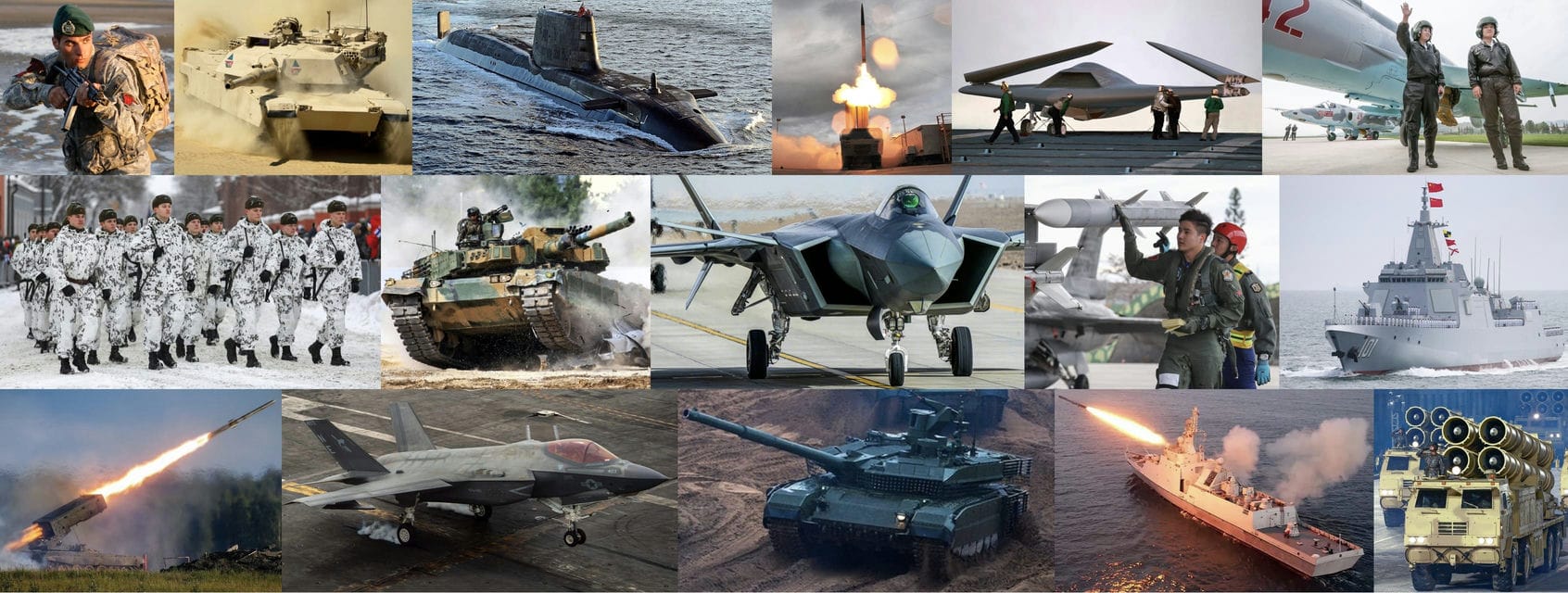
The assumption that a single wave of kinetic strikes can neutralize Iran’s regional influence ignores the structural reality of their "strategic depth" doctrine. Iran’s military capability is not a finite stockpile to be depleted through short-term attrition; it is a distributed, hardened ecosystem designed for a multi-front, high-intensity war of duration. Quantifying this threat requires looking past top-line missile counts and analyzing the manufacturing throughput, the geography of launch sites, and the specific physics of their delivery systems.
The Production Function of Asymmetric Power
The Iranian missile program operates on a philosophy of quantity-as-quality. While Western intelligence agencies often debate the exact number of airframes—frequently cited between 3,000 and 5,000—the more critical metric is the replenishment rate. Iran has moved from a purchaser of technology to a self-sufficient industrial base. This domestic loop creates a "forever war" capability that resists traditional blockade logic.
Structural Components of the Arsenal
The arsenal is built upon three distinct technological pillars, each serving a different strategic utility:
- Short-Range Ballistic Missiles (SRBMs): Systems like the Fateh-110 provide high-precision tactical options. They are easier to hide, faster to deploy, and serve as the primary tool for regional escalation management.
- Medium-Range Ballistic Missiles (MRBMs): The Shahab-3 and its derivatives (Ghadr, Emad) provide the reach to strike targets across the Middle East and parts of Southeastern Europe. These are the primary deterrents against state-level actors.
- Solid-Propellant Innovation: The shift from liquid to solid fuel (exemplified by the Sejjil and Kheibar Shekan) is a critical bottleneck they have overcome. Solid fuel allows for "instant-on" launch capabilities, reducing the window for pre-emptive detection by satellite reconnaissance.
The Geography of Resilience: Missile Cities
The physical security of Iran's assets is managed through extreme geological hardening. The concept of "missile cities"—vast underground complexes carved into the Zagros Mountains—negates the effectiveness of standard bunker-buster munitions and aerial surveillance.
The strategic logic here is twofold:
- Survival under First-Strike Scenarios: By burying the command-and-control (C2) infrastructure and the launch tubes hundreds of meters underground, Iran ensures a second-strike capability.
- Launch-to-Storage Proximity: Many of these facilities are integrated launch platforms. The missile does not need to be transported to a vulnerable pad; it is fired directly from the hardened facility or via rapid-exit "pop-up" systems.
This creates an intelligence vacuum. While analysts can estimate stockpile sizes based on historical production data, the true number of ready-to-fire systems remains a variable of high uncertainty. Any claim that the arsenal is "exhausted" or "diminished" by a set percentage after an engagement is likely a failure to account for these hidden inventories.
The Mathematical Failure of Active Defenses
The cost-exchange ratio is the most overlooked variable in this conflict. In any engagement between Iranian saturation strikes and Western-aligned missile defense systems (such as Iron Dome, David’s Sling, or Patriot batteries), the economic and inventory math favors the aggressor.
$Cost_{Defense} \gg Cost_{Offense}$
An Iranian Shahed-series drone or a basic SRBM may cost between $20,000 and $100,000 to produce. In contrast, an interceptor missile can cost between $1 million and $3.5 million. When Iran employs "swarm" tactics—mixing low-cost decoys, slow-moving loitering munitions, and high-speed ballistic missiles—they are not just trying to hit a target; they are conducting an attrition attack on the interceptor stockpile.
The second limitation is the saturation point of the radar. Every missile defense system has a finite number of targets it can track and engage simultaneously. By launching 300+ projectiles in a coordinated window, Iran tests the processing limits of the Aegis and Patriot architectures. Once the interceptor magazines are empty or the system is overwhelmed, the remaining high-value ballistic missiles have a clear path to their targets.
Escalation Dominance and the Proxy Layer
The missile program does not exist in a vacuum; it is the backbone of a regional "Axis of Resistance." This distributed network allows Iran to outsource the risk of direct retaliation.
- Hezbollah’s Rocket Buffer: With an estimated 150,000 rockets, Hezbollah acts as a forward-deployed battery that can suppress regional air defenses before Iran fires its heavy assets.
- The Houthi Laboratory: The conflict in the Red Sea has served as a real-world testing ground for Iranian guidance systems and anti-ship ballistic missiles. These engagements provide data that Iranian engineers use to iterate on their designs in real-time.
This creates a dilemma for any opposing force: To stop the missiles, one must engage the proxies, but engaging the proxies triggers a larger ballistic response from the Iranian mainland. This "circular deterrence" is the primary reason why kinetic actions against Iran have remained limited in scope.
The Logic of Precision and "The Circular Error Probable"
Historically, Iranian missiles were criticized for their lack of accuracy. However, the last decade has seen a paradigm shift in their guidance systems. The transition from inertial navigation to GPS/GNSS-aided and terminal seeker technology has significantly reduced the Circular Error Probable (CEP).
The impact of this shift is profound. If a missile has a CEP of 500 meters, it is a weapon of terror used against cities. If it has a CEP of 10 meters, it is a surgical tool used against hangars, oil refineries, and command centers. Iran’s ability to strike specific buildings at the Al-Asad airbase in 2020 proved that their arsenal is no longer just a "dumb" stockpile. It is now a precision-strike force capable of degrading an opponent's high-value military infrastructure without resorting to nuclear escalation.
Intelligence Gaps and the "Known Unknowns"
Data-driven analysis must acknowledge where the data ends and speculation begins. There are three primary "blind spots" in Western assessments of Iranian capability:
- Electronic Warfare (EW) Resilience: It is unknown how well Iranian guidance systems will hold up against high-intensity GPS jamming and spoofing from advanced Western EW suites.
- Internal Stability and Command Chain: The speed of the decision-making process within the IRGC's aerospace force during a chaotic, multi-day conflict is an untested variable.
- Hypersonic Claims: Iran has claimed to possess hypersonic glide vehicles (Fattah). If true, this would fundamentally change the interception math, but independent verification of their performance in the terminal phase is currently lacking.
Strategic Recommendation for Policy Architects
Traditional containment is failing because it treats the Iranian missile threat as a static inventory problem. To counter this effectively, the strategy must shift from intercepting the missile to disrupting the ecosystem.
The first priority must be the interdiction of specialized components. Iran still relies on global supply chains for high-end semiconductors, carbon fiber, and specialized sensors. A hyper-focused, intelligence-led disruption of these specific micro-nodes is more effective than broad-spectrum economic sanctions.
The second priority is the acceleration of directed-energy weapons. The only way to solve the cost-exchange imbalance is to move away from kinetic interceptors. Laser-based systems and high-powered microwaves (HPM) offer a "near-zero" cost-per-shot and can engage swarms without depleting physical magazines.
Ultimately, the Iranian missile capability is a function of national will and engineering persistence. It cannot be "destroyed" in a weekend; it can only be managed through a superior application of technological and economic pressure that moves faster than their production lines. The focus must remain on the manufacturing throughput and the guidance bottlenecks, rather than the political rhetoric of the moment.