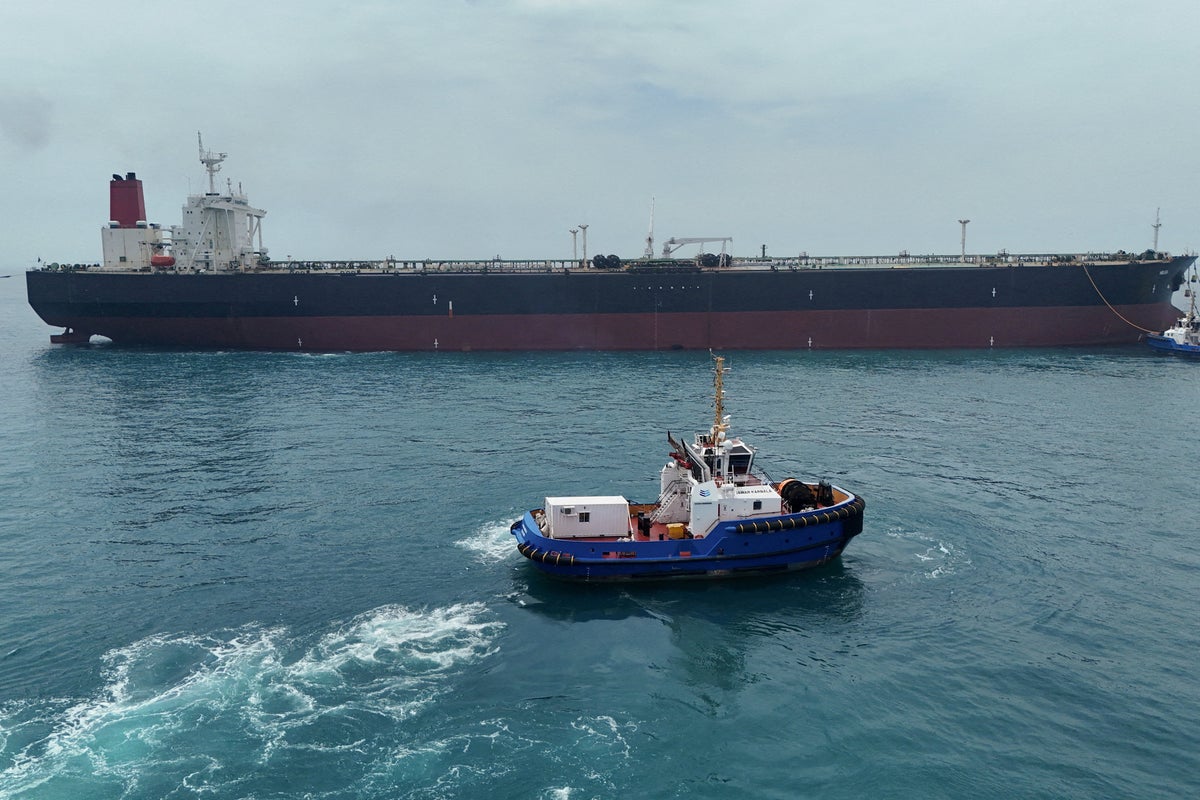
The mainstream media loves a predictable crisis. Every time a naval vessel moves in the Persian Gulf, the financial press rushes to publish the same panicked headline: Iran threatens the Strait of Hormuz, global energy supplies are at risk, and oil prices are about to skyrocket to $150 a barrel.
It is a comfortable narrative. It sells clicks, feeds defense contractor budgets, and satisfies a lazy consensus that treats maritime chokepoints like fragile light switches that can be flipped off at whim.
But the narrative is completely wrong.
The latest warnings demanding oil tankers use strictly approved routes or face a "forceful response" are not the prelude to an economic apocalypse. They are loud, theatrical posturing designed to mask an uncomfortable reality: Iran cannot afford to close the Strait of Hormuz, and the global energy market is far more resilient than the alarmists want you to believe.
Stop pricing in a catastrophic blockade that will never happen. Here is why the conventional wisdom on this chokepoint is fundamentally broken.
The Myth of the Unilateral Shutdown
To understand why the panic is manufactured, look at the actual mechanics of maritime enforcement. The standard commentary implies that a regional power can simply drop an invisible curtain across a 21-mile-wide strip of water and halt 20% of the world’s petroleum liquids.
This ignores basic geography and international law.
The Strait of Hormuz is not a canal cut through a single country's backyard. It is an international strait governed by the transit passage regime under the United Nations Convention on the Law of the Sea (UNCLOS). The shipping lanes themselves are divided into inbound and outbound corridors, separated by a two-mile buffer zone. Most of these lanes sit within the territorial waters of Oman, not Iran.
When a state issues directives about "approved routes," they are not rewriting international maritime law; they are engaging in bureaucratic harassment.
Furthermore, closing a strait requires total command of both the surface and the airspace above it. History shows that disrupting commerce is radically different from stopping it. During the Tanker War of the 1980s, despite hundreds of attacks using anti-ship missiles, mines, and speedboats, less than 2% of the ships transiting the Gulf were ever seriously damaged. Shipping insurance premiums went up, but the oil kept flowing.
The Self-Inflicted Economic Wound
The lazy consensus treats Iran as an isolated, irrational actor operating outside the laws of economic gravity. This is a severe miscalculation.
Iran is fundamentally a petrostate. Even under heavy international sanctions, its economy relies heavily on the export of crude oil and petroleum products, largely routed through the black and gray markets to buyers in Asia.
Consider the logistical reality. If you block the front door to your neighbor's house, you also block the front door to your own.
Shutting down the Strait of Hormuz would immediately freeze Iran's own maritime commerce. It would cut off its remaining economic lifelines, starve its regime of hard currency, and alienate its most important strategic buyers—chief among them China, which imports massive quantities of crude from the region. Beijing has zero interest in seeing its manufacturing engine choked out by an artificial shipping crisis in the Middle East.
I have spent decades analyzing supply chain vulnerabilities, and the golden rule of economic warfare is simple: you do not deploy a weapon that inflicts 100% damage on your own balance sheet. A total blockade is an act of economic suicide, not strategic leverage.
The Redundant Grid
The second major flaw in the alarmist narrative is the belief that global energy logistics have remained static since 1973. The assumption is that if Hormuz closes, the world starves for oil.
This completely undervalues the massive investments made in bypass infrastructure over the last two decades.
- The Habshan–Fujairah Pipeline: Operated by the United Arab Emirates, this pipeline can carry over 1.5 million barrels of crude oil per day directly to the Gulf of Oman, completely bypassing the strait.
- The East-West Pipeline: Saudi Arabia’s massive transport line can move up to 5 million barrels per day from its eastern oil fields across the peninsula to the Red Sea port of Yanbu.
- Global Spare Capacity: The rise of non-OPEC+ production, driven by American shale development, has structurally altered the global supply dynamics. The Western Hemisphere is more self-sufficient than at any point in modern industrial history.
If shipping through Hormuz drops, these redundant systems spool up. The idea that a disruption creates a permanent deficit is an outdated concept from an era before globalized, interconnected pipeline networks.
The Flawed Premise of "People Also Ask"
If you look at what the public asks about this region, the questions themselves are warped by decades of bad analysis.
Can the US military keep the Strait of Hormuz open?
This question assumes the US Navy needs to fight a conventional world war to secure a shipping lane. In reality, modern maritime security relies on convoy escort protocols, electronic warfare countermeasures, and rapid-response mine countermeasures. The Fifth Fleet does not need to colonize the coastline to keep merchant vessels moving; they simply need to ensure the risk-reward ratio remains favorable for commercial insurers.
What happens to oil prices if Hormuz is closed?
The standard answer is "prices double overnight." The brutal, honest answer is that you would see a sharp, speculative spike driven by paper-traders and algorithmic hedge funds panicking in real-time, followed by a rapid correction within weeks. Once the market realizes that physical oil is still moving via alternative routes and strategic reserves are being deployed, the premium evaporates. Speculation creates volatility, not structural scarcity.
The Real Risk Is Micro, Not Macro
Am I saying there is no danger in the Gulf? Absolutely not. But the danger is not the grand, catastrophic war scenario that dominates cable news.
The real risk is a slow, grinding war of friction:
- A localized cyberattack on port infrastructure in the region.
- Arbitrary detentions of single, uninsured ships flying flags of convenience.
- The deployment of low-cost, asymmetrical underwater drones that force insurance companies to raise rates by a fraction of a percent.
This is a tax on shipping, not a blockade. It is an operational nuisance that increases the cost of doing business, but it does not collapse global GDP. It is designed to create anxiety, and every time an analyst exaggerates the threat of a total shutdown, they are handing a psychological victory to state actors using cheap rhetoric to move global markets.
Stop treating every maritime warning like the beginning of World War III. The data does not support it. The geography does not support it. The economic incentives directly oppose it.
The next time a headline tells you the Strait of Hormuz is closing, check the data, look at the alternative pipeline capacities, and ignore the noise. The oil will keep moving. It always does.