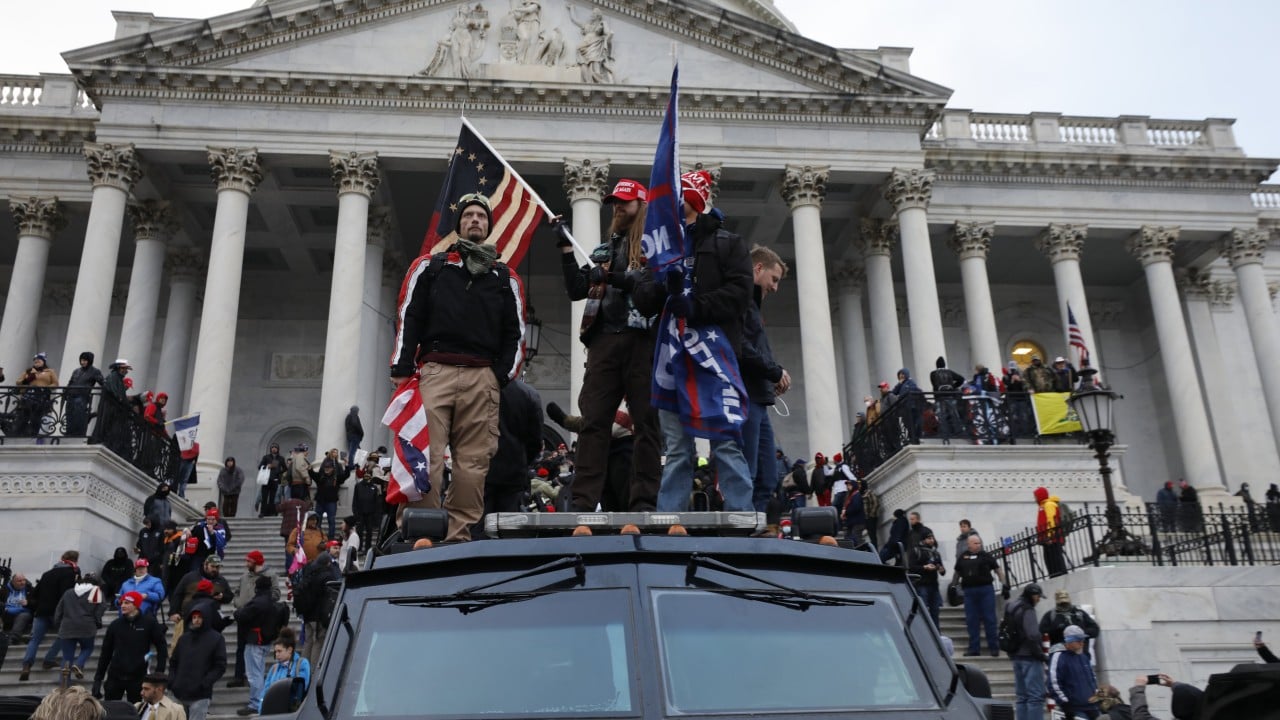
The corporate media is choking on its own outrage cycle over the White House’s $1.776 billion "Anti-Weaponization Fund." Mainstream talking heads and predictable congressional locksteps are hyper-ventilating according to script. They call it a brazen presidential shakedown, an executive overreach, or a taxpayer-funded safety net for political street fighters. The prevailing establishment consensus screams that the fund must be tied up in federal court or dismantled by legislative blockades because it threatens the rule of law.
They are asking the entirely wrong question.
The real threat isn't that this pool of money exists. The real scandal is that both major political parties have spent decades building the exact executive machinery that makes this fund completely legal, highly functional, and virtually immune to traditional checks and balances. Trying to freeze the money through partisan lawsuits is like trying to fix a bursting dam by throwing a bucket of water at it. If you want to understand how the modern American state actually operates, look past the theatre on Capitol Hill and look directly at the plumbing.
The Illusion of Congressional Control
The core argument driving the media coverage is that Congress can simply starve the fund or that a single federal judge can permanently kill it. This view displays an embarrassing ignorance of how federal litigation works.
This money does not require a fresh appropriation vote. It bypasses the standard political theater of budget committees because it draws directly from the Judgment Fund. Created by Congress in 1956, the Judgment Fund is a permanent, indefinite appropriation designed to pay off settlements and judgments against the United States. It is a financial black box.
When the current administration dropped its $10 billion civil lawsuit against the Internal Revenue Service regarding leaked tax records, the Justice Department structured a settlement. Instead of a direct payout to the plaintiffs, the settlement created a mechanism to compensate a broader class of individuals claiming federal "lawfare."
Mainstream analysts claim this is an unprecedented mutation of executive power. I have spent years tracking how federal agencies resolve multi-million dollar disputes, and I can tell you this structure is standard operating procedure wrapped in a different ideological flag.
Consider the historical precedent. During the Obama administration, the Justice Department utilized massive class-action settlements, such as the Keepseagle v. Vilsack case involving discriminatory agricultural lending, to direct hundreds of millions of dollars toward specific initiatives and third-party administrators. The framework is identical:
- An agency faces a massive legal threat or structural liability.
- The Justice Department enters a settlement agreement to mitigate that risk.
- The settlement establishes an administrative body to distribute funds from the permanent Treasury account.
To claim that this current fund is a sudden constitutional breakdown is pure historical revisionism. The executive branch didn't break the rules; it read the manual that its predecessors wrote.
The Fallacy of the Standing Hurdle
Every institutionalist is currently cheering for the lawsuits filed by Capitol Police officers and watchdog groups seeking to block the payouts. They believe the judiciary will step in as a neutral arbiter to save the day.
They are setting themselves up for a brutal lesson in federal civil procedure.
To challenge an executive action in a federal court, a plaintiff must establish Article III standing. This requires proving a concrete, particularized, and imminent injury that is directly traceable to the challenged action.
Look at the structural barriers facing these lawsuits:
- The Speculative Injury Problem: Claiming that paying administrative compensation to individuals will lead to an increased risk of future political violence is a massive causal leap. Federal judges routinely dismiss cases where the alleged harm relies on a chain of highly speculative third-party actions.
- The Taxpayer Standing Barrier: Since the Supreme Court’s ruling in Flast v. Cohen and subsequent jurisprudence, general taxpayers do not have standing to challenge how the executive branch spends money from a general appropriation fund.
- The Executive Settlement Shield: The fund is part of a legally binding settlement agreement approved within a civil framework. Overturning an approved settlement from the outside is one of the steepest uphill climbs in American law.
By focusing entirely on the courtroom drama, critics are ignoring the underlying reality: the legal architecture of the modern administrative state is intentionally built to insulate executive actions from citizen-led lawsuits.
How the Permanent State Wins Either Way
Let's run a thought experiment. Imagine a scenario where a federal judge issues a permanent injunction that completely dismantles the $1.776 billion fund. What changes?
Absolutely nothing.
The structural rot remains untouched. The underlying apparatus—the thousands of un-elected attorneys, the broad immunity doctrines shield federal agents, and the uncontrolled nature of the Judgment Fund—continues to hum along.
If this fund is killed, the next administration will simply use the exact same mechanisms to create its own variation. We will see a "Civil Rights Redress Fund" or a "Corporate Malfeasance Victim Pool" that operates with the exact same lack of transparency, the exact same five-member partisan boards, and the exact same immunity from congressional oversight.
The establishment wants you to focus on the name of the fund and the specific list of potential claimants because that drives clicks and fuels fundraising campaigns. They want you to believe the problem is unique to one specific political actor. The moment you realize that the entire structure of administrative governance is designed to operate outside of legislative control, the partisan illusion falls apart.
Stop Demanding Temporary Fixes
If you want to actually address executive overreach, you must stop treating the symptom and start attacking the source. The frantic demands for quick injunctions are a distraction. True structural accountability requires a complete overhaul of how the federal government settles its own liabilities.
Instead of cheering for symbolic court battles, focus on the real levers of power:
Eliminate the Judgment Fund's Blank Check
Congress must end the permanent, indefinite nature of the Judgment Fund. It should be replaced with a capped, annual appropriation that requires line-item transparency for any settlement over $10 million. If an agency wants to settle a massive dispute by creating a rolling administrative commission, it should be forced to defend that choice before a public congressional committee, not hide it inside a consent decree.
Strip Executive Settlement Autonomy
The Attorney General should not possess the unilateral authority to create independent compensation boards through civil settlements. Any settlement that establishes an ongoing financial distribution mechanism must require explicit legislative ratification.
The $1.776 billion fund is not a localized glitch in the matrix. It is the natural, logical outcome of a system that has systematically stripped power away from the legislature and handed it to executive branch attorneys. Stop looking at the scoreboard and start looking at the rules of the game. The current fight isn't about protecting democracy; it's a turf war over who gets to command an unaccountable empire.