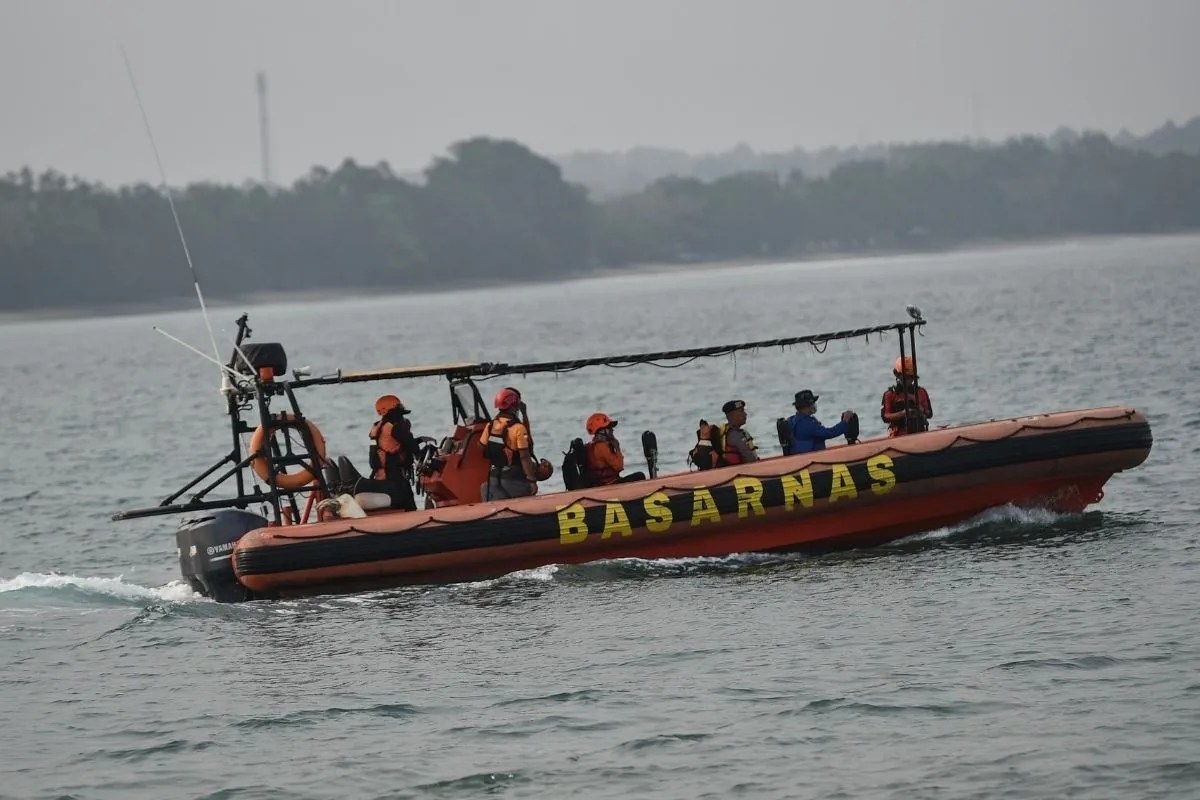
The headlines following the latest Anak Krakatau unrest follow a tired, predictable script. Another search operation called off. Families left hanging. Media outlets recycling emotional soundbites about closure, hope, and tragedy. Everyone treats the cessation of rescue efforts like a moral failure, a surrender to the elements, or an institutional collapse. It is none of those things. It is simple, unvarnished reality facing off against human sentimentality.
When authorities in Indonesia pulled the plug on the active search for the eight missing individuals near Anak Krakatau, the public outcry was loud. Critics claimed urgency was sacrificed. Bureaucrats were accused of cutting corners. But let us strip away the emotional varnish and look at what is actually happening in the Sunda Strait. Don't miss our earlier article on this related article.
Anak Krakatau is not a static geological feature where you can drop a rescue team with a flashlight and expect orderly recovery operations. It is a live, breathing, highly unpredictable volcanic cone that routinely shatters the baseline assumptions of emergency management. Treating search and rescue in an active volcanic zone as a bureaucratic choice rather than a physical impossibility is the kind of dangerous delusion that gets more people killed.
The Myth of Infinite Recovery
Emergency response frameworks are built on a comforting fiction. We assume that given enough manpower, funding, and stubbornness, every catastrophe can be managed, every body recovered, every family given closure. That works fine in a controlled urban environment or a stable marine shelf. It is suicidal fantasy when applied to an active basaltic-andesitic stratovolcano that drops ballistic bombs and triggers submarine mass flows without RSVPing. To read more about the background here, Associated Press offers an informative summary.
I have spent enough time tracking hazard mitigation across the Pacific Ring of Fire to know the standard playbook. Officials wait out the initial blast. They map the ash plumes. They send out patrols until the risk-to-reward curve flips violently into negative territory. Then, they call it. And then the howling begins from commentators sitting thousands of miles away in air-conditioned comfort, wondering why the locals did not just look harder.
The hard truth is that the ocean around Anak Krakatau does not preserve evidence; it consumes it. Pyroclastic density currents entering water behave with catastrophic violence, creating boiling surges, churning underwater avalanches, and localized tsunami waves that rearrange the seabed in seconds. If an individual is caught in the immediate impact zone of an Anak Krakatau eruption, the physics of the event leave virtually zero probability of a surface-level recovery.
Clinging to the hope of finding survivors days after a volcanic maritime disaster in these specific waters is not empathy. It is innumeracy.
Why the Public Asks the Wrong Questions
When search operations shut down, the public immediately defaults to a specific set of queries. How many boats were deployed? Why did they stop so soon? Who made the call to abandon the search?
These questions miss the plot entirely. They assume the constraint is human will. The constraint is thermodynamics and geology.
People Also Ask: Can underwater drone technology find missing victims near active volcanoes?
The honest answer is: rarely, and almost never in an active hazard zone. Sonar arrays, remotely operated vehicles, and thermal imaging cameras require a stable platform and a somewhat predictable medium. When you drop expensive marine robotics into waters choked with pumice rafts, suspended ash, and shifting underwater debris fields generated by an active eruption, those machines become expensive anchors. The particulate density destroys thrusters, and continuous seismic tremors skew telemetry.
People Also Ask: Is closure impossible without a body?
Psychologically, humans crave finality. Culturally, funeral rites anchor grief. But geography does not care about human psychology. The Sunda Strait has been a graveyard of empires and ecosystems since the cataclysmic 1883 explosion of the original Krakatoa. Anak Krakatau is merely the unruly child of that ancient monster, continuing the family tradition of total annihilation. Expecting suburban-style emergency recovery standards in a zone of active tectonic subduction is peak hubris.
The Cost of Performative Rescue
Keeping search teams deployed in a theater of active volcanic hazard is not just futile; it is irresponsible. Every vessel anchored near a restless caldera is a hostage to fortune. When a secondary pulse occurs—and Anak Krakatau has a habit of punching through lulls with sudden Strombolian or vulcanian explosions—those rescue workers become the next headline.
We saw this play out across multiple disaster zones globally. Governments often keep token search efforts running long past scientific viability simply to appease public optics. They burn taxpayer capital and risk first-responder lives to perform a ritual of care that yields zero statistical return. That is not leadership. That is theater.
Real authority means having the spine to look a grieving public in the eye and say: Physics has closed this case. We cannot go back there without trading living rescuers for missing ones.
Shifting the Paradigm of Risk
We need to stop evaluating maritime volcanic disasters through the lens of human drama alone and start respecting the parameters of planetary violence. Indonesia sits on the most volatile tectonic real estate on Earth. The communities lining the shores of the Sunda Strait live with this bargain every single day. They understand, better than any armchair pundit, that the mountain rules the coastline.
When search operations are called off, it is not an abandonment of humanity. It is an acknowledgment that nature has set its boundary lines, and crossing them is a one-way ticket. Accept the geology. Respect the hazard. Stop pretending every tragedy comes with a neat, tidy resolution if we just try hard enough.