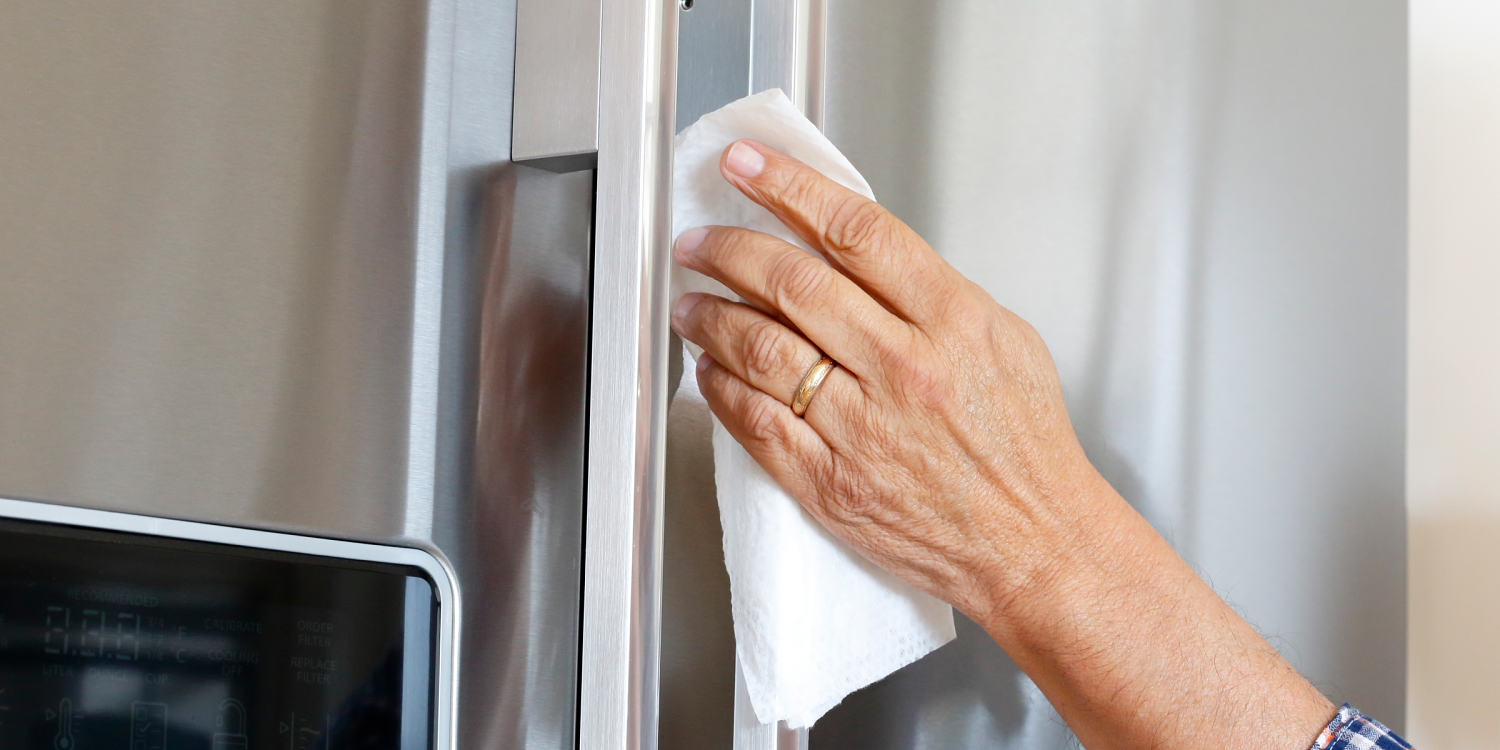
The Shiny Lie of Four Step Guides
Most cleaning guides are written by people who have never spent a day in a commercial kitchen. They tell you to grab a microfiber cloth, some dish soap, and maybe a splash of vinegar. They promise a "streak-free shine" in four easy steps.
They are lying to you. For a different perspective, check out: this related article.
Worse, they are teaching you how to slowly strip the chromium oxide layer off your expensive appliances, inviting the very corrosion and "tea staining" you’re trying to prevent. Your fridge isn't a mirror; it’s a metallurgical achievement. Treat it like one. If you are following the "lazy consensus" of scrubbing with DIY concoctions every Saturday morning, you aren't cleaning. You are accelerating the aging process of your kitchen.
The Myth of the Gentle Cleaner
The most common advice on the internet is to use a mixture of water and mild dish soap. On the surface, it sounds safe. In reality, it’s a recipe for a sticky, polymer-heavy film that acts as a magnet for dust and grease. Further insight regarding this has been shared by Refinery29.
Most dish soaps contain surfactants designed to grab onto animal fats and hold them in suspension. When you apply this to a vertical stainless steel surface and "wipe it away," you aren't removing everything. You are leaving behind a microscopic layer of soap scum. The next time you cook, the airborne grease from your stovetop hits that soap residue and bonds to it.
Within forty-eight hours, your "clean" fridge has a tacky tactile feel. You think it’s dirty, so you wash it again. You are trapped in a cycle of creating the very grime you hate.
Vinegar is Not Your Friend
Then there’s the vinegar crowd. They love to talk about "natural" acidity. Here is the metallurgical reality: Stainless steel gets its "stainless" property from a passive layer of chromium oxide. This layer is thin. Extremely thin. Constant exposure to acetic acid (vinegar) can destabilize this layer, especially if you aren't rinsing it off with surgical precision.
You aren't "disinfecting" a fridge door. You’re etching it. Stop using salad dressing to maintain a high-end alloy.
Stop Going With the Grain
Every amateur guide tells you to "wipe with the grain." This is the most misunderstood instruction in the history of home maintenance.
The "grain" on brushed stainless steel is a series of microscopic directional scratches created during the finishing process. When you wipe with the grain using a standard cloth, you are simply pushing debris deeper into those valleys. You aren't lifting the dirt; you’re packing it in.
If you want to actually clean the surface, you need to work across the grain to lift the particulates out of the grooves, followed by a buffing motion. The obsession with "going with the grain" is purely aesthetic—it hides streaks better. It does not result in a cleaner surface. It results in a surface that looks clean while harboring a buildup of organic matter in the micro-troughs of the metal.
The Mineral Oil Scams
Most commercial "stainless steel cleaners" found in the grocery store aisle are nothing more than scented mineral oil.
I have seen homeowners spend hundreds of dollars a year on these sprays. What they are doing is painting their appliances with oil. Oil hides fingerprints by saturating the surface so that the oil from your skin doesn't show a contrast. It’s an optical illusion.
The downside? Mineral oil is a dust trap. It also goes rancid over time when exposed to heat and oxygen. If the side of your dishwasher feels "gummy," it’s because you’ve been layering oil on top of oil for six months.
The Professional Standard: Chemistry Over Elbow Grease
If you want your kitchen to look like a showroom, you have to stop thinking about "washing" and start thinking about passivation and degreasing.
- True Degreasing: Forget the soap. Use an alkaline cleaner or a specialized solvent like isopropyl alcohol (70% or higher). This breaks the molecular bond between the grease and the metal without leaving a surfactant film. It evaporates instantly. No streaks. No residue.
- The Microfiber Fallacy: Most people use cheap, looped-pile microfiber. These are abrasive. Over time, they create "haze" on the finish. Use a flat-weave microfiber or a chamois.
- The Water Problem: If you live in an area with hard water, stop letting tap water touch your appliances. The calcium and magnesium deposits (limescale) will bond to the chromium oxide. Once those white spots are there, you’ll be tempted to use an abrasive sponge to get them off. That is the "death spiral" for your finish. If you must use water, use distilled.
Why Your "Deep Clean" is Failing
People ask: "How do I get rid of the streaks?"
The answer is: You can't, because you're using too much product. The industry secret is that the less you put on the metal, the better it looks. The "four-step" methods involve so much wetting and wiping that you’re essentially just moving a puddle of diluted dirt around until it dries.
I have consulted for architectural firms that install thousands of square feet of stainless steel in high-traffic lobbies. They don't use "cleaners." They use dry steam and vacuum suction. Why? Because any chemical intervention is a risk to the finish.
The Hard Truth About Scratches
Let’s address the elephant in the room: You cannot "clean" a scratch out of stainless steel.
There are "scratch repair kits" on the market that involve sandpaper. Unless you are a professional finisher with a steady hand and a deep understanding of grit progression, you will ruin your appliance. You will create a "shiny spot" that looks worse than the original scratch.
Accept the patina or hire a pro. Do not follow a YouTube tutorial that involves a scouring pad and a prayer.
The Only Method That Actually Works
If you insist on a routine, throw away the competitor’s handbook and do this:
- Dry Dust First: Use a static duster or a vacuum with a soft brush attachment. Most "scratches" happen because you are dragging household dust (which contains silica) across the metal with a wet rag. You are literally sanding your fridge with your own house dust.
- Spot Clean with Alcohol: Put 70% Isopropyl alcohol in a spray bottle. Mist a flat-weave cloth—not the appliance—and wipe the fingerprints.
- Buff Dry: Use a second, bone-dry cloth to remove any remaining vapor.
That’s it. No soap. No vinegar. No "natural" oils.
You aren't maintaining a kitchen; you're maintaining a laboratory-grade surface. If you want the "homey" look of a cluttered, greasy kitchen, keep using the soap and water method. If you want a kitchen that actually stands the test of time, stop cleaning it so much and start cleaning it correctly.
The "lazy consensus" wants you to buy more spray and spend more time scrubbing. The industry reality is that the best-looking stainless steel is the steel that is touched the least and treated with the simplest chemistry possible.
Put the vinegar back in the pantry. It belongs on your spinach, not your Sub-Zero.