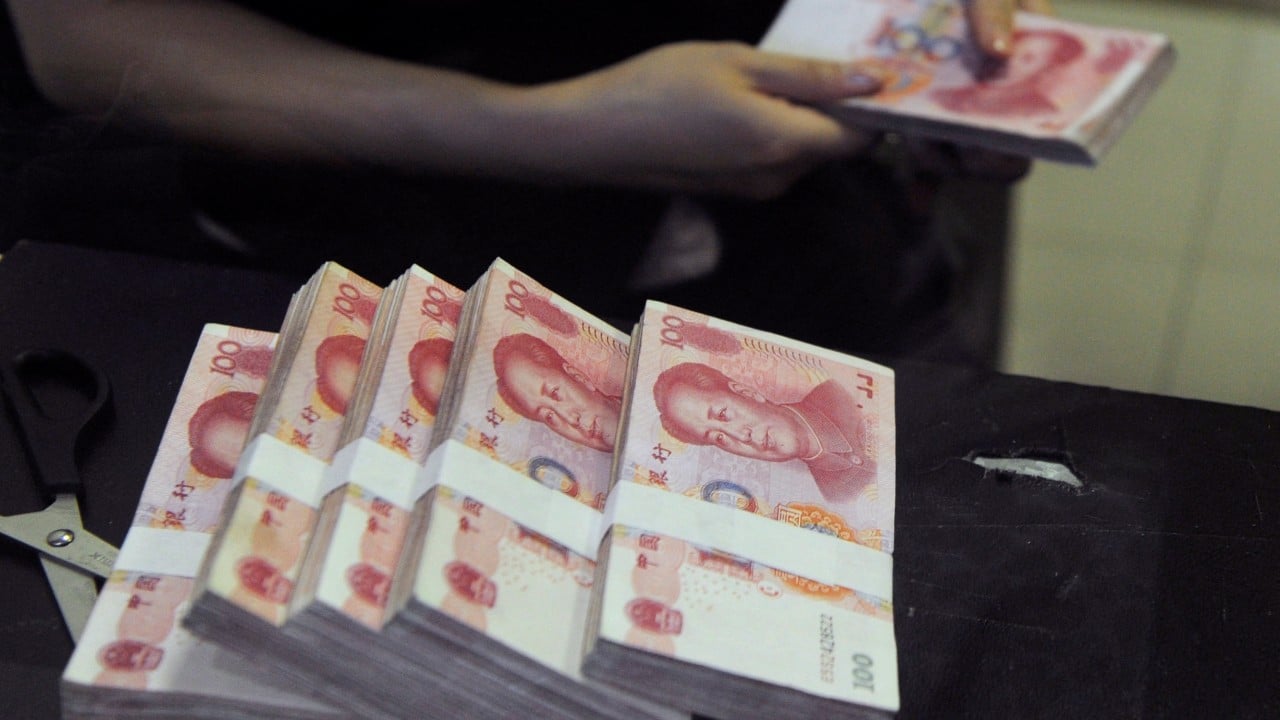
Financial commentators are suffering from a chronic inability to see the forest through the transaction receipts. For months, the mainstream financial press has regurgitated the same lazy narrative: Russian exporters are experiencing payment bottlenecks with Chinese commercial banks, regional lenders are rejecting transfers, secondary U.S. sanctions are biting, and therefore, the grand experiment of de-dollarization has hit an insurmountable wall.
This analysis is not just superficial; it is fundamentally wrong.
The Western consensus mistakes tactical friction for structural failure. They view a compliance bottleneck at a commercial bank in Zhejiang as proof that the U.S. dollar's hegemony is secure. What they fail to grasp is that a geopolitical divorce of this magnitude is not a software update. It is a messy, multi-layered re-engineering of the global financial plumbing. The minor hiccups occurring at the retail and commercial banking levels do not expose the limits of de-dollarization. Instead, they represent the inevitable, violent birth pains of a parallel financial architecture.
The Fatal Flaw of the Commercial Bank Narrative
The core argument of the status quo is simple: because major Chinese banks—fearful of losing access to the clearinghouse mechanisms of the U.S. dollar—have tightened compliance or rejected payments from Russian counterparties, de-dollarization is an illusion.
This argument ignores the deliberate stratification of the Chinese banking system. Over the last two decades, I have watched Western analysts consistently misjudge how Beijing deploys state capitalism. China does not operate a monolithic financial sector where every institution shares the same risk tolerance or geopolitical mandate.
When the Industrial and Commercial Bank of China (ICBC) or Bank of China delays a cross-border payment, they are not acting as proxies for the failure of the renminbi (RMB). They are acting as commercial shock absorbers. Beijing expects its top-tier, globally systemic banks to comply superficially with Western dictates to protect their trillions in foreign-denominated assets.
The real action is happening off-broadway. While the headline-grabbing megabanks create friction to appease Western regulators, specialized, localized, and non-dollar-clearing regional banks are quietly absorbing the flow. These tier-three and tier-four banks have no footprint in the United States, no correspondent banking relationships with New York institutions, and zero exposure to the Society for Worldwide Interbank Financial Telecommunication (SWIFT). They are entirely insulated from secondary sanctions because they have nothing for the U.S. Treasury to seize.
The Illusion of the 2025 Trade Slowdown
Skeptics love to point to the trade figures of 2025, noting that bilateral trade between Moscow and Beijing dipped slightly after hitting a record high above $240 billion. The immediate conclusion drawn by the financial press was that the economic engine of this anti-Western alliance had run out of gas.
Once again, the consensus missed the nuance. The slight contraction in 2025 trade volume was a function of valuation, not structural retreat. The decline was heavily driven by a drop in global energy commodity pricing and a temporary saturation of the Russian domestic market for Chinese consumer electronics and automobiles following the initial post-2022 scramble.
Look at the rebound in the first half of 2026. Data from the early months of this year shows bilateral trade surging back by 20% year-on-year. The fundamental drivers of this economic relationship are structural, not cyclical. Russia requires an industrial lifeline and a market for its heavily discounted hydrocarbons; China requires a secure, overland supply of commodities that cannot be choked off by the U.S. Navy in the Strait of Malacca or the South China Sea. To assume that a temporary payment bottleneck at a commercial desk will halt this existential macroeconomic alignment is sheer fantasy.
Dismantling the Ignorant Questions
When analyzing this monetary shift, the questions asked by corporate risk managers and economic journalists are fundamentally flawed.
Does the lack of full RMB convertibility prevent de-dollarization?
This is the most common "People Also Ask" style objection. The logic goes: because Beijing maintains a closed capital account and strictly regulates the outflow of the yuan, the currency can never replace the greenback.
This objection fundamentally misunderstands the objective of the Sino-Russian financial axis. The goal is not to replace the U.S. dollar with a new global hegemon that behaves exactly like the dollar. Moscow and Beijing are not trying to create a liquidity pool for global speculators to trade currency derivatives. They are building a closed-loop, bilateral clearing mechanism.
In a bilateral trade ecosystem, full convertibility is a bug, not a feature. When Russia and China settle 90% of their massive trade volume in rubles and yuan, they do not need the currency to be liquid in London or New York. They need it to clear goods between Moscow and Beijing. The yuan that Russia accumulates through oil sales are directly recycled to purchase Chinese industrial machinery, microchips, and automotive components. It is a sophisticated form of digitized barter, insulated from the global financial casino.
Can Russia trust the yuan if it cannot easily spend it outside of China?
The short answer is: they do not have a choice, and they do not care. Authoritarian regimes facing existential geopolitical pressure prioritize systemic survival over portfolio optimization.
Imagine a scenario where a corporate treasury manager tells a government fighting a proxy war that they should stop selling oil because the currency they are receiving has a 3% liquidity premium or restricted access to European equity markets. It is an absurd premise. The alternative for Russia is economic strangulation. The friction of dealing with a tightly controlled Chinese currency is a minor cost of doing business when the alternative is total exclusion from international commerce.
The Plumbing is Real: CIPS and mBridge
The most dangerous misconception is that an alternative financial system is still just a theoretical PowerPoint presentation inside the Kremlin or the People's Bank of China. The plumbing is already built, and it is operational.
The Cross-Border Interbank Payment System (CIPS), developed by China, is not just a carbon copy of SWIFT. While SWIFT is merely a messaging network that relies on Western correspondent banks to actually move money, CIPS is increasingly integrating both messaging and direct clearing capabilities for the renminbi.
Furthermore, look at the development of mBridge—the multi-central bank digital currency (mCBDC) bridge platform developed alongside the Bank for International Settlements. By utilizing distributed ledger technology, mBridge allows central banks to settle cross-border transactions directly with one another in digital currencies, completely bypassing the correspondent banking system of the West.
$$Trade\ Settlement = Central\ Bank\ A \xrightarrow{mBridge\ Ledger} Central\ Bank\ B$$
This eliminates the need for a chain of intermediary banks in New York or London, which is precisely where Western sanctions are enforced. This is not a project for the distant future. It is happening now, and the payment frictions we see today are simply the messy calibration of these new tracks.
The High Cost of the New Architecture
To maintain credibility, we must acknowledge the glaring vulnerabilities of this parallel system. It is far from perfect.
For Russia, the downside is severe: total asymmetric dependence on Beijing. By abandoning the dollar and the euro, Moscow has tied its economic destiny to the strategic whims of the Chinese Communist Party. Russia has transformed from a superpower into an economic vassal state, forced to accept the exchange rates, banking fees, and trade terms dictated by Beijing. If a Chinese regional bank decides to hike transaction fees by 4% to cover its compliance risks, Russian exporters have no choice but to pay up.
For China, the risk is the constant threat of contamination. Beijing must carefully calibrate its alternative architecture so that it grows fast enough to provide strategic autonomy, but not so fast that it triggers a premature, total economic decoupling from the West, which still buys the vast majority of its manufactured exports.
The Reality Check
Stop analyzing the demise of the dollar based on whether a single shipment of machine tools was delayed for three weeks at a border bank in Heilongjiang.
The Western financial elite are comforting themselves with tactical noise while ignoring the macro-signal. The Russia-China payment frictions are not proof of the limits of de-dollarization; they are the friction of a massive, tectonic shift in the global monetary landscape. The parallel system is being tested, stressed, and hardened under the pressure of Western sanctions. Every time a transaction is blocked and a new workaround is engineered, the alternative network becomes more resilient.
The old world order, where a single capital city could freeze the reserves of a sovereign nation and halt its global trade with the stroke of a pen, is fracturing. The new plumbing is being laid, and it is being paid for in rubles and yuan.
For a deeper look into how these alternative financial networks are evolving on the ground, check out this critical breakdown on the Sino-Russian financial alignment and the reality of bilateral trade mechanisms, which highlights the strategic shifts occurring outside Western reporting.