Mainstream political coverage treats a presidential flight manifest like a crystal ball. Every time Air Force One crosses the Pacific, newsrooms scramble to publish breathless seating charts, treating proximity to the cabin as the sole metric of geopolitical influence.
That approach is fundamentally flawed.
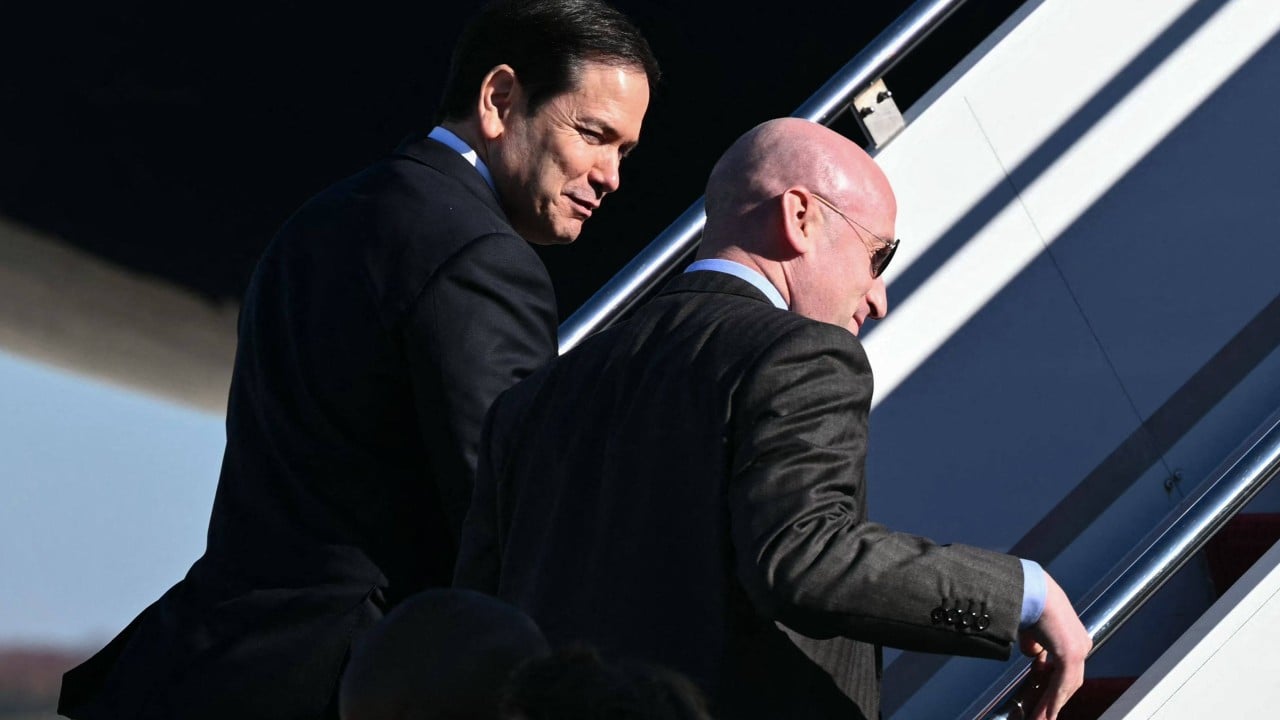
When outlets ask "Who was with Trump on Air Force One for the trip to Asia?" they are chasing a shiny object while missing the actual machinery of American foreign policy. Knowing which press secretary, junior staffer, or cabinet official sat in the forward cabin tells you almost nothing about how trade deals get hammered out, how defense postures shift, or where real leverage lives in the Indo-Pacific.
In Washington, a seat on the plane is often a consolation prize, a logistical necessity, or pure political theater. The real architects of an Asia strategy rarely need to burn jet fuel to prove they are in the loop.
The Myth of the Proximity Metric
Political journalism relies heavily on what insiders call "access theater." Because reporters cannot sit inside closed-door bilateral negotiations with foreign heads of state, they fixate on what they can see: the tarmac walk, the press pool gaggle, and the official travel roster.
Look at how standard coverage breaks down an Asia trip. Outlets meticulously list the National Security Advisor, the Secretary of State, the Chief of Staff, and a rotating cast of trade representatives and communications aides. Then, pundits spend forty-eight hours psychoanalyzing why one official made the cut while another stayed behind in D.C.
Here is the reality of executive branch logistics: Air Force One has finite square footage, strict weight-and-balance limits, and rigid security protocols managed by the White House Military Office. A massive chunk of that passenger list consists of Secret Service details, White House Communications Agency technicians, military aides carrying the nuclear football, and pool reporters.
Even among senior advisors, being on the manifest frequently means you are on babysitting duty—managing press optics, handling domestic fires back home via secure line, or filling a ceremonial chair at state dinners. Meanwhile, the people actually drafting the tariff schedules, structuring semiconductor export controls, or coordinating naval freedom-of-navigation operations are often sitting at desks in Foggy Bottom, the Pentagon, or the Eisenhower Executive Office Building.
Why Staying in Washington Often Signals Greater Power
If you want to understand who holds real sway during a high-stakes Asia swing, stop looking at who got on the plane and start looking at who stayed behind to run the store.
In any administration—and especially in one built around centralized, top-down decision-making—leaving a principal behind in Washington is a massive delegation of trust. Someone has to manage Congress, keep federal agencies aligned, and respond to domestic emergencies while the President is twelve time zones away.
Furthermore, modern diplomacy does not pause for a fourteen-hour flight over the Bering Sea. Consider how major Indo-Pacific policy actually gets executed:
- Advance Teams Do the Heavy Lifting: By the time Air Force One touches down at Yokota Air Base in Japan or Osan Air Base in South Korea, the deliverables are already 95% locked in. Deputy assistant secretaries and career foreign service officers have spent months grinding through the text of communiqués. The principals on the plane are mostly there for the photo op and the final 5% of leader-to-leader horse-trading.
- Backchannels Bypass the Cabin: High-level economic and security negotiations frequently run through informal envoys, sovereign wealth executives, or trusted business figures who fly commercial or private, arriving days ahead without ever appearing on a White House press release.
- The Time Zone Trap: When the President is awake in Tokyo or Seoul, Washington is asleep. Principals on the plane spend half their trip operating in an information vacuum, waiting for D.C. staffers to wake up and clear interagency legal reviews.
Treating the flight manifest as a definitive power ranking ignores how bureaucracy actually functions. A seat on the jet is visibility; control over the interagency process is power.
What the Travel Roster Actually Reveals
Does the manifest tell us nothing? No. If you read it like an operator instead of a gossip columnist, it reveals specific tactical priorities—just not the ones headlines usually highlight.
Instead of counting heads, look at the functional balance of the delegation.
When a manifest is heavy on the U.S. Trade Representative’s office, Treasury officials, and Commerce leads, the administration is signaling a transactional, bilateral economic push—focused on trade deficits, tariffs, and supply chain reshoring. When the roster tilts toward the Department of Defense, the Indo-Pacific Command leadership, and the National Security Council’s defense directorate, the trip is about deterrence, base access, and regional security architecture.
Look also at the congressional hangers-on. Presidents routinely invite friendly senators or House committee chairs along for segments of an Asia trip. That is rarely about foreign policy input. It is domestic legislative lubrication—buying goodwill on the Hill ahead of upcoming confirmation battles or budget fights by offering lawmakers a prestigious international backdrop.
Finally, examine the communications ratio. An oversized contingent of press aides, speechwriters, and social media directors proves the trip is designed primarily for domestic consumption rather than diplomatic breakthroughs. When an administration wants quiet, substantive concessions from Asian allies, it shrinks the media footprint and leaves the campaign-style messaging team at home.
The Trap of Personality-Driven Foreign Policy Coverage
The obsession with who is in the room—or on the plane—stems from a broader failure in modern political reporting: reducing complex geopolitical shifts to palace intrigue.
Asia is not a backdrop for Washington soap operas. Whether the United States is navigating semiconductor supply chains in Taiwan, defense burden-sharing in South Korea, maritime disputes in the South China Sea, or trade friction with Beijing, structural realities dictate the outcomes far more than which advisor whispered in the President's ear over the Pacific Ocean.
Allies in Tokyo, Seoul, Manila, and Canberra do not make multi-billion-dollar defense procurement decisions or rewrite industrial policy based on who sat in row three of Air Force One. They respond to hard incentives: American naval presence, market access, tariff threats, and domestic political pressures within their own borders.
To be fair, individual personalities do matter when a president favors personal rapport with foreign leaders over traditional diplomatic channels. In those moments, the presence of a trusted loyalist or a specific ideological hardliner in a bilateral meeting can tilt the tone of a conversation. Ignoring the personnel entirely would be naive.
But over-indexing on the flight manifest mistakes the staging for the substance. A hawkish advisor on the plane cannot magically erase a trade deficit, and a dovish diplomat on the manifest cannot wish away structural rivalries in the Taiwan Strait.
How to Actually Read a Presidential Asia Trip
If you want to know what a presidential trip to Asia actually accomplished—and who drove it—ignore the tarmac photos and track three concrete indicators instead:
- The Joint Statements vs. Unilateral Readouts: When a trip produces real alignment, both nations release a unified, specific joint statement detailing concrete commitments. When a trip is mostly theater, each side issues its own vague readout emphasizing completely different talking points.
- The Follow-Up Regulatory Actions: Real power shows up thirty to sixty days later in the Federal Register—new Treasury sanctions, Commerce Department entity list additions, or USTR tariff modifications. Trace those documents back to the agencies that drafted them, and you will find who actually ran the trip.
- The Bilateral Meeting Lengths: Scheduled thirty-minute pull-asides that stretch into ninety-minute working sessions indicate genuine negotiation. Rapid-fire, twenty-minute grip-and-grins indicate pre-cooked talking points where the cabin crew was just along for the ride.
Stop tracking who got a boarding pass. Start tracking who signs the paperwork after the wheels touch back down at Joint Base Andrews.