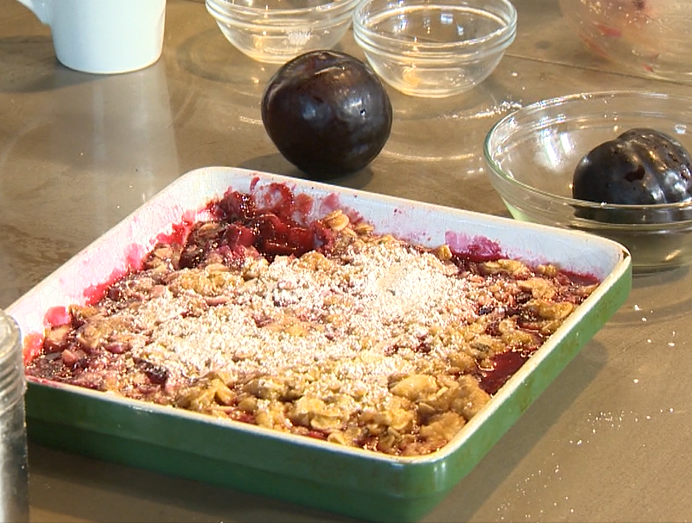
Plum crisp is a disaster of modern baking. Every recipe online follows the same tired playbook. Take tart stone fruit, bury it under a mountain of flour, butter, and brown sugar, bake it until it bubbles into a soupy mess, and call it dessert. It is a lazy cop-out for people who do not understand how acid, pectin, and heat actually interact. You end up with a soggy bottom, a cloying crust that tastes like raw oats, and fruit that has lost all structural integrity.
I have watched line cooks and home bakers alike ruin tens of thousands of pounds of fresh produce because they refuse to treat fruit with any technical respect. They treat plums like apples or berries, throwing them into a pan unceremoniously and hoping a cup of granulated sugar fixes the lack of technique. It does not. It turns the pan into a sticky swamp. Recently making waves recently: Why Reading Books Feels Harder Than Ever and How to Fix It.
To fix this, we need to dismantle the core assumptions of fruit baking.
The Pectin Paradox You Are Ignoring
The standard recipe tells you to slice your plums, toss them with cornstarch or flour, and throw them straight into the oven. This assumes that raw fruit will cook evenly at the exact same rate your oat topping browns. It is a physical impossibility. Further information regarding the matter are explored by Refinery29.
Plums contain massive amounts of malic and citric acid, coupled with wildly fluctuating levels of natural pectin depending on ripeness. When you dump raw, un-macerated plums directly into a baking dish, the acid attacks the structural cell walls before the heat can activate the starch thickener. The result is a runny, acidic soup beneath a burnt crust.
You need to cook the fruit down first. This is where traditionalists clutch their pearls. They argue that pre-cooking makes the fruit mushy. Exactly the opposite is true. By reducing the plum juices on the stovetop with a precise amount of sugar and a touch of salt to tighten the cellular matrix, you drive off excess water and pre-activate the natural pectin.
Imagine a scenario where you take control of the moisture content before it ever touches the oven. You get a glossy, concentrated jammy base that actually holds its shape when spooned, rather than sliding off the plate like swamp water.
Why Your Topping Sucks
Most crisp toppings taste like cardboard because they rely on an equal-parts ratio of flour, oats, and butter. It is a textureless blanket. Rolled oats straight out of the canister absorb moisture too slowly, meaning they stay tough and chewy on the outside while the butter melts out and pools at the bottom of the dish.
If you want a contrast that actually cuts through the rich, tart punch of cooked plums, you have to engineer the topping for structural variance.
- Toast your oats in a dry skillet with a pinch of flaky sea salt before mixing them into the fat. This kickstarts the Maillard reaction and drives out raw cereal flavors.
- Ditch standard granulated sugar in the topping. Use muscovado or dark dark brown sugar for its high molasses content, which creates chewy, caramelized edges rather than a sandy crumble.
- Cut the butter quantity down by twenty percent and brown it first. Water content in raw butter steams the flour and creates a heavy, doughy crust. Clarifying or browning the butter removes that water weight, leaving you with pure milk solids that toast into a nutty, brittle shard.
The Acid Trap
People default to sweetening plum desserts into oblivion because they are terrified of tartness. Black amber, Santa Rosa, and damson plums pack a formidable wallop of malic acid. The amateur response is to dump a cup of white sugar over the fruit to mask it.
This completely misses the culinary point of stone fruit. Acidity is not a flaw to be corrected with sweetness; it is the engine of the dish. When you drown a plum in sugar, you flatten the flavor profile until it tastes like generic high-fructose corn syrup.
Instead, balance the natural acid with fat and salt. A heavy pinch of kosher salt tossed directly with the plums does not make them salty; it suppresses the bitter notes of the plum skins and amplifies the perception of natural sugars. Pair that tart, salted fruit base with a heavy-handed, deeply toasted oat crumble, and you create tension on the palate. Tart meets savory meets crisp.
Rewriting The Blueprint
Stop using baking dishes that are too deep. A deep glass casserole dish traps steam underneath the fruit, ensuring your bottom layer turns to mush regardless of how long you bake it. Switch to a shallow cast-iron skillet or a wide ceramic gratin dish. Surface area is your best friend when you are trying to evaporate water and crisp up a topping simultaneously.
Bake it hot and fast, not low and slow. A 350-degree oven is a slow-motion disaster for fruit crisps, melting the butter out of the topping before the flour can set, resulting in a greasy slide. Crank the oven to 400 degrees Fahrenheit. The aggressive heat sets the oat structure immediately, browns the butter solids to a deep amber, and traps the steam inside the plum reduction just long enough to burst the cell walls without turning them to liquid.
Stop baking like you are following instructions on the back of a flour bag. Treat your ingredients like chemicals undergoing a reaction, respect the natural water content of stone fruit, and stop serving soup in a bowl.