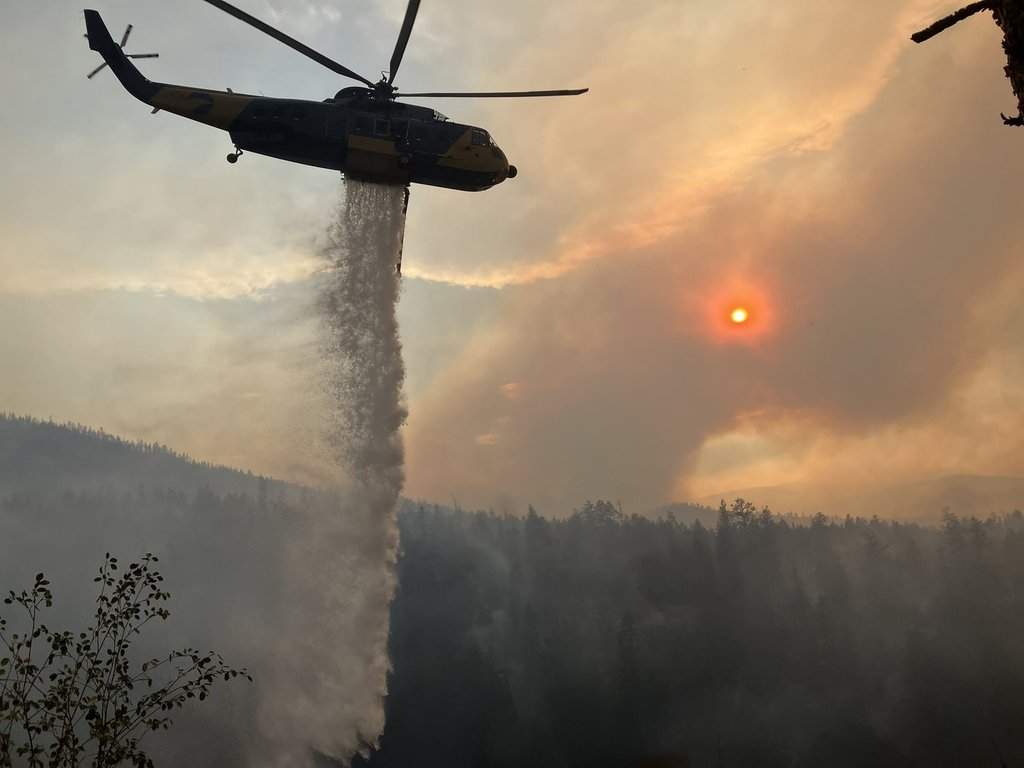
Every time a flood crests a levy or a wildfire scorches another subdivision, the script rolls out like clockwork. Climate advocacy groups hit the press briefings, warning that federal work on climate adaptation is dangerously inadequate. They scream for billions more in federal funding, larger retaining walls, higher sea barriers, and deeper disaster recovery funds. Thelazy consensus is clear: the government is failing us because it is not building enough concrete armor to hold back the planet.
It is a comforting narrative for activists and politicians alike. It treats climate adaptation like a plumbing problem. Just buy a bigger pipe.
I have watched public funds burn through this exact logic for two decades. I have seen municipal governments throw millions at coastal reinforcement, only to watch the insured property values behind those walls skyrocket by fifty percent within three years.
Federal climate adaptation, as currently conceived, is not a shield. It is a subsidy for hazardous living.
When you spend federal dollars to protect vulnerable real estate, you do not eliminate risk. You institutionalize moral hazard. You tell every developer, insurer, and homebuyer that the American taxpayer will underwrite their choice to build in a floodplain or a wildfire corridor. The more federal money we pour into defense mechanisms, the more wealth we entice into harm's way.
The Feedback Loop of Perverse Incentives
Economists call this the Peltzman effect. When you make drivers wear seatbelts, they drive slightly faster because they feel safer. The safety gear alters behavior in a way that offsets the protection.
Apply that to climate adaptation. Build a ten-million-dollar seawall around a barrier island, and watch what happens. The perceived risk drops to zero. Local councils approve high-density zoning. Real estate speculators swoop in. Property values climb, which means tax revenues climb, which creates an even larger asset base demanding federal protection when the wall inevitably breaches.
Climate groups treat adaptation as a race against nature. They assume that if nature pushes harder, our adaptation spending must accelerate to match it. That framing ignores the human variable entirely. We are not failing to adapt because we lack funding. We are failing because our adaptation policies are engineered to encourage maximum exposure.
Federal agencies like FEMA and the Army Corps of Engineers are trapped in a feedback loop. Their mandate is to protect life and property where it currently sits. But capital is fluid; water is heavier. Every dollar spent on defensive infrastructure in a high-risk zone is a dollar stolen from dynamic, proactive relocation strategies.
The Myth of Comprehensive Resilience
Let us look at the data governing infrastructure resilience. For every dollar spent pre-disaster on mitigation, studies from organizations like the National Institute of Building Sciences claim we save six dollars down the line. That statistic gets weaponized in every congressional hearing.
Here is the caveat the advocates leave out. Those savings calculations assume the underlying asset remains static. They assume the house behind the seawall stays a modest cottage, and the population density remains flat. But capital does not stay flat. People migrate toward the coast and toward the arid sunbelt precisely where climate vulnerability is highest.
When you upgrade a floodgate to handle a hundred-year storm, you do not protect a static community. You invite three times as many people to move into the danger zone before the next fifty-year storm hits. The aggregate risk profile of the nation goes up, even as the localized engineering looks pristine on paper.
We are not adapting. We are subsidizing the status quo until the math breaks completely.
Why Managed Retreat is the Only Exit Strategy
The uncomfortable truth that no environmental lobbyist wants uttered at a podium is simple: managed retreat is the only rational framework left.
Not retreat out of defeatism, but retreat as a disciplined, capital-allocation strategy. We need to stop throwing good money after bad concrete. The federal government should phase out flood insurance subsidies for repetitive-loss properties immediately. Every time a home floods three times in a decade, the federal backstop should dissolve, and the payout should be contingent on one condition: you bulldoze the foundation, restore the wetland, and move inland.
This sounds cruel to people sitting in vulnerable homes today. But what is crueler? Continuing to fund the illusion that a seaside mansion can be defended indefinitely against rising tides, or helping those communities relocate before the catastrophe forces their hand without a safety net?
I have walked through towns where federal adaptation grants bought a temporary reprieve. A five-year extension on a dying zip code. The residents celebrated the new berms and drainage pumps, blind to the fact that their local economy was calcifying. They were chained to a geography that economics and ecology had already abandoned.
Dismantling the Industrial Adaptation Complex
There is a booming corporate lobby behind the climate adaptation industrial complex. Engineering firms, dredging contractors, and concrete manufacturers love the current paradigm. Every disaster declaration is an earnings call.
When climate groups demand more federal work on adaptation, they are unwittingly serving as the marketing department for heavy civil contractors. More money directed toward hard infrastructure means more contracts for pouring massive walls of reinforced cement into estuaries and coastlines that nature is actively trying to reclaim.
Hard armor fails. It alters littoral drift, starves down-current beaches of sand, and destroys natural sponges like salt marshes and mangrove forests. When an armored coast finally fails, the energy of the wave is amplified, creating a catastrophic collapse rather than a gradual adjustment.
Nature does not negotiate with engineering specs.
What Actually Works
If we want real climate adaptation, we must invert our entire policy posture.
- Abolish Pre-Disaster Subsidies for High-Risk New Construction: If a developer wants to build in a high-risk wildfire or flood zone, let private capital price that risk accurately. If private insurers refuse to touch it without extortionate rates, that is the market telling you not to build there. Listen to it.
- Reallocate Capital to Relocation Funds: Take the billions currently earmarked for sea walls and levees and redirect them into voluntary buyouts and municipal relocation infrastructure. Help entire towns pick up their economic centers and move to higher ground before the crisis hits.
- Prioritize Nature-Based Buffers Over Hard Infrastructure: Where defense is truly necessary to protect legacy urban centers, stop pouring concrete. Restore wetlands, widen river floodplains, and let natural systems absorb the shock.
The next time you hear a climate coalition argue that federal adaptation work is lagging behind the crisis, look closer at what they are actually asking for. They are usually asking for a bigger shovel to dig a deeper hole.
We do not need more adaptation money. We need the courage to stop subsidizing stupidity.