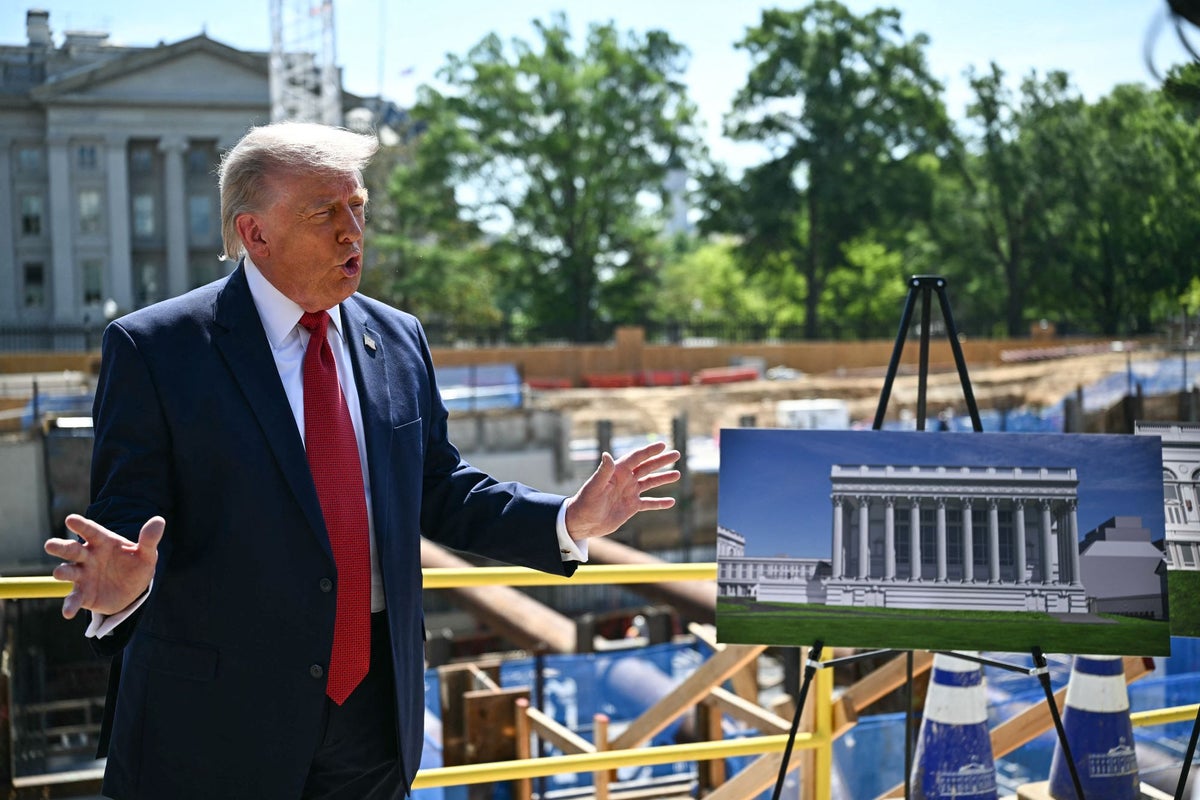
The architectural commentariat is having a collective, multi-million-dollar meltdown.
If you read the mainstream critiques of the current construction wave hitting Washington, D.C., the narrative is entirely predictable. Critics call it a "gaudy farce," an "egotistical takeover," or a "dangerous rewriting of the federal city’s landscape". They point with horror to the renderings of a 250-foot Triumphal Arch rising over the Potomac River. They gasp at the $1.4 billion White House ballroom expansion. They faint at the sight of a temporary UFC Octagon being erected on the South Lawn for America's Semiquincentennial.
The lazy consensus is that Donald Trump is breaking Washington.
The reality is far more brutal: Washington was already dead, buried under decades of sterile, bureaucratic brutalism and institutional inertia. What the critics are actually mourning isn't the architectural integrity of the capital. They are mourning the death of their own monopoly on public taste.
I have spent decades watching real estate developers, urban planners, and federal art commissions burn billions of dollars on projects that nobody likes, nobody visits, and nobody remembers. They build glass cubes and concrete slabs that resemble premium insurance brokerages, then call it "democratic transparency."
Trump’s hyper-populist, real-estate-magnate intervention in D.C. isn't a political aberration. It is a market correction to fifty years of elite architectural failure.
The Myth of the Sacred Skyline
The central premise of the outrage machine is that Washington’s classical core is a fragile, finished masterpiece that must never be altered. This is historical fiction.
Washington has always been an aggressive, ego-driven real estate project. Pierre Charles L’Enfant didn't design the city via a focus group; he designed it to project raw geopolitical power. When the Washington Monument was built, critics called it a "hideous obelisk" that would ruin the city's proportions. When the Lincoln Memorial was proposed, purists threw tantrums because it was placed in an isolated, swampy marsh.
Every great monument in human history was built by a polarizing leader trying to cement a legacy. To complain that a president is "fashioning himself as Washington, D.C.'s developer-in-chief" is to completely misunderstand what the city is.
Let's dissect the targets of the current media panic:
1. The 250-Foot Triumphal Arch
Critics argue that putting an arch at Memorial Circle dwarfs the Lincoln Memorial and disrupts a "somber corridor" near Arlington National Cemetery. They claim a 250-foot structure is fundamentally un-American.
Why? Because the Arc de Triomphe in Paris is only 164 feet? Since when does the United States take design cues or scale limitations from 19th-century Europe? The argument that the scale is "thematically jarring" is code for "it makes us uncomfortable because it is loud".
Public architecture should be loud. The 250-foot height corresponds directly to the 250th anniversary of the nation's founding. It is literal, unsubtle, and populist. It rejects the modern architectural dogma that public spaces must be neutral, apologetic, and depressing.
2. The $1.4 Billion White House Ballroom
The demolition of the East Wing to build an 89,000-square-foot ballroom has been framed as a historic crime. But let's look at the operational reality. The White House is an active diplomatic and state venue. For decades, foreign heads of state have been hosted under temporary plastic tents on the lawn because the state dining room holds fewer than 140 people.
It is embarrassing for the world's largest economy to host global summits in structures that look like upscale wedding venues in Ohio. Building a permanent, massive space for statecraft makes structural and long-term financial sense, regardless of the price tag or the aesthetic preferences of the current administration.
3. The South Lawn UFC Octagon
This is the ultimate trigger for the cultural elite. A steel cage on the pristine grass of the executive mansion.
But ask yourself: what is more genuinely reflective of modern American culture? A stiff, scripted gala featuring an opera singer that 99% of Americans turn off within four seconds, or a raw, high-energy sporting event that commands the attention of millions of everyday citizens? Thomas Jefferson hosted casual, booze-fueled open houses where citizens tracked mud through the carpets. Andrew Jackson invited a 1,400-pound block of cheese into the foyer and let a mob eat it. The White House has always been a house of the people, and the people watch cage fighting, not the ballet.
Dismantling the PAA Fallacies
The public debate around these developments is infected with terrible premises. Let’s address the common questions floating around the internet with some actual honesty:
Doesn't this scale violate the Height of Buildings Act of 1910?
The 1910 Act limits commercial and residential building heights to protect the skyline from turning into a canyon of skyscrapers. It was never intended to chain the federal government from building monuments. The Washington Monument is 555 feet tall. If the 1910 Act applied to federal monuments, half of D.C.’s postcard landmarks wouldn't exist.
Is this a waste of taxpayer money during an uncertain economy?
This is a classic misdirection. The funding for these projects relies heavily on private donations, repackaged inaugural funds, and reallocated ceremonial budgets. But even if it were 100% taxpayer-funded, public infrastructure and civic pride are legitimate state expenses. We routinely spend hundreds of billions on unreadable omnibus bills and failed weapons programs without a peep from the design critics. Spending a fraction of that on permanent infrastructure for the capital is a drop in the bucket.
Won't a 250-foot arch pose a safety hazard for planes landing at Reagan National Airport?
This is the funniest argument of all—using aviation safety as a shield for aesthetic snobbery. Planes do not routinely fly through the trees of Memorial Circle at 200 feet. D.C. airspace is the most tightly regulated and heavily monitored sky on earth. If a pilot hits a 250-foot monument at Memorial Circle, the city has much bigger problems than the location of the arch.
Why the Esthetic Cartel is Terrified
The real panic here isn't about safety, cost, or history. The panic is about control.
For fifty years, a small, insular network of Ivy League architects, museum curators, and federal panel appointees have dictated what America looks like. They hate classicism because it's too populist; they hate bold scale because it requires conviction. Instead, they forced a diet of uninspiring, soulless brutalism down the public's throat. Think of the J. Edgar Hoover Building—a crumbling, concrete monstrosity that actively repels human eyes. That is what the "experts" gave us when left to their own devices.
Trump’s approach relies on a totally different philosophy: Regional Car Dealership Rococo meets Classical Imperialism. It is unpolished, heavily gilded, and massive. It is exactly what the average American imagines a monument should look like if you gave them a billion dollars and told them to make something grand.
Is there a downside to this? Of course. When you build for the masses, you lose subtlety. You get four massive golden lions and giant inscriptions that leave zero room for artistic nuance. If you are looking for understated, intellectual minimalism, you will not find it here.
But public monuments are not meant to be intellectual puzzles for art critics to solve over white wine. They are meant to be visceral anchors of national identity.
The Actionable Reality
If you are an investor, a resident, or an observer of urban development, stop listening to the architectural obituaries being written in the legacy press. The transformation of Washington is a clear signal that the era of bureaucratic design stagnation is over.
- Accept the new aesthetic paradigm: The demand for grand, classical, and maximalist architecture is returning. The minimalist glass box era is dying.
- Ignore the legal challenges: Organizations trying to use local land-use laws to stop federal monument construction are playing a losing hand. The executive branch has immense leverage over federal land, and the courts rarely interfere with semiquincentennial infrastructure.
- Watch the money: The capital influx into D.C. for these mega-projects is going to stimulate local construction, engineering, and luxury hospitality sectors for the next decade.
The critics can keep writing their columns about the "follies" towering over the White House. Meanwhile, the steel is being poured, the gold leaf is being applied, and the octagon is being built. Washington is being forced into the 250th anniversary of the nation with its eyes wide open, shedding the boring skin of its mid-century bureaucratic malaise.
The old guard lost the keys to the city. Get used to the gold.
For a deeper dive into the specific design proposals and the physical layout of the upcoming construction projects across the capital, you can watch this breakdown of the Trump Triumphal Arch Renderings.


