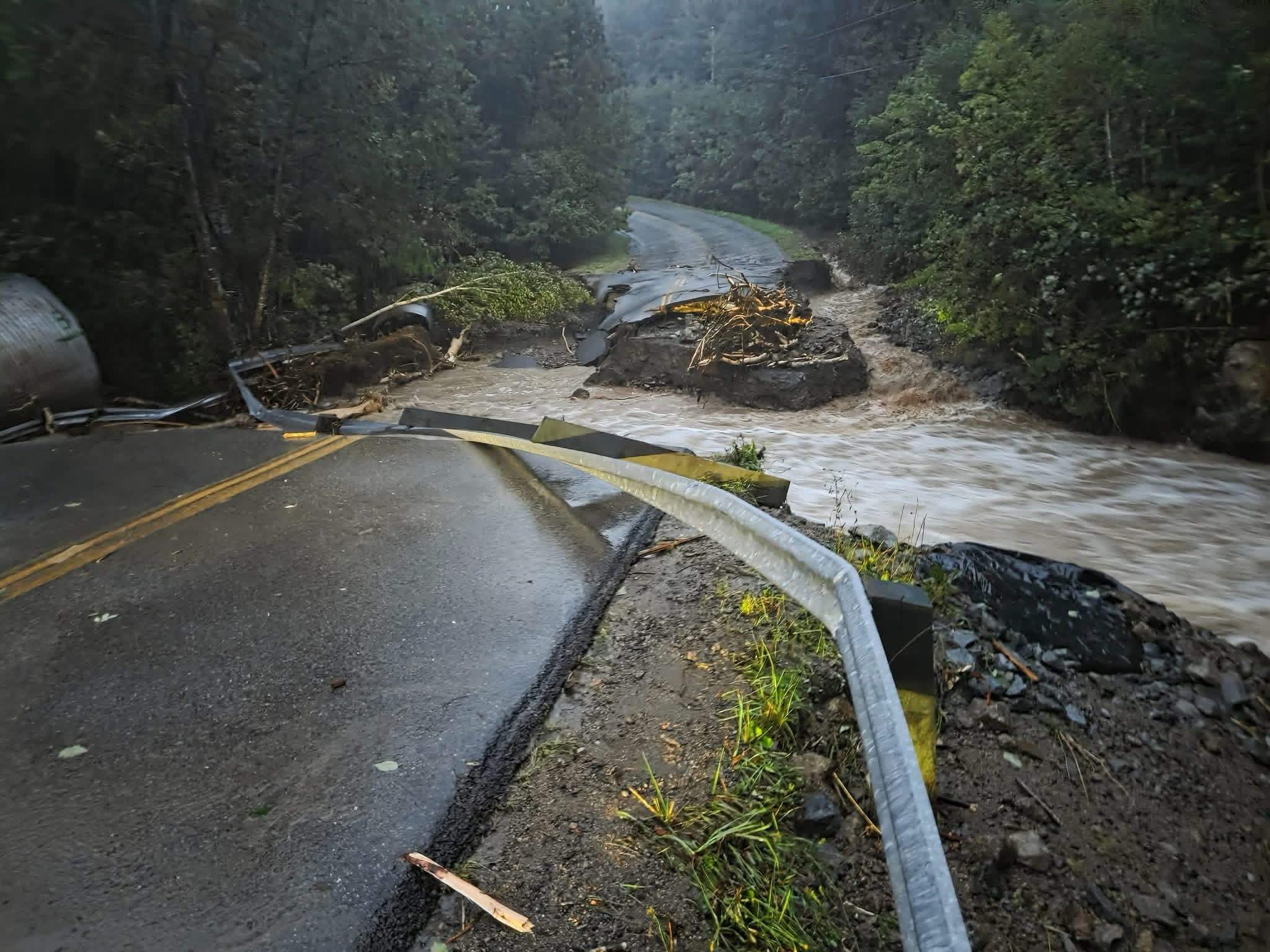
The media is popping champagne because a few graders managed to claw back a gravel lane on West Bay Road. Headlines scream that the stranded are saved, the crisis is receding, and the public works department deserves a medal for pushing mud around. It is a comforting narrative. It is also a dangerous delusion.
When over two hundred millimetres of rain turns rural Nova Scotia into an archipelago of isolated communities in less than forty-eight hours, patching a culvert with identical specs to the one that just washed away is not recovery. It is a down payment on the next disaster.
The Myth of Return to Normal
Local officials line up at press conferences to praise the resilience of Cape Bretoners, pointing to reopened corridors in Richmond, Victoria, and Inverness counties as proof of a system that works. This praise acts as a smokescreen for systemic failure. We are treating multi-day paralyzing washouts as anomalous acts of God rather than predictable engineering deficits.
Bridges and roadways built to mid-century hydrological standards cannot handle modern atmospheric rivers. When a culvert fails, replacing it with the exact same diameter pipe three feet lower in the ditch saves money today and guarantees a blowout tomorrow. The lazy consensus in municipal planning assumes that weather is cyclical. It is directional. The baseline has shifted, yet our civil engineering manuals are stuck in 1974.
Imagine a scenario where a provincial government froze all standard road reconstruction funds for six months, redirecting every single engineering dollar toward climate-adaptive infrastructure like oversized box culverts, engineered wetlands, and reinforced roadbeds. Traffic would hurt for a season. Taxpayers would squawk. But bridges would stay put when the next storm dumps a foot of rain.
Instead, we applaud temporary gravel shims that wash out with the next high tide or heavy drizzle.
Who Pays for the Band-Aids
The human cost of this infrastructure theater is staggering. While bureaucrats boast about opening access points, residents are left relying on side-by-sides, chainsaws, and makeshift ATV trails through private timberland just to get cancer treatments or check on elderly relatives. Community solidarity is admirable, but it is not a municipal policy. Relying on neighbours with all-terrain vehicles to bridge the gap left by a collapsing state infrastructure network is a moral hazard.
Insurer payouts and provincial disaster assistance forms are designed to wear down claimants through bureaucratic friction. Property owners spend weeks documenting warped floorboards and flooded foundations while public works ministers promise that the entire network will be restored within days. Those promises rely on an accounting trick: temporary passage is equated with permanent security. A road you can creep across in first gear while dodging orange pylons is not a fixed road. It is a liability waiting for its next victim.
Rethinking Rural Vulnerability
The standard playbook for rural flood recovery focuses entirely on reactive logistics. Clear the debris, drop the gravel, reopen the school, move on. This approach treats symptoms while ignoring the root pathology of rural planning: linear development along vulnerable waterways without redundancy.
If a peninsula or rural community relies on a single coastal artery for egress, that community is structurally compromised. True mitigation requires redundancy. It means investing in secondary access routes that might cost more upfront than patching a coastal shelf, but guarantee that an entire municipality does not become a hostage to geography every time a slow-moving front stalls over the Bras d'Or Lake.
Stop accepting temporary patches as permanent victories. Demand engineering that outlasts the storm cycle.