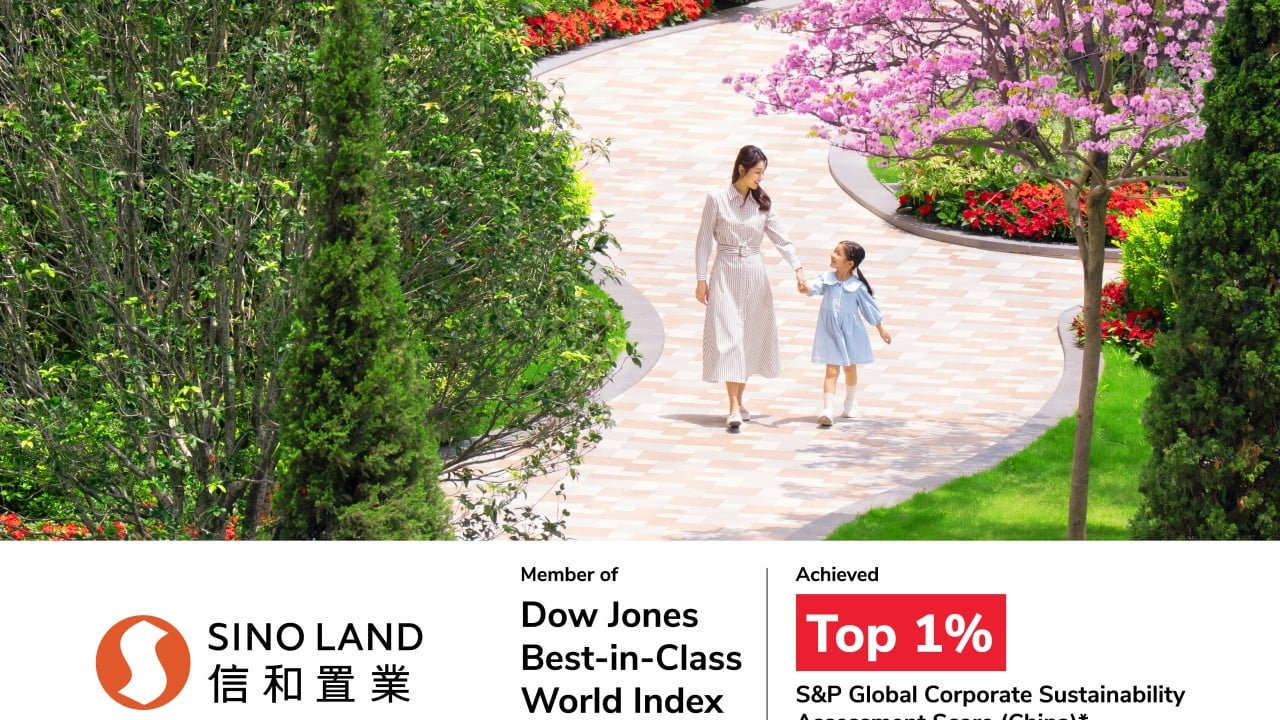
Corporate press releases love the smell of self-congratulation in the morning. The latest industry consensus is practically begging you to throw a party for Sino Land because they secured a top 1% spot in the S&P Global Corporate Sustainability Assessment Score for China, coupled with an upgraded AAA rating from MSCI ESG Ratings. The media is eating it up. They frame these badges of honor as undeniable proof of environmental stewardship.
They are completely wrong.
I have watched developers dump millions of dollars into chasing index metrics, and the reality is ugly. The correlation between a sky-high Environmental, Social, and Governance (ESG) rating and actual, measurable decarbonization of our planet is tenuous at best. The corporate real estate sector has perfected the art of treating sustainability as a compliance game rather than an operational overhaul. When a property giant brags about global recognition, they are not necessarily saving the environment. They are simply winning an optimization race designed by data aggregators.
The Flawed Premise of the AAA Scorecard
To understand why a top-tier ESG rating is an illusion of progress, you have to look at what agencies like MSCI and S&P actually measure. An ESG rating does not calculate a company’s total ecological footprint or its net damage to the biosphere. Instead, it measures risk exposure. Specifically, it assesses how well a company's financial bottom line is protected against environmental regulations and climate shifts.
Imagine a scenario where a property developer builds a massive luxury tower. They use immense quantities of carbon-heavy concrete, displace local ecological habitats, and rely on supply chains stretching halfway across the globe. However, because their legal team handles climate disclosures beautifully, their board is highly diversified, and they purchase carbon offsets to neutralize Scope 1 emissions on paper, the algorithms reward them with a flawless score.
The current framework rewards documentation over disruption. A developer gets points for establishing an ESG Steering Committee or hosting a "Sustainability Month." Meanwhile, the actual physical structure they erected continues to leak heat and consume vast amounts of grid power. It is an administrative victory, not an ecological one.
The Green Building Certification Trap
The industry standard defense always points to green building certifications. We hear data points like "90% of new buildings achieved BEAM Plus certification." This sounds impressive to an outsider, but anyone who has managed a commercial real estate portfolio knows how the system is played.
Certifications like BEAM Plus or LEED operate on a point accumulation model. You can secure points for installing bike racks, putting up signs about water conservation, or using a specific brand of low-VOC paint. Developers routinely engage in point-chasing behavior to secure a "Gold" or "Platinum" rating while bypassing the most difficult, expensive, and impactful structural changes—like installing geothermal heat pumps or fully eliminating fossil gas hookups from the foundation.
True decarbonization requires a radical transformation of embodied carbon, which is the emissions generated during the manufacturing, transportation, and construction of building materials. According to the World Green Building Council, building operations and construction are responsible for nearly 39% of global energy-related carbon emissions. Chasing certifications that prioritize operational checklists over the fundamental physics of construction material carbon intensity is a systemic failure.
The Scope 3 Escape Hatch
The most glaring gap in the corporate sustainability narrative is the handling of Scope 3 emissions. For a real estate developer, Scope 3 encompasses tenant energy consumption and the upstream carbon emissions embedded within the supply chain. This is where the vast majority of a building's true environmental impact hides.
It is easy to validate long-term emissions reduction targets through bodies like the Science Based Targets initiative (SBTi) for Scope 1 and Scope 2 emissions because the company directly controls those utility bills. But when it comes to the supply chain, developers turn to alliances and voluntary compliance networks. They launch initiatives like a "Supplier Climate Alliance" and host training hours through internal academies.
This is soft diplomacy masquerading as operational execution.
Training your suppliers’ middle management does not change the fact that the steel factory they utilize is powered by a coal-dominated grid. It passes the ethical buck down the line while allowing the parent company to claim credit for "engagement." If a company cannot legally enforce carbon maximums across its entire concrete and steel supply chain, its global ESG accolades are nothing more than a marketing strategy.
The Capital Allocation Misconception
The ultimate justification for pursuing these indices is that they attract capital. The logic dictates that institutional investors use the Dow Jones Sustainability Index or the FTSE4Good Index Series to allocate funds toward ethical businesses.
Let us look at the mechanics of how this actually functions. ESG indexing has turned into a massive fee-generation engine for financial institutions. By bundling companies into specialized exchange-traded funds (ETFs) based on these data provider scores, asset managers can charge higher management fees for "sustainable" products.
The downside to this contrarian view is obvious: ignoring these frameworks entirely can alienate risk-averse institutional capital that requires check-the-box ESG compliance to meet their own mandates. But let us not confuse access to liquidity with planetary rescue. The capital flowing into AAA-rated property stocks is not funding radical green infrastructure research; it is buying equity in companies that have the lowest regulatory risk profile.
Shift the Strategy From Metrics to Physics
If the current system of global recognition is fundamentally broken, how should a progressive real estate enterprise actually operate? The solution requires abandoning index optimization and focusing on physical, absolute metrics.
Stop measuring success by your position in a regional yearbook. Start measuring it by material efficiency and structural longevity.
- Enforce Embodied Carbon Caps: Mandate strict, non-negotiable carbon limits per square meter for every single building material used, regardless of supplier complaints. If a supplier cannot prove their steel was produced using electric arc furnaces or green hydrogen, fire them.
- Tie Executive Pay Explicitly to Absolute Grid Reductions: Strip away the qualitative metrics from executive bonuses. Do not reward a C-suite executive for launching an educational campaign or hosting an experiential workshop. Tie their compensation directly to the year-over-year reduction in absolute megawatt-hours consumed across the entire managed portfolio.
- Retrofit Over New Construction: The greenest building is the one that already exists. Instead of leveling older structures to build shiny, certified new towers that require a massive upfront carbon debt, reallocate capital toward deep energy retrofits of existing urban stock. This approach is rarely rewarded with flashy global awards because it lacks the PR appeal of a brand-new architectural marvel, but it is the only way to meet genuine climate targets.
The industry consensus will continue to celebrate index upgrades, yearbook inclusions, and corporate press releases. But as long as these accolades are based on risk management frameworks rather than absolute carbon reduction, they remain a distraction from the structural work required to transform our built environment. Stop playing the compliance game. Focus on the physics of the building, or stop claiming you care about the planet.