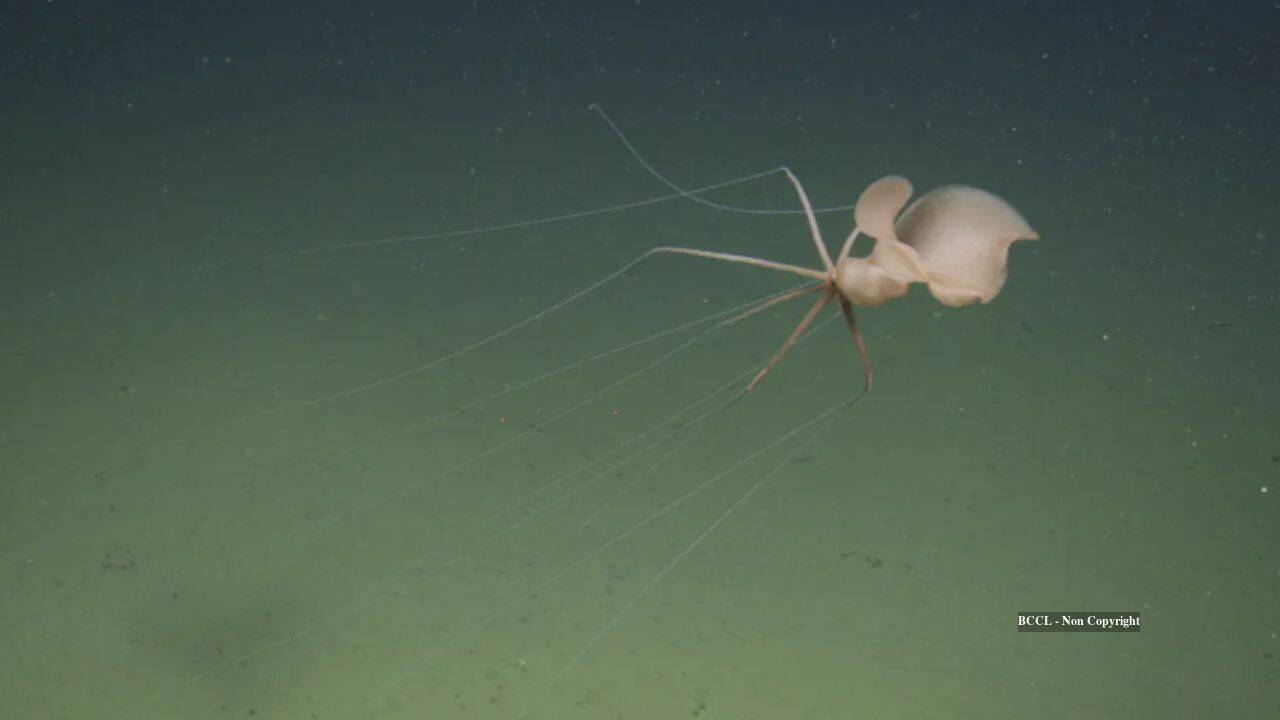
Every few months, a robotic arm captures grainy, low-contrast footage of a translucent, nightmarish cephalopod trailing translucent whip-like tentacles ten thousand feet down, and the internet collectively loses its mind. The media serves up the exact same tired headline: Robot finds rare bigfin squid two miles below California in first live Northeast Pacific sighting. Millions of clicks. Endless awe. Total distraction.
We treat these abyssal encounters like miraculous close encounters with alien life. We marvel at the resilience of a creature enduring crushing pressure and absolute dark, as if the deep ocean were some untouchable interstellar sanctuary.
It is not. It is our planetary trash can, and we are treating its inhabitants like sideshow acts.
I have spent years looking at how capital flows into oceanographic projects, and the disconnect between our fascination with deep-sea biology and our active destruction of deep-sea habitats is staggering. We gasp at a rare bigfin squid sighting off the coast of California while commercial interests quietly plot to carve up the abyssal plains for polymetallic nodules.
The lazy consensus says these discoveries prove nature is infinitely resilient, hiding away in its dark fortress, safe from human meddling. That is a dangerous fairy tale.
The Myth of the Untouchable Abyss
The core failure in how we process deep-sea exploration is our geographic illiteracy. People think two miles down means a parallel dimension. It does not. The ocean is a single, interconnected fluid engine.
When a remotely operated vehicle spots Magnapinna drifting gracefully above the sediment, the prevailing narrative frames the creature as a monarch surveying an empty kingdom. In reality, that squid is navigating a thin soup of microplastics, chemical runoff, and rising water temperatures that trickle down from the surface faster than most marine biologists care to admit.
We pat ourselves on the back for building cameras that can withstand ten thousand pounds of pressure per square inch, and then we use that exact same technological prowess to map out mining claims for manganese, cobalt, and nickel. The deep ocean is not a pristine museum. It is the next frontier of industrial extraction, and our viral videos of weird squids are the PR smoke screen making it look like a magical wonderland rather than a fragile ecosystem on the brink.
What the Bigfin Squid Actually Tells Us
Let us talk about the biology because the romanticized version of the bigfin squid completely misses how these organisms actually survive.
Most people look at those grotesquely long, elbowed tentacles and assume they are whip-like weapons used to snatch fast-moving fish. Wrong. They are passive drifting traps. The squid hovers above the benthic floor, trailing its filaments like weighted fishing lines, waiting for microscopic crustaceans to bump into them.
That feeding strategy relies on a motionless, undisturbed water column. Introduce the seismic thumping of deep-sea mining exploration, or the constant whir of heavy industrial dredging equipment, and you destroy the hydrodynamic stability those appendages depend on.
When researchers gasp at the rarity of these sightings, they mistake our lack of observation for natural scarcity. Bigfin squids are not necessarily rare; they are just localized to environments we rarely visit, using a sensory apparatus finely tuned to absolute silence. Every time we drop a multi-million-dollar robotic submersible into their habitat with roaring thrusters and blinding halogen floodlights, we are shining a stadium spotlight into the eyes of an animal that has evolved for absolute dark. We are disturbing the very ecosystem we claim to want to protect.
The Real Threat Is Coming from the Boardroom
Imagine a scenario where a deep-sea mining consortium successfully strips the Clarion-Clipperton Zone of its mineral wealth over the next decade. The sediment plumes kicked up by these robotic vacuum cleaners will travel thousands of miles on abyssal currents, choking benthic filter feeders and smothering the unique habitats that support species like the bigfin squid.
The corporations funding the submersibles are often the same ones lobbying international bodies to loosen environmental protections for the high seas. They love the viral marketing of a spooky, beautiful squid because it frames the ocean as vast, mysterious, and ultimately too big for human activity to permanently damage.
It is the exact same psychological trap used by oil companies running ads featuring sea otters while drilling off the coast.
We do not need another breathlessly written news piece marveling at how strange nature is down where the sun does not shine. We need a fundamental shift in how we regulate the high seas. Right now, international waters operate on a Wild West model where whoever has the deepest pockets and the heaviest machinery gets to stake a claim.
Stop Watching the Screen
The next time a video of an abyssal cephalopod crosses your feed, do not just hit like and scroll past. Ask yourself who funded the expedition, what permits were approved in that exact grid sector that week, and why we are spending billions on finding new life-forms just in time to accidentally poison them.
The ocean does not need our wonder. It needs our restraint. Stop treating the deep sea like a sci-fi movie set, and start treating it like the life support system it actually is.