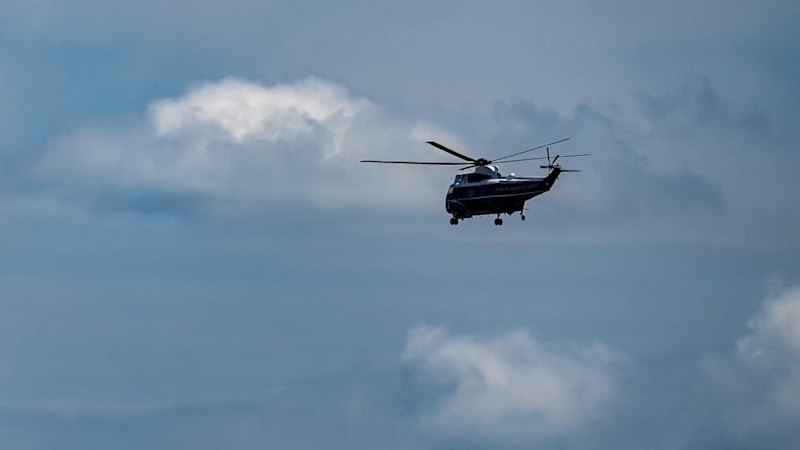
Another day, another media meltdown over a routine piece of aviation friction. The headlines scream about a terrifying near-miss over the nation's capital, featuring Marine One and a commercial regional jet. Analysts clutch their pearls. Pundits demand immediate congressional hearings.
The lazy consensus says this proves the skies above Washington are broken, a ticking time bomb of incompetent air traffic control and reckless military logistics.
It is absolute theater.
Let us look at the actual data instead of the panic porn. A "loss of separation" sounds catastrophic to someone whose primary interaction with aviation is ordering a ginger ale in row 24. In the grinding reality of high-density air traffic corridors, separation standards are built with massive safety margins. Falling below a 1.5-mile horizontal buffer does not mean metal is about to shear. It means two heavily tracked, highly visible aircraft dipped inside a legal buffer zone for a matter of seconds before vectoring apart.
I have watched organizations waste millions chasing phantom systemic risks while ignoring the boring, mundane failures staring them in the face. This incident is no different. The noise is about who dropped the ball on the radio frequency. The reality is about a severely strained air traffic architecture that operates on institutional duct tape.
The Myth of Immaculate Airspace
The narrative hinges on the idea that Washington airspace should operate like a pristine, sterile cleanroom. That is fantasy. Ronald Reagan Washington National Airport sits cheek-by-jowl with restricted zones, military corridors, and high-priority VIP transit routes. It is one of the most constrained, high-pressure traffic management challenges on Earth.
When the media hyperventilates over a garbled radio transmission or a missed call-out, they pretend that human-operated transit systems should achieve algorithmic perfection. They ignore the baseline physics of moving multi-ton vehicles through tight corridors under shifting wind conditions. The Marine One crew tried calling the tower three times; the tower frequencies were congested or stepped on. It happens. It is a communications hiccup, not an existential crisis.
Focusing on the proximity of the Envoy Air jet to the President's helicopter misses the structural rot entirely. The real problem is not that a VIP helicopter got within a mile of a regional jet. The real problem is that civilian and military aviation integration in the capital region relies on legacy coordination protocols that belong in the last century.
Dismantling the Oversight Theater
Imagine a scenario where we stop launching multi-agency investigations every time two planes see each other through a windshield. The National Transportation Safety Board and the Federal Aviation Administration rush to open probes not because safety was compromised, but because political optics demand a sacrificial offering of bureaucratic theater.
The White House stated plainly that the President was never in harm's way. The Marine Corps defended the flight profile as entirely routine. Yet the institutional machinery grinds forward, forcing controllers and pilots to spend more time defending routine deviations than managing actual traffic flow.
This creates a perverse incentive. Instead of fostering real operational safety, hyper-scrutiny drives operators toward defensive compliance. People freeze. Communication slows down precisely when it needs to be fluid.
What You Should Be Asking Instead
If you want to fix aviation safety in Washington, stop asking whether the President's chopper came too close to a passenger plane. That question is engineered for clicks, not solutions.
Ask instead why the critical infrastructure linking military and civilian tower networks remains chronically brittle. Last year's tragic accidents and close calls exposed glaring gaps—such as out-of-service direct lines between defense facilities and civilian towers that went unnoticed for years. That is where the failure lives. Not in a momentary dip in separation, but in the administrative neglect that underfunds basic system interoperability.
We do not need more hand-wringing over VIP travel routes. We need total modernization of the handoff protocols between DCA tower controllers and military flight operations. Until we stop treating every minor spatial overlap as an assassination attempt or a catastrophic near-miss, we will keep engineering a system paralyzed by its own paperwork.
Stop looking at the flashing lights in the sky. Look at the ancient switchboards on the ground.


