Most hair loss advice on the internet is written by people who have never looked at a follicle under a dermatoscope.
You have seen the standard consumer health guide. It pats you on the head, tells you that silicon scalp massagers and high-frequency wands are "gimmicks," and then triumphantly declares that FDA-cleared Low-Level Laser Therapy (LLLT) caps and microneedling pens are the "science-backed winners."
That consensus is lazy. Worse, it is financially predatory.
Classifying hair growth hardware into a neat binary of "scams" versus "science" misses the biological reality of why people go bald in the first place. When you spend $1,200 on an FDA-cleared laser helmet while ignoring the endocrine wrecking ball destroying your follicles from the inside, you haven't bought a medical device. You have bought a very expensive nightlight for your skull.
I have spent over a decade watching desperate consumers burn thousands of dollars on aesthetic hardware while their hairlines quietly recede behind the devices. They fall for the "FDA-cleared" stamp, mistaking regulatory safety approval for guaranteed clinical efficacy.
Let's dismantle the hardware myth.
The "FDA-Cleared" Illusion
When a red-light cap or laser comb boasts that it is "FDA-cleared," consumers hear "proven to grow my hair back."
In reality, the FDA’s 510(k) clearance pathway—which almost every consumer hair laser uses—does not require a device to prove it is better than standard medication. It only requires the manufacturer to prove the device is safe and "substantially equivalent" to an older predicate device already on the market.
Yes, photobiomodulation works in a petri dish and in controlled clinical trials. Specific wavelengths of red light (typically 650nm to 670nm) penetrate the epidermis and stimulate cytochrome c oxidase within the mitochondria of dermal papilla cells. This increases adenosine triphosphate (ATP) production, theoretically nudging resting telogen hairs back into the active anagen growth phase.
Here is the catch that device manufacturers bury in the fine print.
Androgenetic alopecia—pattern baldness—is not an energy deficiency. It is a localized, genetically driven sensitivity to dihydrotestosterone (DHT). DHT binds to androgen receptors in your scalp, triggering a cascade of inflammatory cytokines like TGF-beta1 that progressively miniaturize the follicle until the vascular supply chokes off and the follicle fibroses.
Using a laser cap without blocking DHT is like turning up the thermostat in a house while the windows are wide open in a blizzard. You are burning energy to stimulate cellular growth while an endocrine assassin is actively shrinking the organ. Clinical data consistently shows that LLLT yields modest increases in hair density—often around 15 to 20 hairs per square centimeter over 24 weeks—and those gains vanish the moment you stop wearing the helmet.
If you are not addressing the androgenic cascade, hardware is a rounding error.
The Microneedling Trap You Are Falling Into
Right alongside laser caps, the mainstream consensus loves to champion microneedling. Derma rollers and automated stamping pens are hailed as the ultimate DIY biohack.
The mechanism is legitimate. Controlled micro-trauma triggers the wound-healing cascade, releasing platelet-derived growth factor (PDGF), vascular endothelial growth factor (VEGF), and activating the Wnt/beta-catenin signaling pathway. Furthermore, creating micro-channels dramatically increases the transdermal absorption of topical minoxidil by bypassing the stratum corneum. Studies popularized by researchers like Rachita Dhurat demonstrated that combining weekly 1.5mm microneedling with 5% minoxidil outperformed minoxidil alone by a wide margin.
What the gadget blogs leave out is the carnage happening in bathrooms across the country.
Consumers read "1.5mm needles work best" and immediately buy cheap, multi-wheel titanium derma rollers online. Unlike vertical stamping pens, manual rollers enter and exit the skin at an angle, creating microscopic tears rather than clean vertical channels.
Then, they use them too frequently. Every three days. Every other day.
Chronic, aggressive wounding of the scalp without adequate recovery time does not build collagen; it induces perifollicular fibrosis. Scar tissue. And hair cannot grow through scar tissue. Worse, applying topical minoxidil immediately after puncturing the dermis—a routine endlessly parroted on internet forums—drives propylene glycol and alcohol straight into the systemic bloodstream. The result? Heart palpitations, severe contact dermatitis, and systemic hypotension, all in pursuit of a few stray vellus hairs.
What Actually Happens With "Gimmick" Tools
To understand why most tools fail, you have to look at the mechanics of the scalp itself.
The mainstream consensus dismisses manual scalp massagers and inversion tables as pure pseudoscience. From a strict pharmacological standpoint, they are right—rubbing your head will not lower your serum DHT.
However, dismissing mechanical stimulation entirely ignores the role of scalp tension and microvascular perfusion. Researchers like Robert English have proposed the "galea aponeurotica" hypothesis, noting that pattern hair loss occurs almost exclusively in the regions of the scalp directly overlying the galea—a dense, fibrous sheet of connective tissue pulled taut by the frontalis and occipitalis muscles. Chronic mechanical tension compresses the subcutaneous blood vessels, creating localized hypoxia.
Does a $10 silicone scrubber cure baldness? No. Will twenty minutes of aggressive, daily pinch-massage alter tissue fibrosis? Possibly, over years, though the compliance rate is near zero because your hands will cramp long before your hairline moves.
The real gimmick isn't the silicone brush. At least the brush only costs ten dollars. The real gimmick is any device—cheap or expensive—marketed as a standalone monotherapy for a systemic genetic condition.
| Device Category | The Marketing Pitch | The Physiological Reality | The Verdict |
|---|---|---|---|
| LLLT Laser Caps | "FDA-cleared clinical regrowth at home." | Modestly boosts cellular ATP; does zero to stop DHT miniaturization. | Adjuvant only. Useful as a 10% boost alongside pharmaceuticals, useless alone. |
| Derma Rollers | "Stimulates stem cells and boosts absorption." | Angled needles tear skin; overuse causes scarring and systemic drug side effects. | Obsolete. Replace with adjustable vertical stamping pens used sparingly. |
| High-Frequency Wands | "Oxygenates follicles via thermal ozone." | Generates surface ozone (antibacterial) and mild vasodilation; zero deep follicle impact. | Pure theatre. Good for surface acne, irrelevant for pattern baldness. |
| LED Red Light Masks/Panels | "Same technology as laser caps for less." | Non-coherent light scatters on contact with hair shafts; poor dermal penetration. | Underpowered. Hair blocks the photons before they reach the bulb. |
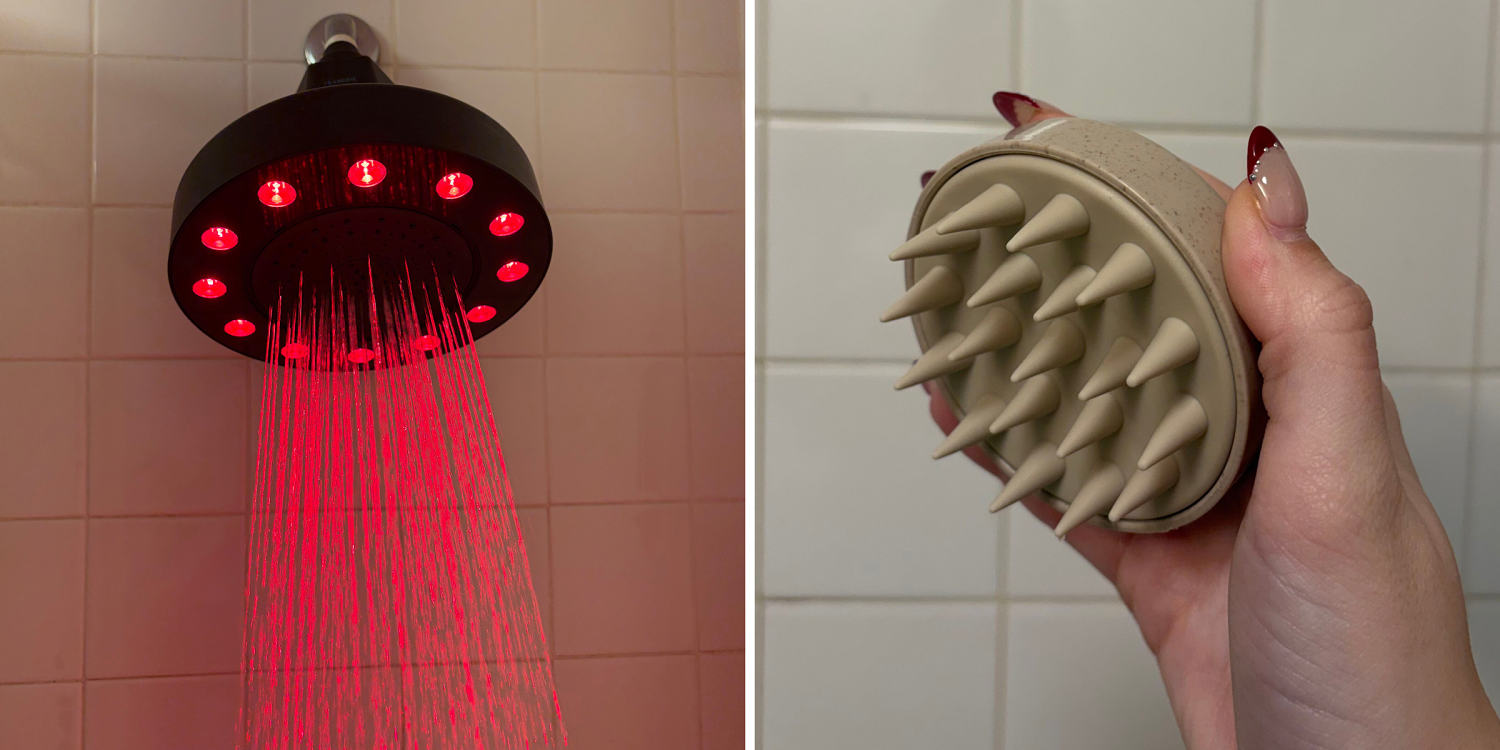
| Silicone Scalp Brushes | "Exfoliates buildup and boosts circulation." | Removes dead skin and sebum; mechanically incapable of reversing miniaturization. | Hygiene tool. Buy it to wash your shampoo out better, not to regrow hair. |
Answering the Questions You Are Actually Asking
When people search for hair growth tools, they are usually trying to avoid a single thing: medication. They want a mechanical bypass around pharmacology. Let's look at the questions driving this industry and strip away the marketing spin.
Can a laser cap replace finasteride or minoxidil?
No. Anyone telling you otherwise is selling you a laser cap. Finasteride inhibits the 5-alpha reductase enzyme, slashing scalp DHT by roughly 60% to 70%. Minoxidil opens potassium channels, hyperpolarizing cell membranes and extending the anagen growth phase. Lasers merely whisper encouragement to cells that are actively being suffocated by hormones. Comparing a laser cap to a 5-alpha reductase inhibitor is like comparing a multivitamin to chemotherapy.
Do red light panels work just as well as expensive laser helmets?
No, and the physics are obvious if you look at your own head. Hair is a dense physical barrier. Non-coherent LED light from a flat wall panel disperses rapidly and reflects off hair shafts and sebum. Medical-grade laser diodes produce coherent, collimated beams designed to part the hair and reach the dermal papilla roughly 3 to 5 millimeters beneath the epidermis. If you buy a cheap LED cap packed with basic diodes instead of true laser diodes, you are just warming up your hair follicles.
Are scalp massagers completely useless?
For regrowing a slick bald temple, yes. For maintaining a healthy scalp environment, no. Seborrheic dermatitis and chronic micro-inflammation accelerate hair shedding. A basic mechanical scrubber helps lift oxidized sebum and keratin plugs that trap yeast like Malassezia. It is a hygiene upgrade, not a medical treatment. Stop expecting a piece of rubber to rewrite your genetics.
How long do you have to use hair growth devices?
Forever. Hair loss is a chronic, progressive condition. Every single tool on the market—from a $15 derma stamp to a $3,000 laser helmet—only alters the follicular environment while you are actively using it. The moment you put the device in a drawer, your genetics resume their baseline programming, and any hair dependent on that artificial stimulation will shed within three to six months.
The Contrarian Protocol That Actually Moves the Needle
If you want to stop wasting money on aesthetic hardware, you have to invert your strategy. Stop buying tools to fix a chemical problem. Fix the chemistry first, and only bring in hardware when you have stabilized the ground.
1. Establish a pharmacological baseline.
Before you spend a single dollar on a device, address the root cause. For men, that usually means a 5-alpha reductase inhibitor (finasteride or dutasteride) to stop the bleeding, paired with a growth stimulant like topical or low-dose oral minoxidil. For women, it means ruling out ferritin deficiencies, thyroid dysfunction, and polycystic ovary syndrome before exploring anti-androgens like spironolactone or topical minoxidil. If you refuse to touch medication—which is a completely valid personal choice—accept that hardware alone will likely only slow your loss down slightly rather than restore a teenage hairline.
2. Audit your scalp inflammation.
Inflamed scalps shed hair. Before buying gadgets, rotate an over-the-counter ketoconazole shampoo (1% or 2%) into your routine twice a week. Ketoconazole is an antifungal that clears Malassezia yeast, reduces scalp inflammation, and exhibits mild local anti-androgenic properties on the skin. It costs fifteen dollars and outperforms almost every piece of plastic on the market.
3. Introduce precision microneedling—and throw away the roller.
Once your hair loss is stabilized, if you want a mechanical force multiplier, buy an adjustable microneedling stamp or an automated pen with sterile, disposable cartridges. Set the depth between 0.6mm and 1.0mm—you do not need to draw blood or stab yourself at 1.5mm to trigger growth factors. Use it once every two weeks. Wait at least 24 hours before applying topical minoxidil to prevent systemic absorption and chemical irritation.
4. Treat LLLT as a luxury add-on, not a foundation.
If you have already stabilized your hair with medication, have zero scalp inflammation, are microneedling safely, and still have $1,000 burning a hole in your pocket, then buy a true laser diode cap. Use it for 15 to 20 minutes every other day while you answer emails. Expect a 10% to 15% improvement in hair shaft thickness over a year.
The Downside Nobody Wants to Hear
There is a massive catch to this evidence-based approach, and it is the exact reason the gadget industry thrives: compliance fatigue.
Swallowing a pill or applying a foam takes ten seconds, yet millions of people quit within a year because they hate the routine or fear rare side effects. Adding a microneedling session every other Sunday and strapping a glowing helmet to your head three times a week turns basic grooming into a part-time job.
Furthermore, even when you combine the best pharmaceuticals with the best mechanical tools, you cannot resurrect a dead follicle. Once the sebaceous gland detaches and the follicle completely fibroses into smooth, shiny skin, no laser, needle, or pill on earth will bring it back. At that point, the only tool that works is a surgeon's punch graft.
Stop looking for salvation in an Amazon shopping cart. Biology does not care how sleek the industrial design is, how many influencers hold it up to a ring light, or how many diodes are packed under the hood. Control the hormones, calm the inflammation, and leave the expensive scalp jewelry on the shelf.