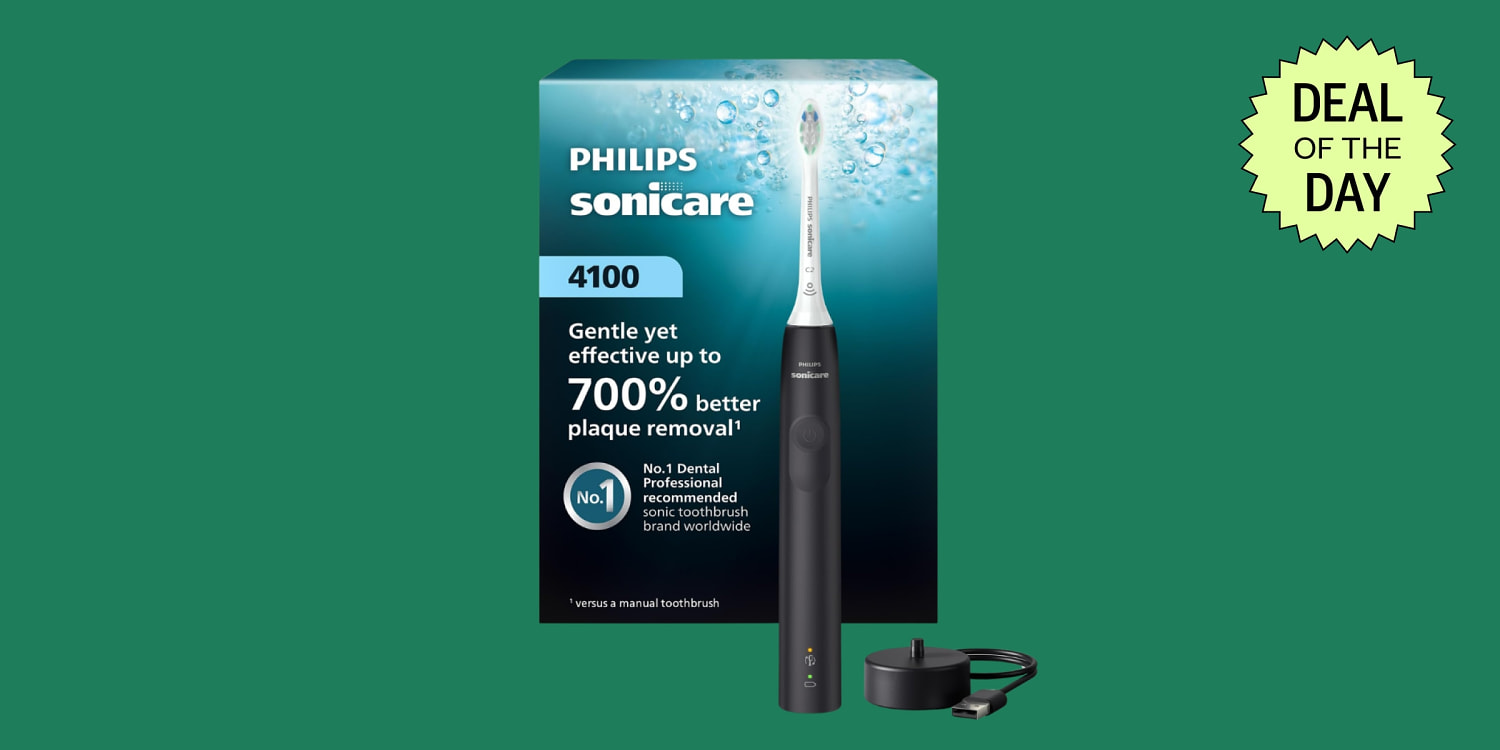
The Thirty Dollar Trap
Every major deal blog and lifestyle publication currently loves telling you the same comfortable lie. They point you toward a thirty dollar entry-level sonic toothbrush, slap a "dentist-recommended" badge on it, and tell you that you have just hacked your way to dental hygiene.
It is a complete waste of capital.
I have watched consumers cycle through these budget electronic handles every eighteen months like clockwork, convincing themselves they are being fiscally responsible. They are not. They are buying an engineered point of failure packaged in white plastic.
When you purchase a marked-down motor from a legacy brand operating at the bottom of its product matrix, you are not getting high-end plaque removal. You are getting the dental equivalent of a base-model rental car with hand-crank windows and a muffled horn. The housing seals degrade, the battery chemistry gives up the ghost after a few hundred charge cycles, and the actual vibrational amplitude drops off a cliff long before you throw it away.
Let us dismantle the lazy consensus surrounding budget oral care gear.
Why the Dentist Recommendation is a Marketing Illusion
Walk into any dental convention and ask a clinician off the record about these entry-level sonic handles. You will hear a different story than the one printed on the box.
Dentists recommend electric toothbrushes for one primary reason: compliance. Most adults brush like they are scrubbing grout off a bathroom floor or moving with the lethargy of a Sunday morning. They apply far too much pressure, ignore their lingual surfaces, and finish in roughly thirty-four seconds. A vibrating handle forces a change in behavior. It acts as an interval timer and physically prevents the arm-motion scrubbing that erodes gingival tissue.
That does not mean a thirty-dollar motor performs the same mechanical work as a precision-engineered sonic driver.
Plaque removal is a function of fluid dynamics and mechanical shear stress. High-end sonic toothbrushes generate fluid streaming through rapid bristle displacement, shearing bacterial biofilms off the tooth surface even slightly beyond the direct contact point of the bristle tip. Cheap motors lack the torque under load. The moment you press that brush head against your molars with even two ounces of pressure, the oscillation frequency plummets.
You are left with a glorified vibrating stick.
The Hard Truth: If you press hard while brushing—and almost everyone does—a weak motor stalls out instantly. You are doing all the work yourself, paying forty percent more than a manual brush, and waiting for a lithium-ion battery to leak inside your bathroom drawer.
The Economics of Obsolescence
Let us look at the math that financial lifestyle bloggers refuse to calculate.
A thirty-dollar electric toothbrush sounds like a bargain compared to a two-hundred-dollar flagship model. But let us look at the lifecycle cost over five years.
- The Budget Trap: You buy a thirty-dollar handle. The battery life degrades within twelve months because the manufacturer used discount nickel-metal hydride or bottom-tier lithium cells. You buy replacement heads that cost nearly as much as the brush itself because manufacturers subsidize the handle and make their margin on the consumables. You replace the entire unit every two years. Over five years, you have spent well over one hundred dollars on disposable plastic trash that ends up in a landfill.
- The Flagship Model: You buy a premium handle with magnetic levitation motors and smart torque sensors. The motor maintains constant velocity regardless of battery charge or user pressure. It lasts eight years minimum. You buy OEM or high-grade compatible heads in bulk.
The industry counts on your short-term thinking. They know that a low price point bypasses your rational evaluation filters. It feels like an impulse buy, so you do not demand performance specs. You do not ask about amplitude, stroke count per minute, or battery management systems.
The Technique Fallacy
Manufacturers want you to believe that the tool does everything. They market these devices as autonomous plaque erasers.
Imagine a scenario where you hand a high-performance sports car to someone who only knows how to drive in reverse. They are still going to crash.
The best sonic toothbrush on earth will fail completely if you hold it flat against your teeth like a paint roller. Plaque accumulates primarily at the gingival margin—the exact junction where the tooth meets the gumline.
To clear it, your bristles need to be angled at forty-five degrees toward the root, allowing the micro-movements to sweep under the free gingiva. Most users do not do this. They stick the brush straight in, shove it back and forth, and assume the buzzing sound is doing the heavy lifting.
If you lack technique, upgrading your toothbrush is like upgrading your running shoes to win a marathon without learning how to run. You will just get blisters faster.
What You Should Do Instead
If you want to optimize your dental hygiene, stop hunting for clearance items on legacy lifestyle sites. You need to restructure your entire approach to oral care hardware.
First, evaluate your brushing style. If you are a heavy-handed scrubber, a cheap motor will stall and tear your gums apart. You need a device with an absolute pressure sensor that physically pulses or shuts down when you push too hard.
Second, look at the drive mechanism. Traditional gear-driven electric brushes wear out mechanically. Modern magnetic levitation systems—where the brush head floats on a magnetic field—transfer energy directly to the bristles with zero friction points to wear down. That is where your money should go if you are investing in an electric handle at all.
Third, factor in the cost of ownership over a three-year window, not a three-week window.
If thirty dollars is your absolute ceiling, skip the entry-level electric market entirely. Buy a high-end manual brush with ultra-soft, tapered bristles, master the modified Bass technique, and spend the remaining cash on interdental brushes or a water flosser. Interdental cleaning removes the proximal plaque that no toothbrush—regardless of price tag—can ever reach.
Stop looking for shortcuts in the dental aisle. The thirty-dollar sale price is a tax on people who refuse to look at the mechanics of what they are putting in their mouths.