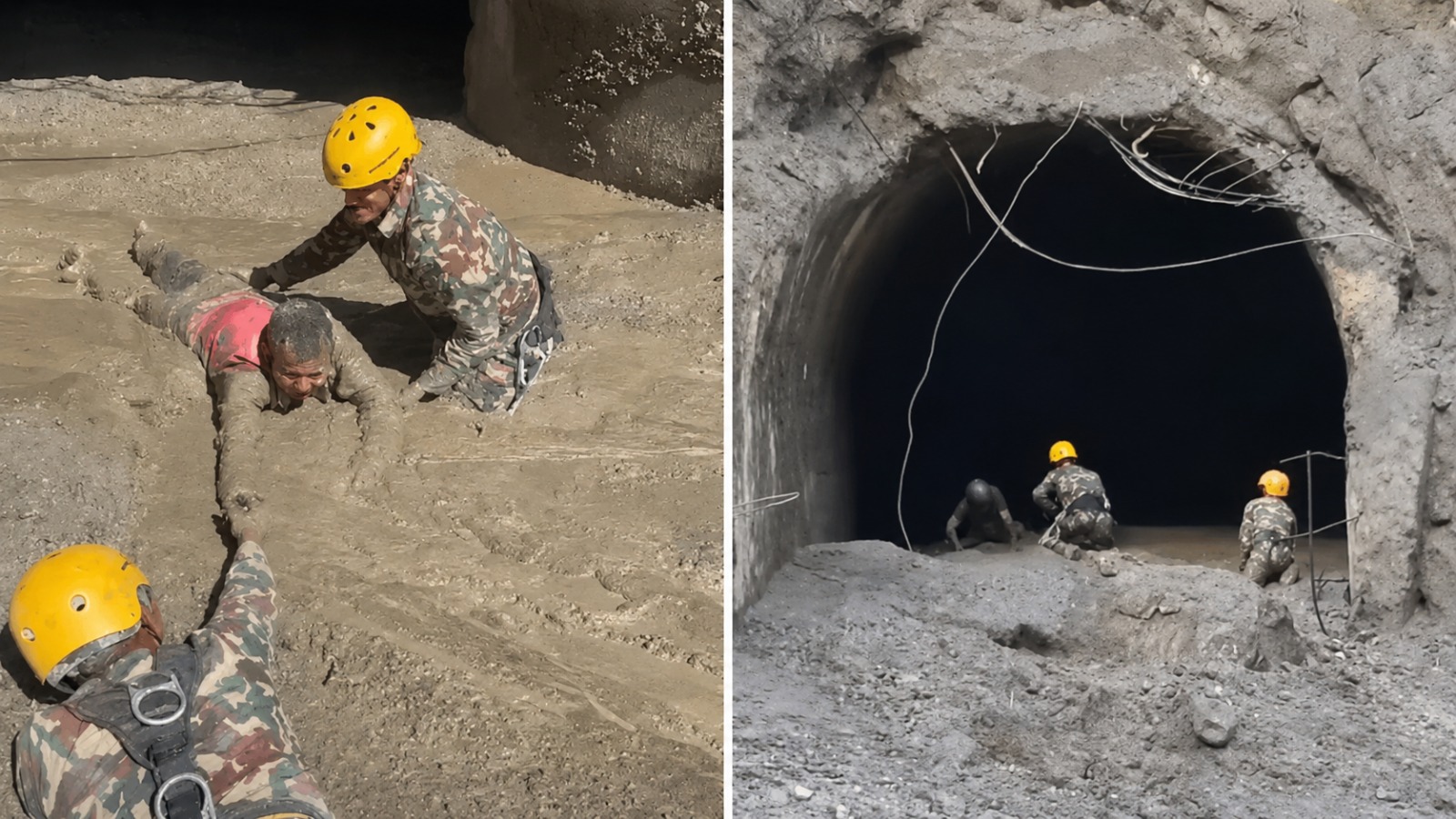
Another catastrophic flash flood tears through the Himalayas, wiping out communities and infrastructure along the Bhotekoshi and Trishuli corridors. The immediate reflex from scientists and media outlets is to hunt for a single, exotic villain. Headlines celebrate a newly minted study declaring that an ice-rock avalanche from the Langtang-Lirung heights—not conventional rainfall—was the primary trigger. They point to satellite images of a glacier section snapping off, falling thousands of meters, and slamming into the Lhende River.
It makes for a thrilling geophysical detective story. It is also a convenient distraction.
Fixating on whether a wall of water was launched by an ice-rock avalanche, a glacial lake outburst, or an unrecorded cloudburst misses the forest for the pulverized trees. Nature is volatile; that is a constant in high mountain environments. The disaster is not that a glacier broke or that a high-altitude slope failed. The disaster is that we continue to build billions of dollars of hydropower assets and permanent settlements directly in the ballistic path of predictable cryospheric hazards, operating on outdated hydrological assumptions.
Let us dismantle the lazy consensus. The narrative that "an unexpected avalanche caused the catastrophe" lets planners and policymakers off the hook. An ice-rock avalanche traveling at over 150 kilometers per hour is terrifying, but it is not unprecedented in a warming, destabilized mountain range. When experts emphasize that there was no heavy rainfall on the day of the disaster, they imply that the absence of rain means the system should have been safe. That logic treats water as the only hazard, ignoring the solid-mass mechanics of high-altitude mass wasting.
In reality, the Lhende Khola corridor flooded twice in a brief span of months. When a geographical bottleneck experiences recurrent catastrophic failures, calling the latest incident a surprise is an administrative failure disguised as objective science.
The Physics of Catastrophe
To understand why pointing at the avalanche is a half-truth, you have to look at the mechanics of debris flows. When a 0.56-square-kilometer chunk of ice and bedrock shears off from an altitude of 5,200 meters, it possesses immense potential energy. Upon impact, that mass does not simply melt; it pulverizes. It acts as a massive kinetic hammer, instantly transforming into a dense, hyper-concentrated slurry of boulders, mud, and ice that strips valley walls bare.
The recent study highlights that river water levels dropped upstream hours before the flood wave hit. That drop is the smoking gun of a temporary landslide dam formation. The avalanche slammed into the narrow gorge, choking the Lhende River and creating an accidental natural barrier. Water pooled behind this unstable ice-and-rock plug until hydrostatic pressure forced a catastrophic breach, unleashing a delayed secondary hammer blow downstream.
This means the initial avalanche was only act one. Act two was the temporary impoundment and subsequent dam break. Yet, regional disaster management frameworks are fundamentally unequipped for cascading hazards. Early warning systems focused exclusively on rain gauges are functionally useless when a river is blocked by a massive rockfall miles upstream in a remote, cross-border zone. If your sensor only measures precipitation, it will read zero while a ticking time bomb of trapped water builds behind a debris dam.
The Infrastructure Blind Spot
The human and economic cost of this event—over 900 dead and dozens of hydropower projects knocked offline—exposes the sheer fragility of Himalayan development models. For years, I have watched developers treat mountain river valleys as stable industrial real estate. They run feasibility studies based on fifty-year hydrological records, completely ignoring the dynamic, rapidly evolving morphology of the cryosphere.
Building thirteen hydropower projects in a corridor that has demonstrated chronic vulnerability to mass wasting is an exercise in institutional denial. Engineers design structures to withstand maximum probable precipitation floods, not high-speed, debris-laden hyper-concentrated flows that arrive with zero meteorological warning. When you place concrete penstocks and generation units in narrow gorges carved by ancient glaciers, you are gambling against geological time. The house always wins.
The cross-border administrative vacuum compounds the physical risk. The trigger point sits high in the borderlands between Tibet and Nepal. Early warnings crawl through bureaucratic channels or arrive minutes too late—if they arrive at all. By the time a warning is issued across jurisdictions, the mass has already covered twenty-two kilometers in a matter of minutes. Relying on reactive emergency alerts in a setup like this is like trying to dodge a bullet after you hear the impact.
Redefining Resilience
If we are going to survive the third pole's transition, we have to stop treating every major flood as an unforeseeable act of God.
First, we must abandon precipitation-centric early warning models. We need continuous seismic and acoustic monitoring of high-altitude slopes. Sudden slope failures and ice-rock avalanches generate distinct ground vibrations long before the resulting flood wave registers on a downstream water level gauge. Sensors that detect mass-wasting events at the source buy critical minutes for downstream evacuation.
Second, spatial planning in the Hindu Kush Himalaya needs a complete overhaul. Zoning laws must treat the entire runout zone of high-altitude glaciers as a high-risk red zone. Placing critical infrastructure like multi-megawatt hydropower plants directly in narrow river bottoms without upstream sediment traps or bypass tunnels is professional negligence. If an infrastructure project cannot survive a localized mass-wasting event, it should not be financed, insured, or built.
The debate over whether it was an ice avalanche, a glacial lake outburst, or rainfall misses the point because all three are symptoms of a shifting baseline. The mountains are destabilizing. Pretending that identifying the specific trigger solves the problem is a comforting illusion for bureaucrats who want a neat box to check.
Stop asking whether the flood was caused by water or ice. Start asking why we keep building in the path of the hammer.