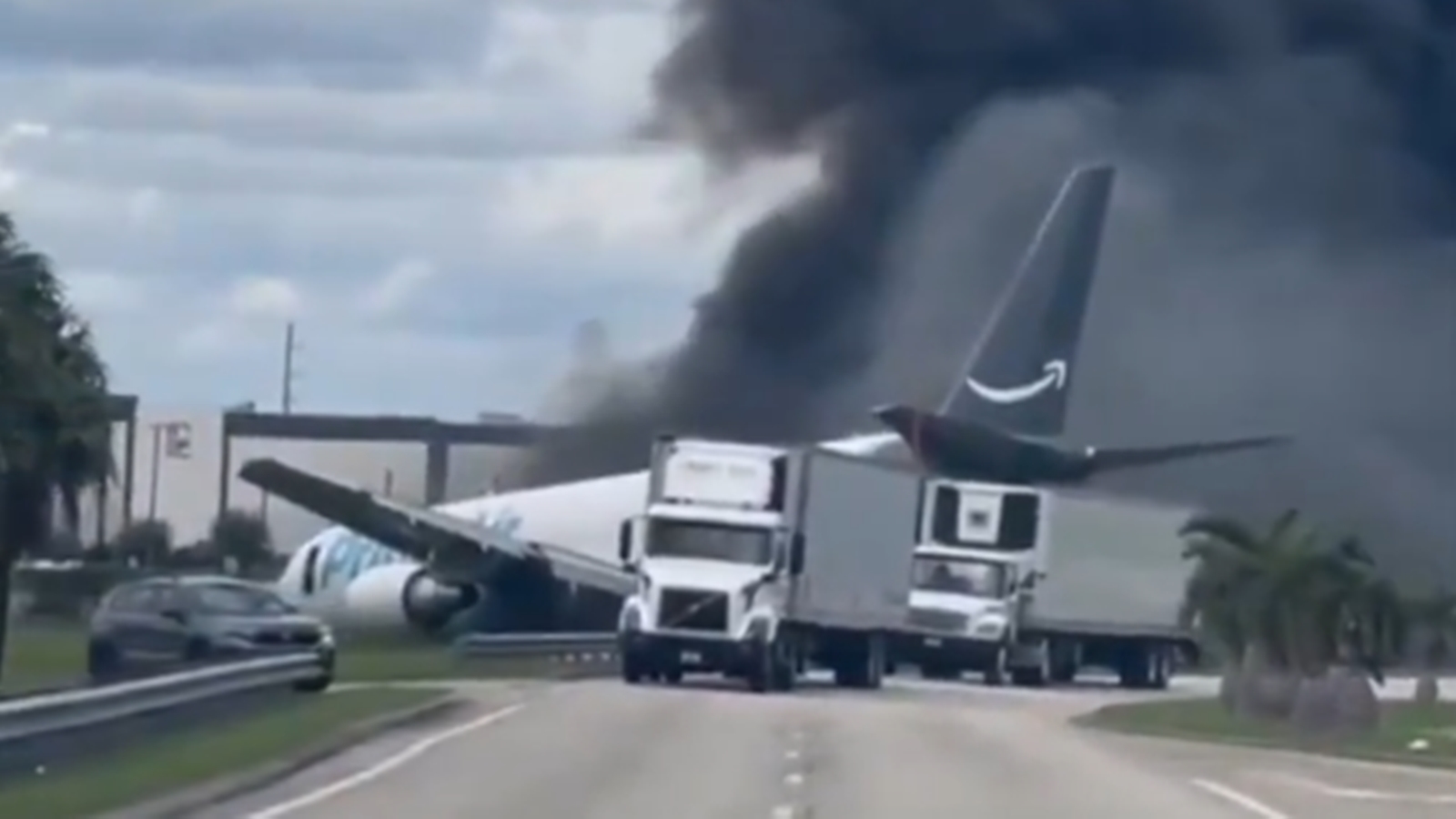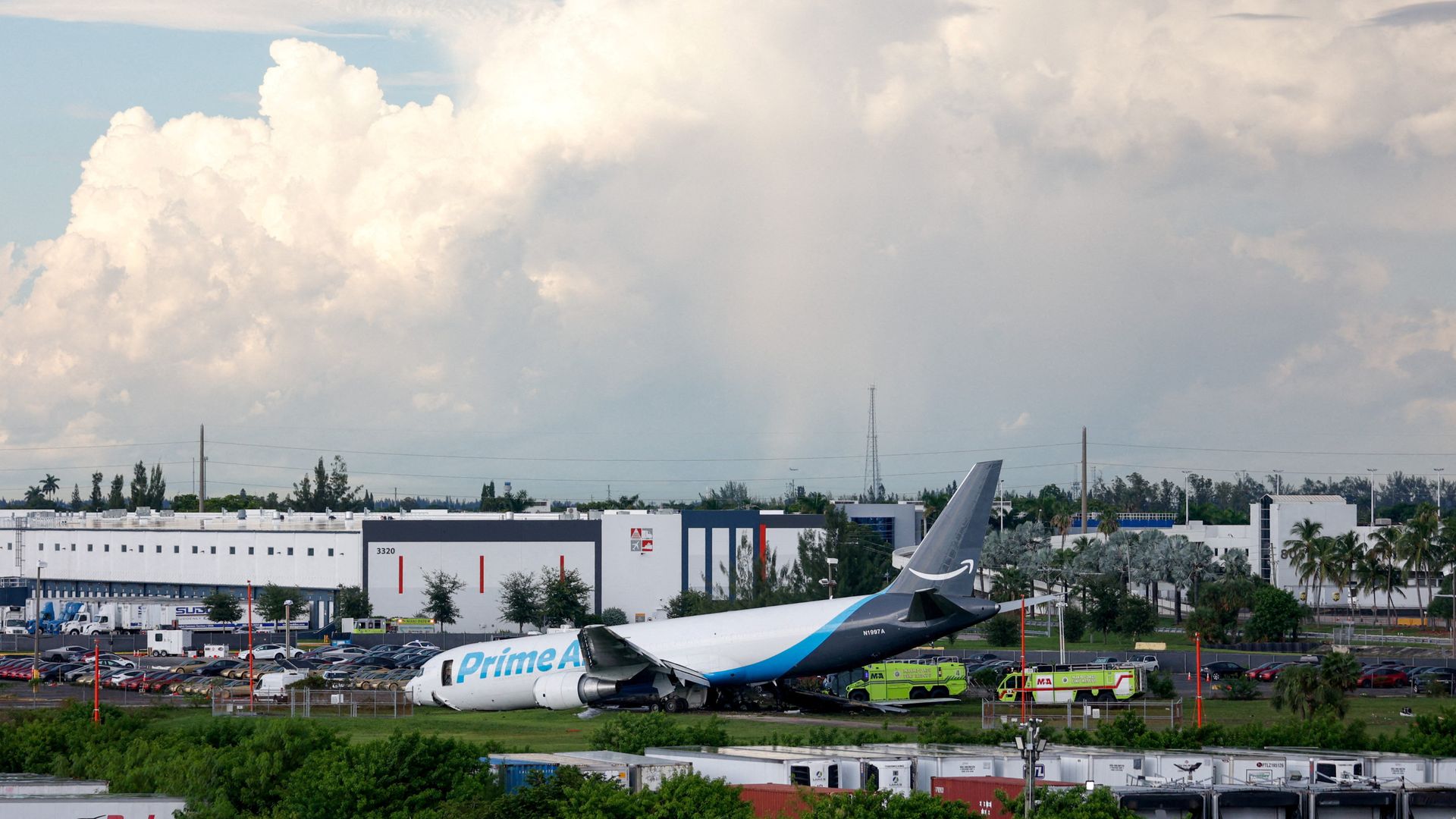
Every single time a cargo carrier goes down, the media cycles run the exact same predictable script. Flash breaking alerts. Show stock footage of a smoldering fuselage. Interview a terrified resident who says "it could have happened to anyone." Then, the talking heads pivot to the lazy consensus: air freight is inherently dangerous, or e-commerce delivery networks are moving too fast, pushing exhausted crews to the breaking point.
It is a comforting narrative for people who do not understand how modern supply chains function. It lets everyone point fingers at corporate greed or pilot fatigue and call it a day.
I have spent two decades inside the belly of global logistics operations. I have watched multi-billion-dollar distribution networks scale overnight, and I have seen the post-accident autopsy reports that never make the evening news. The mainstream media wants you to believe that a plane crash involving a major retail logistics partner is a tragic anomaly born of reckless speed.
The truth is much darker and far more systemic. We are not looking at a sudden failure of safety culture. We are looking at the mathematical inevitable collision between legacy aviation infrastructure and an on-demand consumer economy that demands absolute perfection at rock-bottom prices.
The Myth of the Rogue Flight
When a freighter crashes, the initial reports always focus on the immediate variables. Weather conditions. Mechanical anomalies. Crew hours. Investigators spend months parsing black boxes to find a single point of failure.
That approach is an exercise in comforting denial.
Air freight operations, particularly those contracted by massive logistics giants like Amazon Air, FedEx, and UPS, do not operate like commercial passenger airlines. They operate on razor-thin margins in secondary and tertiary airports during off-peak hours. They fly older, converted airframes—planes that have already lived full lives carrying passengers before being gutted and retrofitted to haul cardboard boxes.
To call these accidents isolated tragedies is to ignore the structural pressures placed on the entire ecosystem. Imagine a scenario where a fleet of aging Boeing 767s or ATR turboprops is pushed to fly maximum cycles across congested nocturnal routes, landing in deteriorating weather at smaller municipal fields to shave three minutes off a delivery window. When a hull finally fails, the regulators swoop in, ground a handful of planes, penalize an operator, and pretend the system is fixed.
The lazy consensus says we need stricter oversight of pilot rest schedules. That is a bandage on a severed limb. The real issue is that the architecture of modern air cargo was built for a 20th-century mail delivery model, not a 24/7 instant-gratification fulfillment monster.
The Economics of Avoidable Risk
Let us look at the data the commentators ignore. Cargo carriers operate under Part 121 regulations in the United States, theoretically holding them to the same high maintenance standards as passenger airlines. But the economic reality on the ground tells a very different story.
Contract carriers operate on thin service-level agreements. If a plane misses a hub sort time because a maintenance delay kept it on the tarmac for an extra hour, the financial penalty from the retail giant can wipe out the profit margin for that entire route.
This creates a perverse incentive structure. Maintenance is deferred. Quick-turnaround fixes are prioritized over deep inspections. Pilots are subtly—or overtly—pressured to accept marginal aircraft because the alternative is an operational failure that costs the carrier its contract.
I have sat in boardrooms where executives debated the cost-benefit analysis of grounding an aircraft versus keeping it in rotation through a minor warning light. The spreadsheets do not care about human safety; they care about network velocity. Until the cost of losing a hull and its crew exceeds the astronomical profits generated by uninterrupted network flow, these companies will continue to roll the dice.
Why the Public Asks the Wrong Questions
People always ask: Are cargo planes less safe than passenger planes?
The technical answer is yes, statistically, cargo flights experience higher accident rates per flight hour than passenger operations. But asking that question misses the point entirely. The right question is: Why do we treat cargo aviation as an invisible, second-class utility when it now forms the central nervous system of global commerce?
We separate passenger safety from cargo safety in our collective consciousness. When a passenger jet goes down, it is a national catastrophe. When a freighter crashes into a swamp or a hillside, it makes a brief splash in the news cycle before society pivots back to tracking their same-day package delivery status.
This compartmentalization allows the logistics industry to operate in a regulatory twilight zone. The planes are older, the airports are less equipped with modern precision-landing gear, and the pressure to maintain schedule integrity is exponentially higher.
The Uncomfortable Solution
Fixing this requires a level of disruption that consumers will hate.
If we want to stop these tragedies, we have to dismantle the expectation of instantaneous gratification. We have to accept that shipping a pair of cheap headphones across the continent in twelve hours requires an invisible army of stressed pilots flying aging iron through sub-optimal conditions.
We need to mandate the immediate retirement of passenger-to-freighter conversions that have exceeded their structural design life, regardless of how much revenue it strips from the logistics supply chain. We need to tie carrier contracts directly to safety audit scores rather than on-time delivery percentages. And we need regulatory bodies that have the teeth to fine companies out of existence the moment network velocity is prioritized over human lives.
The public wants a villain they can hate—a tired pilot, a stormy night, a mechanical glitch. The real villain is a supply chain model built on the backs of aging aircraft and relentless speed, cheered on by consumers who refuse to wait.
Stop mourning the symptom while feeding the machine.