Record crowds swarm the gates, turnstiles spin faster than ever, and sports media immediately reaches for the most intellectually lazy narrative available. According to the standard hot take, a surging National Bank Open is locked in a noble struggle against backward-looking residents who hate progress, tennis, and economic vitality.
It is a clean, comforting story. It is also entirely wrong.
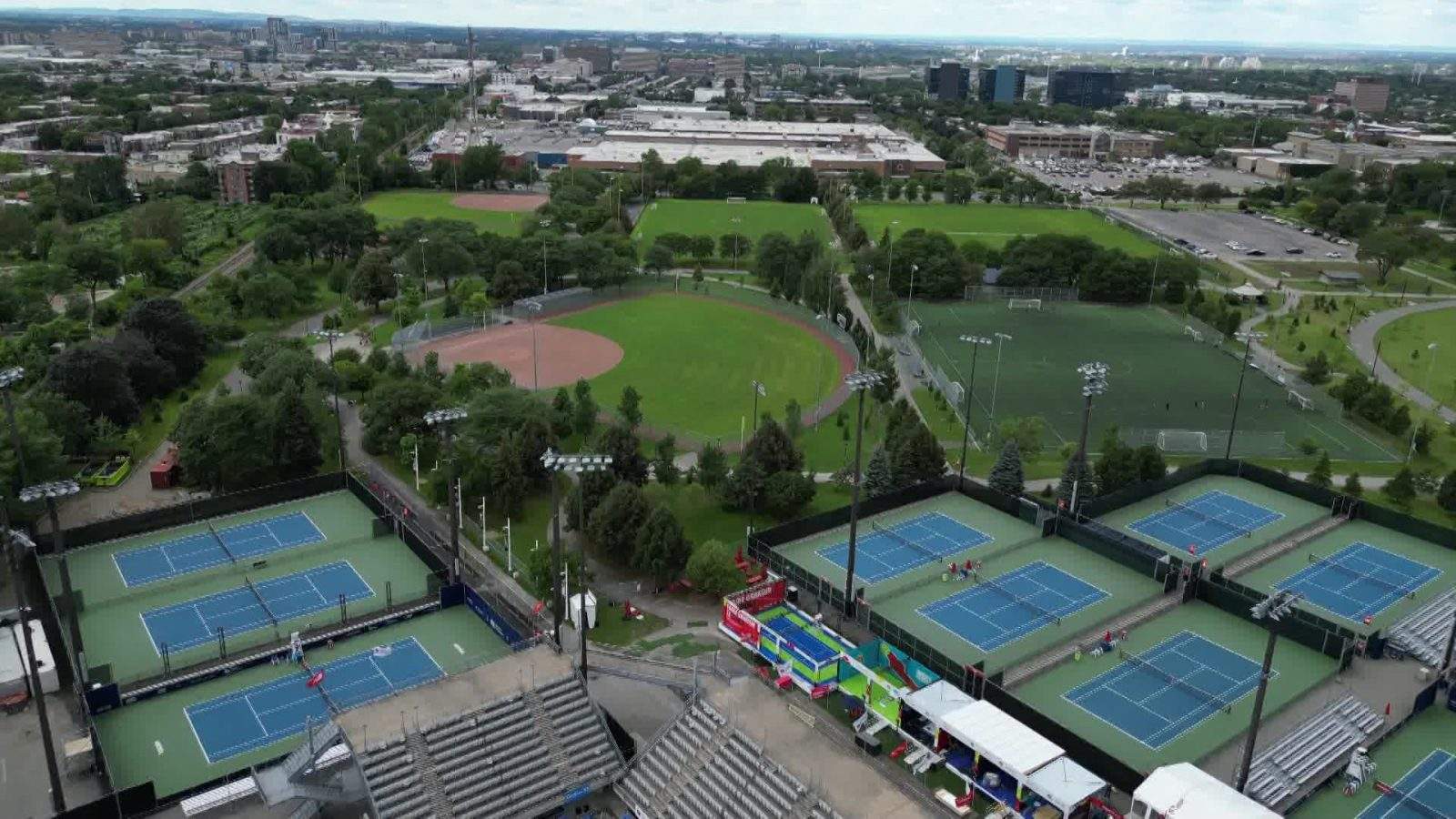
The $400 million upgrade proposed for IGA Stadium—eating further into Jarry Park’s public green space to build a massive stadium footprint—is not being held back by small-minded obstructionists. It is being held back by a structural failure of imagination from event organizers who refuse to accept a basic economic reality: brute-force physical expansion is a dying strategy in modern sports entertainment.
The Myth of Obsolescence
Let us define the core argument pushed by Tennis Canada and echoed by breathless reporters: the facility is obsolete, the ATP demands a 15,000-seat showpiece with a retractable roof, and any entity standing in the way of asphalt pouring over a baseball diamond is a regressive local.
This framing relies on a fundamental falsehood. It assumes that a tennis tournament must mimic a Grand Slam cathedral to justify its existence, treating a ten-day summer event as an excuse to permanently annex urban public commons.
I have watched sports federations blow millions on white-elephant concrete across North America, chasing the ghost of international standardization while ignoring the shifting economics of live attendance. Over 309,000 fans showed up this year. That is a triumph of demand, not an indictment of supply. If you are drawing record crowds into an allegedly "obsolete" venue, your venue is not failing your audience; your operational model is failing your imagination.
The Public Space Fallacy
Imagine a scenario where a private corporation demands to permanently fence off a quarter of Central Park or Hyde Park because its annual corporate conference is selling out. Public outcry would be instantaneous, and rightly so.
Yet, when local residents in a densely populated, working-class Montreal neighborhood push back against losing a recreational baseball diamond, a swimming pool, and soccer pitch for a facility used intensely by the community year-round, they are instantly branded as NIMBYs.
This is where the lazy consensus collapses under the weight of data. Tennis Canada operates as a non-profit, a status that often obscures the corporate scale of its operations. When an organization asks for massive public subsidies—frequently targeted at up to 90 percent of a $400 million price tag from taxpayers—to expand its footprint from roughly 20 percent to over 25 percent of a public park, this ceases to be a private tenant dispute. It becomes a municipal equity crisis.
Grassroots tennis programs funded by tournament revenues are valuable. But do not insult the intelligence of urban residents by telling them that a kid swinging a tennis racket somewhere else in the province compensates for the concrete eradication of their local park.
Why Expansion is the Lazy Answer
The governing bodies of tennis suffer from copy-paste syndrome. If Madrid builds a multi-court monolith, Montreal feels an existential panic that it must follow suit or become irrelevant.
This ignores how contemporary fans actually consume live sports. Younger demographics do not prioritize sitting in a blistering 15,000-seat concrete bowl for five hours straight. They value festival atmospheres, immersive grounds experiences, digital integration, and modular viewing zones. Piling hundreds of millions into a single retractable-roof monolith to appease international tour bureaucrats is an analog solution to a digital-era problem.
The tournament's leadership complains about tight player facilities and small practice courts. Fair enough. But footprint expansion is not the only mechanism for optimization. Vertical architecture, smarter scheduling, off-site training integration, and decentralized fan hubs can solve logistical bottlenecks without a single bulldozer touching a neighborhood baseball field.
The Real Question We Should Be Asking
Instead of asking how to squeeze a bigger footprint into a constrained urban park, sports journalists should be asking why Tennis Canada refuses to decentralize or evaluate multi-site regional models. Why must every dollar of infrastructure investment anchor itself deeper into a residential neighborhood that is already gasping for breathing room?
Stop framing this as a war between tennis fans and neighborhood residents. It is a test of whether our cities exist to serve the daily lives of the people who live in them, or to bow down before the seasonal demands of touring sports federations.
The status quo is indeed unacceptable. But doubling down on concrete is not disruption. It is a failure of leadership.