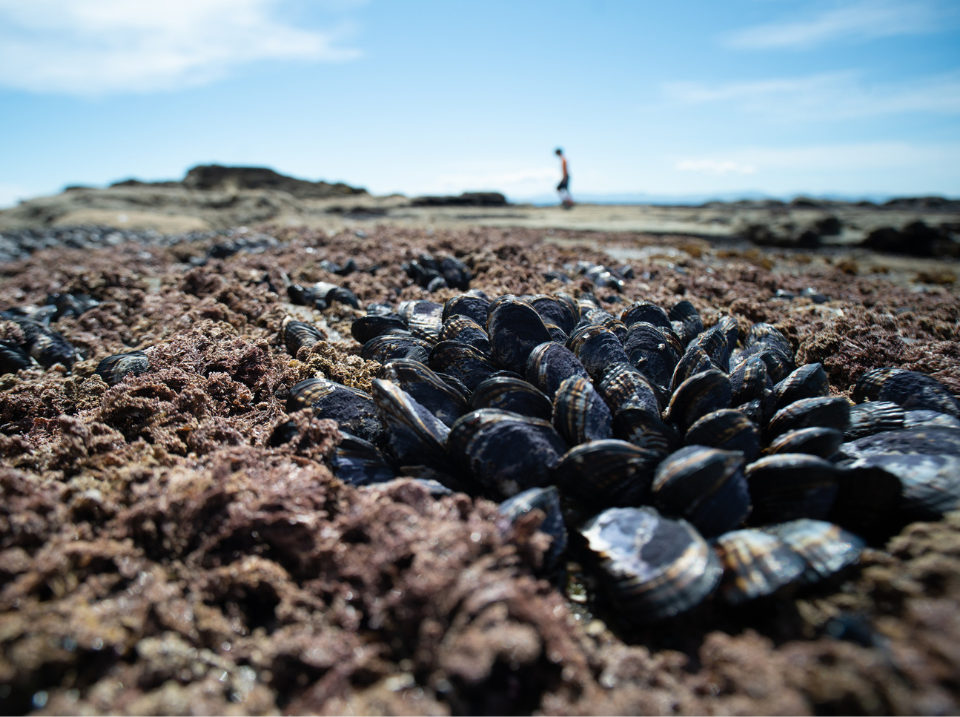
Government health alerts love a good act of God. When a sudden outbreak of norovirus or paralytic shellfish poisoning (PSP) shuts down commercial bivalve harvesting along the Pacific Northwest coast, the official press releases read like a weather report. They blame unseasonable warmth. They blame naturally occurring marine biotoxins. They warn you, the passive consumer, to check the map before you harvest, as if the ocean just happens to be having a bad day.
It is a comforting narrative. It is also a massive deflection. Recently making headlines in related news: The Structural Collapse of Gamete Donor Anonymity.
The lazy consensus dominating public health warnings treats contaminated shellfish as an unpredictable environmental hazard. They frame it as an inevitable tax we pay to the sea for the privilege of eating oysters, clams, and mussels. If you get violently ill after downing a dozen raw Kusshis, you simply drew the short straw in a natural lottery.
That is nonsense. The harsh reality, known to anyone who has spent decades analyzing coastal water quality and tracking the intersection of municipal infrastructure and marine biology, is that our shellfish problem is fundamentally a human plumbing problem. We are not victims of erratic nature; we are victims of crumbling infrastructure and a regulatory framework that measures safety by looking backward instead of forward. Additional information regarding the matter are explored by Healthline.
When you eat a contaminated oyster, you are rarely suffering from an unpredictable ecological anomaly. You are suffering from the fact that someone, somewhere upstream, flushed a toilet, and a municipal processing plant could not handle the volume.
The Bioreactor Fallacy: Oysters Do Not Manufacture Toxins
To understand why the standard warning system is broken, you have to understand the mechanics of the bivalve. Consumers treat oysters like plants that grow in the water, absorbing vague "nutrients." In reality, an adult oyster is a high-powered, industrial-grade filtration unit. A single oyster pumps up to 50 gallons of water a day through its gills, stripping out particulate matter, microalgae, and bacteria.
When a public health department issues a warning about marine biotoxins like saxitoxin (the alkaloid behind paralytic shellfish poisoning) or domoic acid (amnesic shellfish poisoning), they talk about "algal blooms" as if they are spontaneous forest fires.
They ignore the fuel.
[Agricultural Runoff / Human Waste]
               │
               ▼
   [Nitrogen & Phosphorus Spike]
               │
               ▼
     [Explosive Algal Bloom]
               │
               ▼
[Oyster Filters Toxic Microalgae]
               │
               ▼
   [Severe Human Poisoning]
Massive blooms of the dinoflagellate Alexandrium catenella do not occur in a vacuum. They are supercharged by anthropogenic nutrient loading—a polite term for agricultural fertilizer runoff and untreated municipal wastewater rich in nitrogen and phosphorus. We feed the algae. The algae multiply by the billions. The oysters eat the algae. Then we eat the oysters and act surprised when our nervous systems shut down.
Worse still is the norovirus issue. Norovirus does not originate in the ocean. It does not infect fish. It is an exclusively human pathogen. When norovirus hits a shellfish bed, it is because human feces or vomit entered the water.
Every time a government body warns that "warm waters have increased the risk of norovirus in bivalves," they are committing a logical felony. Warm water does not create norovirus; it merely accelerates the failure of outdated coastal septic systems and overwhelmed combined sewer overflows (CSOs) during heavy summer rains. The warming climate is just the mirror reflecting our refusal to update 1950s-era municipal engineering.
Why the "Safe Harvest" Maps Are a Dangerous Illusion
The baseline defense for the current system is the harvest closure map. State and provincial authorities regularly sample water and shellfish tissue, closing zones when toxin levels or fecal coliform counts cross acceptable thresholds. It looks scientific. It looks robust.
It is dangerously slow.
The standard method for detecting bacterial and viral contamination relies on indicator organisms like Escherichia coli or generalized fecal coliform counts. The problem? Shellfish can retain viral pathogens like norovirus long after the surrounding water column has cleared of fecal coliform indicators. You can test a bucket of water, find it completely within legal limits, and still harvest oysters that are packed with enough viral payload to cripple a cruise ship.
Furthermore, tissue testing is an exercise in hindsight. By the time a sample is collected, transported to a central laboratory, processed via bioassay or quantitative PCR (polymerase chain reaction), and translated into a public health directive, days have passed. The contaminated product has already been harvested, shipped, distributed to wholesalers, and slid down the throats of patrons at high-end raw bars.
Imagine a scenario where a city monitors traffic safety by counting accidents three days after they happen, and only then decides to turn on the red lights. That is exactly how we manage shellfish safety. It is a reactive, retrospective post-mortem disguised as preventative healthcare.
The Raw Bar Industrial Complex
I have watched commercial growers lose millions of dollars overnight because a single municipal lift station failed five miles upstream from their leases. The growers are rarely the villains here; they are caught in a pincer movement between urban sprawl and outdated public policy. Yet, the industry perpetuates its own myths to protect the market.
The biggest myth? "If it cooks, it’s fine."
While thorough cooking destroys viral pathogens like norovirus and bacteria like Vibrio parahaemolyticus, it does absolutely nothing to chemical biotoxins. Saxitoxin and domoic acid are heat-stable. You can boil a contaminated mussel for an hour, bake it, fry it, or blast it in a pressure cooker—the toxin remains completely intact, ready to bind to your voltage-gated sodium channels and induce respiratory paralysis.
The industry stays quiet on this because parsing the difference between viral contamination (killable by heat) and biotoxin contamination (unkillable by heat) requires nuanced consumer education that dampens the romance of seafood consumption. They prefer the clean, simple narrative: just buy from licensed dealers and you are perfectly safe.
Dismantling the Flawed Premises of Public Safety
When people look into shellfish safety, they inevitably ask the wrong questions because they are working from a flawed premise. Let us dismantle the most common ones.
Is it safe to eat wild shellfish if the area isn't explicitly closed?
No. Assuming an unmonitored beach is safe because it lacks a "Closed" sign is an open invitation to organ failure. Remote beaches are rarely tested with the frequency required to catch sudden, localized toxic blooms. An open status often means "nobody has checked lately," not "we checked today and it is clean."
Can you tell if a shellfish is toxic by its appearance, smell, or behavior?
Absolutely not. A mussel packed with a lethal dose of saxitoxin looks identical to a healthy one. It opens and closes normally in the water. It smells like the fresh sea breeze. The toxins do not harm the bivalve; they are stored harmlessly in its digestive gland. The animal is fine. You are the one who will stop breathing.
Do commercial depuration systems fix the problem?
Depuration—holding harvested shellfish in tanks of clean, UV-treated saltwater for several days—is highly effective at purging basic bacterial contamination. But it is incredibly poor at removing viral particles bound deep within the animal's tissues, and it is completely useless against accumulated marine biotoxins. It is a cosmetic wash, not a cure-all.
The Actionable Pivot: How to Actually Eat Shellfish Safely
If you are going to consume bivalves, stop looking at the government maps as a green light. Look at them as a lagging indicator of where not to go. If you want to mitigate your risk, you have to apply a colder, more analytical set of criteria to your seafood consumption.
- Audit the Watershed, Not the Beach: Before you harvest or buy local, look at the geography of the surrounding land. Is the bay located within 20 miles of a major metropolitan area, a water treatment facility, or intensive livestock farming? If yes, the baseline risk is permanently elevated, regardless of what the weekly state test says.
- The 48-Hour Rain Rule: Never harvest wild shellfish, and think twice about ordering raw oysters from local waters, within 48 to 72 hours of a heavy rainfall event. Heavy rain triggers urban runoff and causes municipal sewer systems to bypass treatment directly into coastal waters.
- Demand Harvest Dates, Not Just Expiration Dates: When buying from a fishmonger, demand to see the shipper's tag. By law, commercial shellfish must possess a tag detailing the specific harvest location and date. If the harvest date was five days ago and the area has since experienced a major weather shift or a delayed closure notice, walk away.
- Acknowledge the Residual Risk: The only entirely honest public health warning is one no agency will print: eating a raw filter-feeder harvested from modern coastal waters is a calculated gamble. You are bypassing the entire evolutionary shield of your stomach acid to ingest an animal that has spent its life concentrating the microscopic contents of human-altered oceans.
If you want absolute safety, stick to deep-water pelagic fish. If you want the luxury of raw oysters, stop pretending you are participating in a pristine, timeless ritual of nature. You are eating the biological real estate market of the modern coastline, risks and all.